


Snow, Cheese, and Glacial Lakes: Why Portugal's Highest Mountain Deserves a Second Look
Spain remains the default. Ask most British holidaymakers where they head when the urge to escape strikes, and Majorca, the Costa del Sol, or Barcelona will come up before Lisbon, let alone the Portuguese interior. Recent reporting from The Daily Telegraph found that despite high-profile anti-tourism protests in parts of Spain, visitors continued to receive warm welcomes, a reminder of how deeply embedded the Iberian peninsula is in British holiday culture. Yet Portugal, quieter and less publicised, has long offered an alternative that rewards those willing to look a little harder. And within Portugal, Serra da Estrela stands as one of the most overlooked destinations in Western Europe.
The Serra da Estrela mountain range, situated in the centre of Portugal, contains the highest point in the mainland, the Torre, at 1,993 metres above sea level. It forms the centrepiece of the largest protected area in the country, the Parque Natural da Serra da Estrela, covering 88,850 hectares of glacial valleys, granite formations, lagoons, and ancient villages. In July 2020, the territory was formally recognised as a UNESCO World Geopark, joining a global network that acknowledges its outstanding geological heritage. Within its boundaries, 144 geological sites have been catalogued.
"For those travelling from the UK, navigating the logistics is the first step towards this mountain escape. While modern regional connectivity is generally reliable, travel disruptions remain a reality. Should a flight delay or cancellation occur on the way to or from Portugal, passengers are entitled to look into ec261 compensation through AirHelp before making any alternative arrangements, ensuring that unexpected airport waits do not overshadow the anticipation of the peaks ahead."
The winter draw is well established. Between November and April, snowfall transforms Torre into the only skiing destination in Portugal. The resort offers skiing, snowboarding, and sledging, along with equipment hire and instruction. Portugal's only cable car operates on the hillside adjacent to the summit. On clear days, the view from Torre extends as far as the beach at Figueira da Foz on the Atlantic coast.
But the mountain's reputation as a purely winter destination has long frustrated those who know it well. The Parque Natural contains 25 lagoons, over 300 kilometres of walking trails, and several certified river beaches, all of which are at their most accessible between June and September.
The Glacial Valley That Rivals the Alps
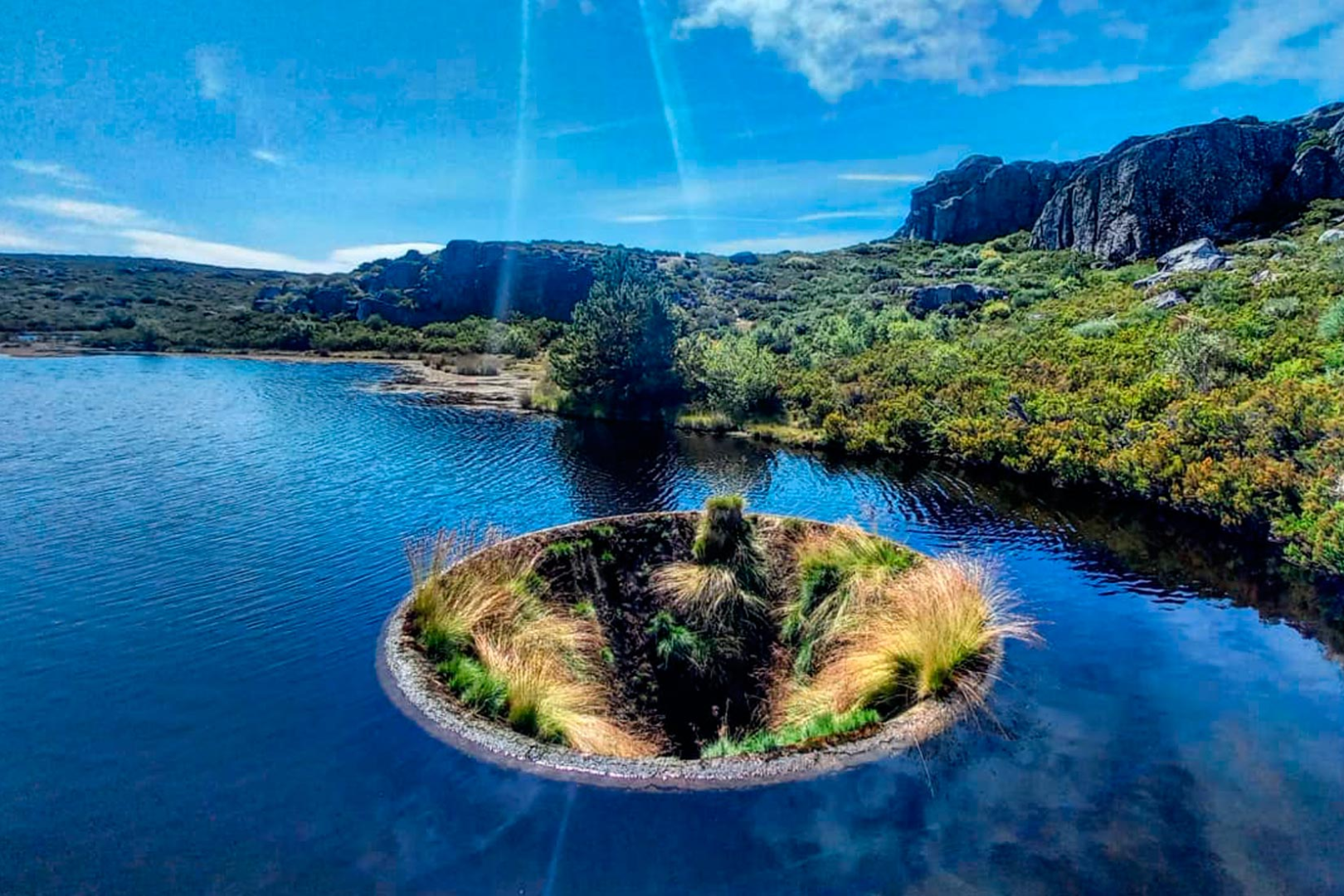
Covão dos Conchos appears to be a natural geological phenomenon but is in fact a feat of mid-century engineering. Built in 1955, a bell-mouth spillway at the centre of this mountain lagoon draws water from the Ribeira das Naves into a tunnel that channels it to the Lagoa Comprida reservoir below, feeding the region's hydroelectric network.
The Zêzere Glacial Valley, stretching approximately 13 kilometres and shaped during the last ice age, is one of the largest glacial valleys in Europe. The river Zêzere originates here, beginning its descent from the high plateau at Covão d'Ametade, at around 1,500 metres altitude, before eventually feeding into the Tagus some 200 kilometres downstream. A riverside trail runs along the valley floor, offering a moderate-difficulty walk with flat and gently sloping sections and views described by the Centro Interpretativo do Vale Glaciar do Zêzere as among the most dramatic in the country.
The Covão dos Conchos, located 6.9 kilometres from the village of Sabugueiro, has become one of the most photographed sites in Portugal. Built in 1955, an artificial circular drainage hole at the centre of a mountain lake creates the visual impression of a natural geological wonder: water flowing continuously toward a perfectly round aperture that funnels into an underground tunnel connecting the lake to the Lagoa Comprida reservoir, 1600 metres above sea level.
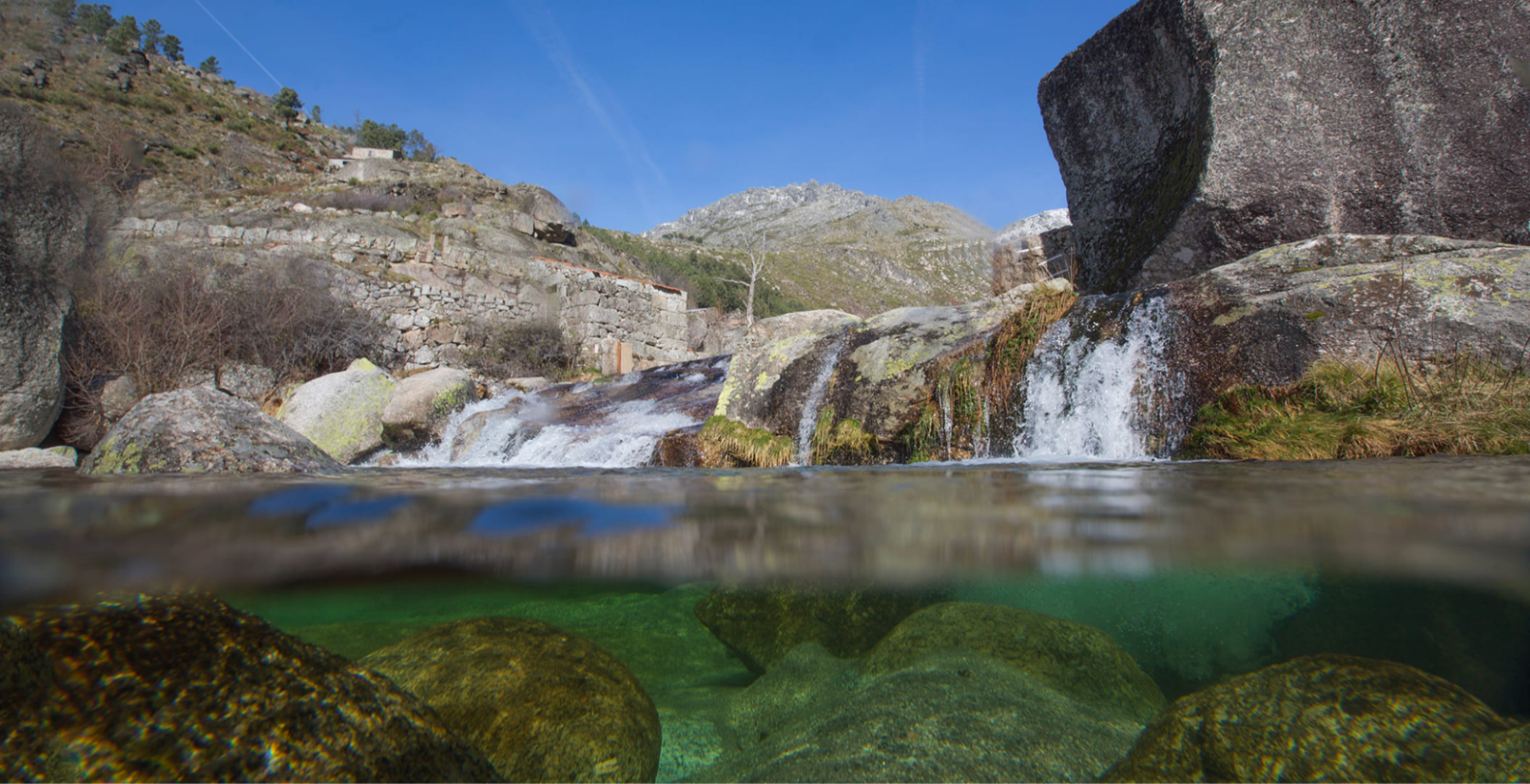
Swimming in Serra da Estrela requires no compromise on quality. The river beach at Loriga, a village sometimes referred to as the "Swiss Portugal", holds a Blue Flag award and is lifeguarded during the bathing season. The water is fed by pure mountain streams and framed by granite rock cliffs. Vale do Rossim, accessible by car with nearby parking, offers an extensive area of sand and grass beside crystal-clear glacial waters. The river beach at Unhais da Serra sits at the edge of the Aquadome thermal spa complex, the first mountain spa in Portugal and one of the largest in Europe, allowing visitors to combine open-air swimming with therapeutic hydrotherapy treatments.
And the gastronomy of the region is built on products with protected designation of origin. Serra da Estrela cheese, made exclusively from raw milk from Bordaleira and Churra Mondegueira sheep, coagulated using thistle flower, and matured under strict certification, is widely regarded as Portugal's most prestigious cheese. It was named one of the seven gastronomic wonders of Portugal. The production process, tied to the ancient practice of transhumance, the seasonal migration of flocks between valley and mountain pasture, has shaped the food culture of the entire region for centuries.
In 2017, the municipality of Seia added another artisan product to the regional repertoire: Montês gin, distilled from four native botanicals (juniper, carqueja, heather, and arbutus berry) using water drawn from within the protected area of the natural park. The product was launched by Destilaria Caratão in the village of Barriosa and described by its master distiller, João Pedro Freire Borges Mendes, as a gin that "celebrates the singularity and richness of the wild plants that grow from the mountains."
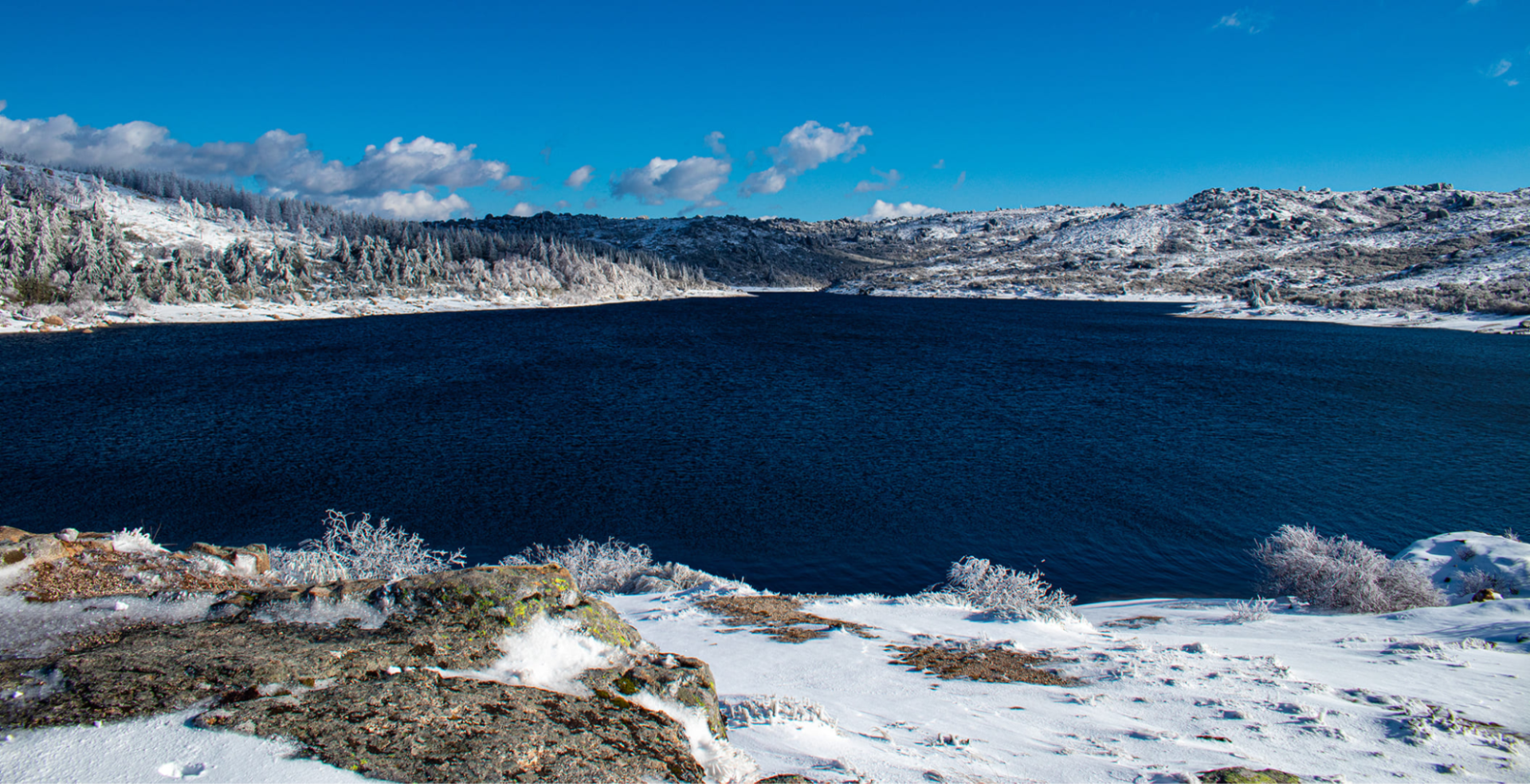
At 1,300 metres above sea level, the Vale do Rossim reservoir sits higher than any other recognised beach in Portugal. A finalist in the national "7 Maravilhas — Praias de Portugal" initiative, the site draws summer visitors from the surrounding municipalities of Gouveia, Seia, and Manteigas, who come to swim in clear mountain water framed by granite boulders and recovering woodland.
The Serra da Estrela region sits within a wider territory rich in medieval heritage. The Aldeias Históricas de Portugal network encompasses twelve villages within or adjacent to the park, including Sortelha, described as among the most beautiful in Portugal, with 800 years of architectural history intact, and Linhares da Beira, the highest village in Portugal, with a castle dating to the late eleventh century that also serves as one of the premier paragliding launch sites in the country. Belmonte, the birthplace of Pedro Álvares Cabral, explorer of Brazil, hosts the last known Crypto-Jewish community on the Iberian Peninsula, with a museum opened in 2005 documenting centuries of Sephardic heritage.
Spain will, no doubt, continue to attract the majority of British visitors to the Iberian peninsula. The infrastructure is familiar, the flight routes plentiful, and the culture well understood. But for those seeking an experience defined by altitude, silence, and genuine regional identity, with summer river swimming, world-class cheese, and glacial landscapes that carry UNESCO recognition, Portugal's highest mountain has built a compelling case.