

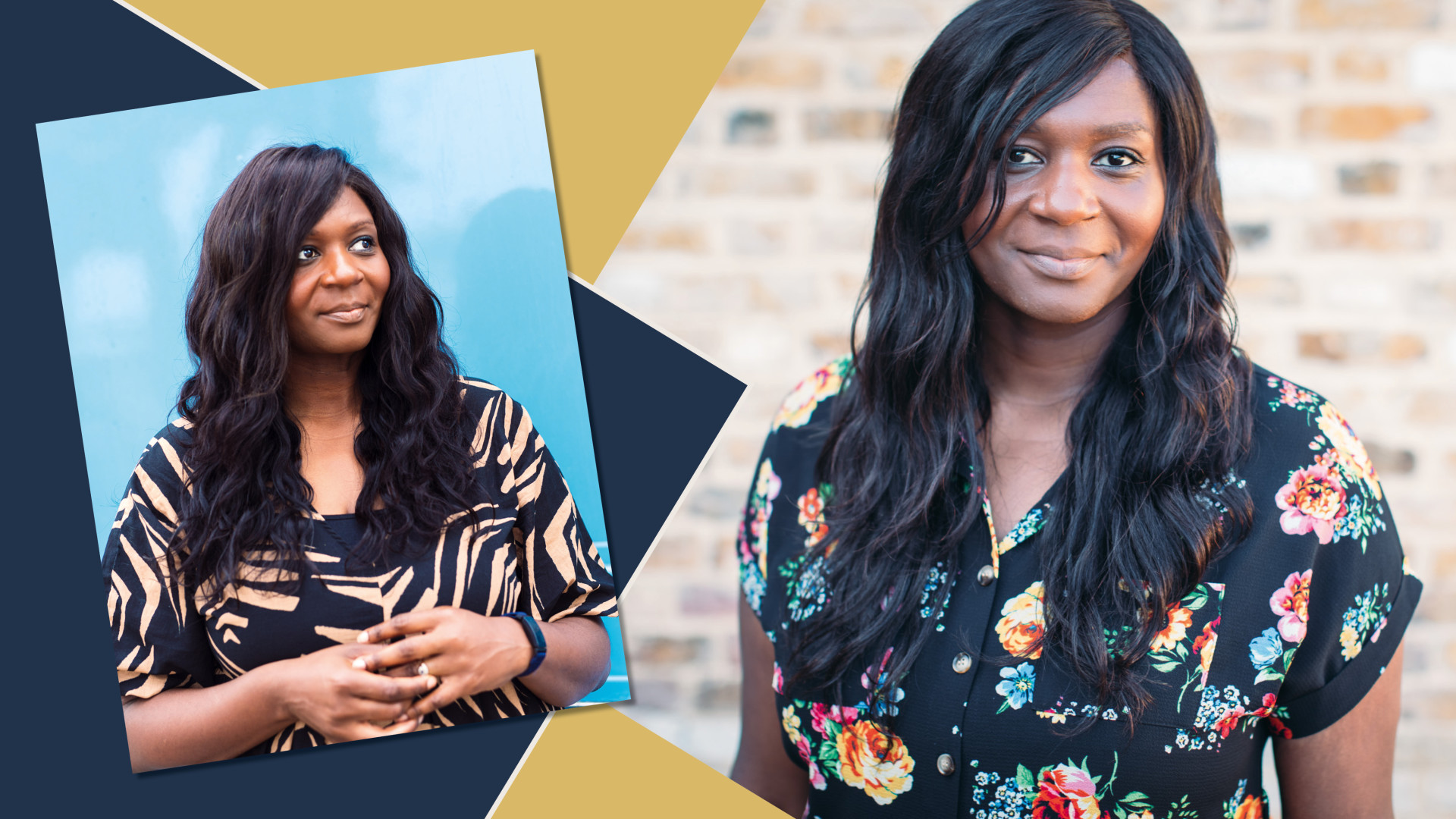
Speaking with Chine McDonald for our March issue feels like scoring a particularly serendipitous hat-trick of points of relevance. The author, who is director of Theos (the religion and society think tank) and a regular contributor to BBC Radio 4’s Thought for the Day, is in Oxford this month for the Literary Festival speaking about her latest book, Unmaking Mary: Shattering the Myth of Perfect Motherhood.
Mother’s Day, International Women’s Day, and the Festival – tick, tick, tick. When I put this to her, she concedes it’s a busy month. I am very aware that Unmaking Mary is Chine’s third book, and one which was written while she was still grappling with a newborn. I’m therefore guessing that Chine’s definition of busy is likely to be more busy than most.
How did she do it? “I found it torture”, she readily admits. “It had to come out of me finding the time, away from children to sit down and literally spend an hour – or whatever it was – getting the thoughts out of my head and onto paper or the screen. So much of motherhood is just unfinished thoughts; constantly interrupted. I was just noting things down then coming back to them and thinking, ‘What do I mean by that?’. So finding the space in those years of early motherhood was really, really difficult.”
That sounds like something of an understatement, and I can only admire the discipline it must have taken, but I also want to know more about the impetus to write, especially at such a pinch point in her personal life. The process couldn’t have been straightforward. “I feel like my books have been progressions of each other. My first, which I wrote in my late 20s, was called Am I Beautiful, and was all about body image among women of faith. After I'd written it I realised that a lot of what I spoke about was actually the particularity of being a Black woman. It led me to think about the place of Black women in society, and what types of people in which types of bodies are seen as the ideal. Predominantly, that has been white men for much of history and that is most vividly portrayed through how God is depicted in European art in particular. God is Not a White Man was my next book, and a couple of years after it had come out, my publishers were asking ‘what's the next book?’.
I was on maternity leave with my second child, and I all I could think about was being a mum. I couldn't think about anything else, because I found it [with both my children] so all-consuming and discombobulating, and I hadn't been prepared for it. That made me ask lots of questions about what it was to be a woman and what it was to be a mother. Big existential questions about how God is thought of as this male father figure whereas I, as a Christian, came to understand God in different way when I became a mother, more in a potentially maternal, nurturing sense.
That's what led me to write the book. I had one child before the pandemic and one after, and there seemed to be an avalanche of women writing about the maternal experience. I devoured all these books and realised that actually I potentially had something different to say, from a theological and sociopolitical lens.
The book starts at in one of those dark hours that many parents will be familiar with; during the period where my baby would wake up in the night and be up for two to three hours and just not go back to sleep. I was in one of those desperate hours where I was just rocking and burping and feeding, and he wasn't going to sleep. I felt I was slowly losing control, becoming increasingly frantic, I remember shouting, ‘just go to sleep’ – I lost it. Obviously, immediately, I felt profound guilt, and a real sense of failure. I was looking around the room. It looked like chaos; I was dishevelled, and I remember feeling, ‘I’m not doing it right, I'm not living up to the idea of what a mother is’. The image I think best represents this ‘ideal mother’ I had in my head is ultimately displayed in how Mary – the most famous mother of all – is depicted.
If you think about Mary you imagine her as serene, beautiful and young. She’s in a passive pose and she is subservient. And interestingly, most of the secular books I read about motherhood mentioned Mary at some point. As someone who is a public theologian, it was a connection point between the secular and the religious.
The book uses the example of Mary to explore the ways in which this perfect motherhood is displayed in our society, and the effect that has – whether or not we realise it – on the mother's experience. I think many mothers go into motherhood thinking it's going to be one way and realise very quickly that it's not. There are all these idealised versions of motherhood, from Mary to supermodel mothers in magazines or tradwives on social media. All of that is part of the same thing: the perfect standard which you need to live up to as a mother and if you don't, you are failing in some way.
I realised as I explored Mary that in the actual biblical stories, she’s not presented as a perfect ideal – a lot of that has come from patriarchal understandings of Christianity in the subsequent centuries. Actually, she a mother who is pregnant out of wedlock, who is a refugee, and is living at one of the most dangerous violent times in history. Her son is crucified and she's there watching. I found those gritty stories of Mary's reality helpful in trying to shatter this myth.”
What I find maybe most impressive when talking with Chine is how she has – in my opinion – come to her own interpretation of faith and legitimised that through her writing. Even as a non-believer, her God sounds alright to me, and I find myself nodding along with much of what she is saying. Plus, she’s warm and engaging and easy to talk to, so I feel able to admit that I have come to see religion as something of a tool used by a patriarchal society. “I totally get it, and this is probably where I see my role, or my place. Calling out faith tradition is what I’ve tried to do, both my last book and this. Saying that the Church and Christian theology have massively contributed to racial injustice, and we have to address this and also recognise that Christian theology has, in many ways perpetuated this myth of perfect motherhood because of the patriarchy, often led by the Church.
I have questions about how the Bible has been and is interpreted in particular ways that might keep some people with power and some without. I don't think the Bible fell down from the sky. I think it is a collection of humans wrestling with God and with each other, and I find that endlessly fascinating.
When I talk about Christianity is, it is the actual story of the Christian narrative; one that talks about all being welcome. No person is better than the other, and no one is perfect. And it talks about grace, which – for me – provides a kind of exhale: I should have grace and mercy for myself, I'm not trying to live up to an ideal.”
And finally, I need to ask: ‘do you ever question your faith? “I question it every day. I was raised in a conservative evangelical Christian home. I'm Nigerian, my great grandfather was an Anglican priest in Nigeria, so Christianity has long been part of my family's heritage, and I've always asked questions about God since I was a child.
I wanted to be a journalist when I was a teenager but ended up doing Theology at Cambridge. I actually wasn't prepared for what it was – from day one, it felt like everything I'd ever known was ripped apart in an academic study of theology: what exactly do these texts mean? What about Big Bang Theory? What about neuroscience? What about all of this stuff? I found that crippling in the first few weeks, and then I came to a kind of a sense of being okay with questions, because questions are interesting, and if I believe in God, God is bigger than my questions."
Chine McDonald is taking part in the Oxford Literary Festival, speaking with Jessica Hamel-Akré about her book in a talk entitled Unmaking Mary: Shattering the Myth of Perfect Motherhood at the Weston Library on Saturday 28 March. You can book tickets from the website at oxfordliteraryfestival.org.
Theos are currently undertaking a research project in partnership with Bible Society. To learn more, visit theosthinktank.co.uk, and for more information on Chine McDonald’s work, visit chinemcdonald.com.