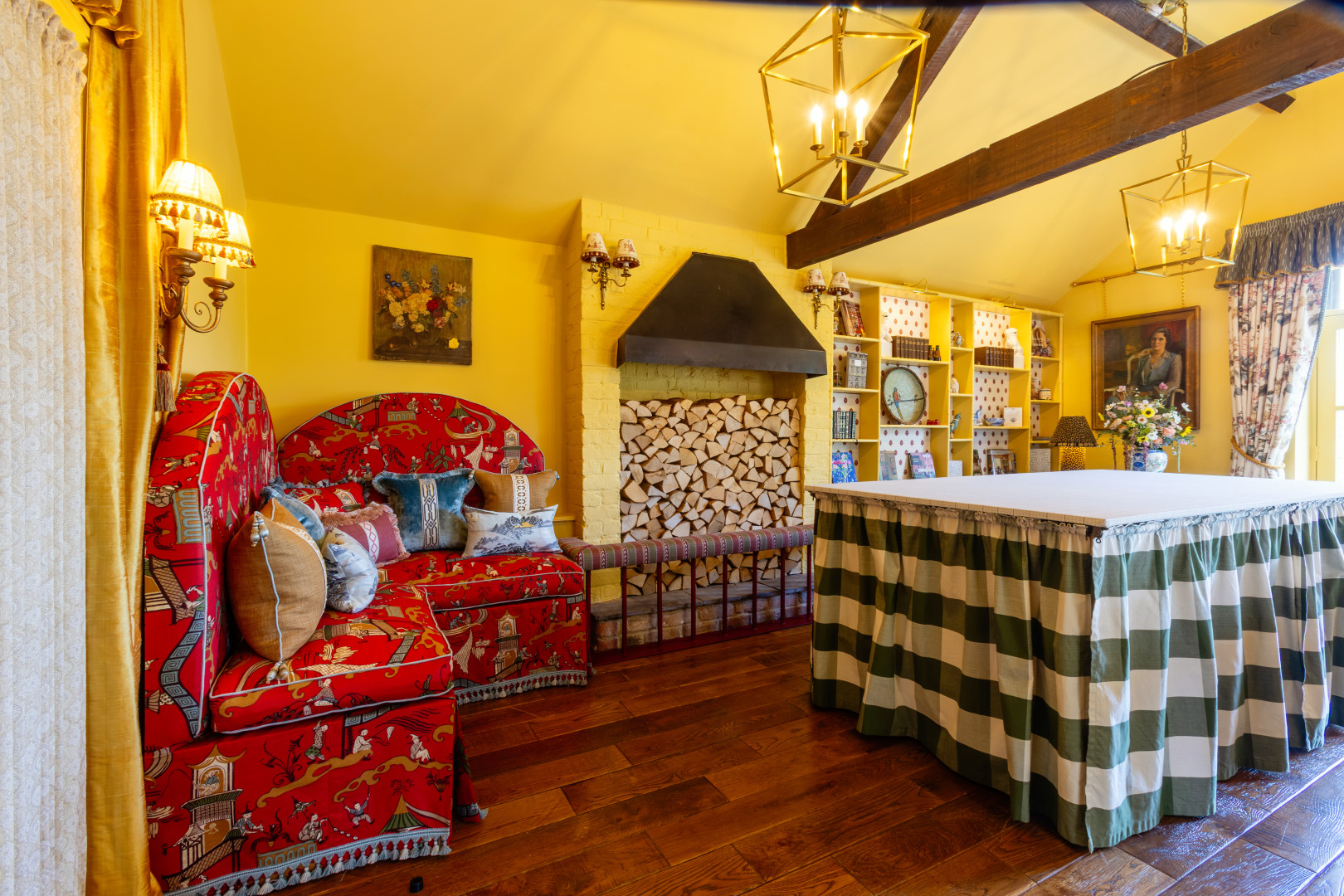




Natalie Evans, author of the Amazon bestseller Happy Home Sale and founder of Little Barn Door is a home staging expert with a passion for design, presentation and buyer psychology. Based in Hampshire, Little Barn Door has grown into an award-winning, multi-regional staging agency supporting clients across England and Wales. They have won multiple industry accolades and are especially popular with first-time sellers, rural and character homeowners, and busy families who need guidance on transforming their property. We wanted to find out more about what home staging involves, and persuade Natalie to share some of her secrets…
Is your background interior design or real estate?
Interestingly, my background is actually neither. Before launching my home staging brand, my career was in Human Resources, specialising in Employment Law. While many assume home staging naturally begins with an interior design background, my experience in humanbehaviour, psychology, and the way people interact with spaces has been invaluable.
Understanding how buyers emotionally connect with a property has allowed me to build a brand focused not simply on creating beautiful interiors, but on influencing buying behaviour.
For me, staging is far more than aesthetics, it’s a strategic marketing tool designed to help homes sell faster and for stronger offers.
How did you get into home staging?
My first experience was entirely personal. Back in 2016, when we were preparing to sell our own home, I knew it needed to stand out. There were several almost identical properties for sale on our terrace, and I wanted ours to be the one buyers remembered.
Instinctively, I began depersonalising the space and resetting it to appeal to the type of buyer we once were ourselves, a young couple without children, looking for a lifestyle as much as a property. I focused on presenting the home in a way that allowed potential buyers to imagine themselves living there.
Within just six hours of going online, the property was viewed and sold. That experience made me realise the huge impact preparation can have on a sale, and I immediately saw a gap in the market. We were familiar with interior designers and aspirational show homes, but there seemed to be very little available for everyday homeowners wanting practical, results-driven support.
By reverse-engineering the process I’d followed myself, I developed a service that genuinely helped people sell faster and more successfully. From there, the business grew organically.
Is it something you train for?
Today, professional training in home staging is incredibly important. Ten years ago, the industry was still relatively new, and many people entered it simply with a passion for interiors. Now, however, the profession has evolved significantly, with many exceptional staging companies offering opportunities to gain hands-on experience alongside formal education. One of the biggest misconceptions is that having ‘an eye for design’ automatically makes someone a home stager. In reality, staging is not about creating a home that suits your personal taste, it’s about strategically presenting a property to maximise buyer appeal.
A strong understanding of spatial planning, buyer psychology, property marketing, and sales is essential. Academic training, combined with practical experience, ensures that you are delivering genuine staging expertise rather than simply offering a styling service.
How important is home staging in selling a house?
Home staging is now an essential part of a property’s marketing strategy. When people think of staging, they often imagine fully furnished show homes, but staging can be as simple as decluttering, rearranging furniture, and refining the presentation of an occupied home.
For lived-in properties, staging helps buyers emotionally connect with the space and envision their own future there. Personal photographs, highly specific room uses, or excessive clutter can unintentionally distract buyers from seeing the home’s full potential for themselves.
For vacant homes, staging becomes even more important. Empty properties can often feel cold, lifeless, and difficult to visualise, which may lead to lower offers. Professionally staged vacant homes, however, feel welcoming and aspirational, allowing buyers to better understand the scale, flow, and lifestyle the property offers.
Ultimately, staging helps maintain perceived value, increases desirability, and can significantly improve both the speed and outcome of a sale.
What does it actually involve – isn’t it simply a case of decluttering?
While the term ‘home staging’ is widely used, the industry itself is incredibly broad. Different professionals specialise in different areas, including Airbnb properties, HMOs, luxury homes, decluttering services, and full-scale show home installations.
Services can range from a simple consultation through to complete furniture installations and styling packages. However, every staging project shares the same goal: creating maximum buyer appeal in order to secure a successful sale. Decluttering alone is not enough without strategic intent. Likewise, simply furnishing a space does not automatically make it market-ready. The difference lies in intentionally designing the property around the target buyer and enhancing the home’s strongest selling features.
Is the idea always to ‘neutralise’ or do different properties lend themselves to different aesthetics?
Every property is different, and successful staging always depends on the home itself, its location, and the likely buyer demographic. Some properties benefit from trend-led styling and bold personality, while others require a much softer, more understated approach that allows the architectural features to take centre stage. A professional home stager understands how to tailor the presentation to suit both the property and the market.
In the early 2000s, the prevailing advice was often to create ultra-neutral, clinical interiors. However, buyers today are increasingly drawn to warmth, character, and a sense of lifestyle. Over-neutralising a property can sometimes make it feel impersonal or uninviting. The key is balance, creating a space that feels aspirational yet still emotionally engaging.
How much should sellers budget for when considering home staging?
Home staging services can vary significantly depending on the level of support required. Consultation services may begin from around £200, while full-scale show home installations can exceed £10,000. For vacant properties requiring full staging, the investment typically equates to approximately 1 - 1.5% of the property’s value.
While staging can feel like a significant upfront cost, it should be viewed as an investment rather than an expense. Recent statistics consistently show that staged homes sell faster and often achieve higher offers than comparable unstaged properties.
When combined with accurate pricing and a proactive estate agent, staging becomes one of the most effective tools available to maximise both buyer interest and sale value.
How does the process work – do you need to make home visits, or can this be done online?
At Little Barn Door, we offer both face to face and remote services to suit our clients’ individual needs. While many clients enjoy meeting in person, others may live overseas or prefer the convenience of a virtual consultation.
Following an initial meeting, whether in person or online, we create a tailored proposal outlining the recommended staging approach alongside a transparent quotation. Clients typically receive this within 24 hours. Once approved, the entire process can move very quickly. In many cases, we can design, install, and professionally photograph a property ready for marketing within seven days, and occasionally within as little as 72 hours.
Above all, our focus is on making the home-selling process feel seamless, supportive, and stress-free. It’s incredibly rewarding to guide clients through the transformation and see the impact staging has on both their property and their confidence in the sales process.

Image: La Boheme Photography
Natalie’s Top Five Staging Hacks
1) Restore every room to its original purpose
Over time, many homes evolve to suit changing family needs: dining rooms become playrooms, spare bedrooms become storage spaces. Returning each room to its intended purpose improves flow and helps buyers better understand the layout.
2) Add a mirror in the hallway
Mirrors not only create a greater sense of light and space, but they also help buyers subconsciously visualise themselves entering and leaving the home, creating a stronger emotional connection.
3) Keep fragrances subtle and fresh
A clean home is essential, but overpowering cleaning products can feel harsh and distracting. Opt for lighter, more natural scents to create a welcoming atmosphere.
4) Always make the bed
It sounds simple, but first impressions matter enormously. Studies show buyers spend only seconds assessing bedrooms, so a beautifully made bed instantly creates a sense of calm and order.
5) Use rugs to define open-plan spaces
Open-plan living remains highly desirable, but large spaces can sometimes feel undefined. Rugs help create visual zones, making the space feel warmer, more functional, and easier to navigate.
Find out more at littlebarndoor.uk