



Last year marked the 80th anniversary of the Second World War’s Victory in Europe, with big celebrations, services and events across Britain and Europe. It’s hard to imagine the celebrations ever being of quite that magnitude ever again, especially as the number of surviving WWII veterans dwindles to a mere handful. Soon, we won’t be able to mark this day with people who actually saw it with their own eyes at all, so this year I’ve found myself thinking about it more personally.
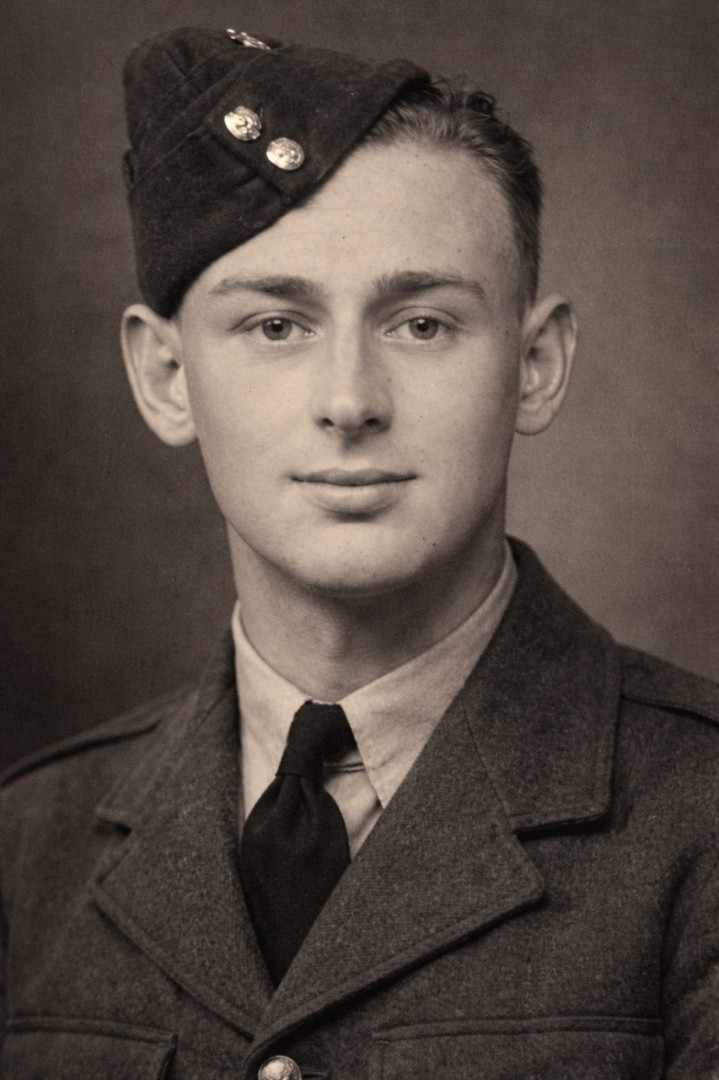
I spent a great deal of time with my maternal grandparents. My mum was very young and single when she had me, so we lived with them and they more or less raised me in my early childhood. They often talked – to each other and to me – about their time serving in the RAF during the Second World War. It was the historical focal point everything in their life seemed to pivot around. They were just 17 when war broke out, and 18 when they were conscripted.
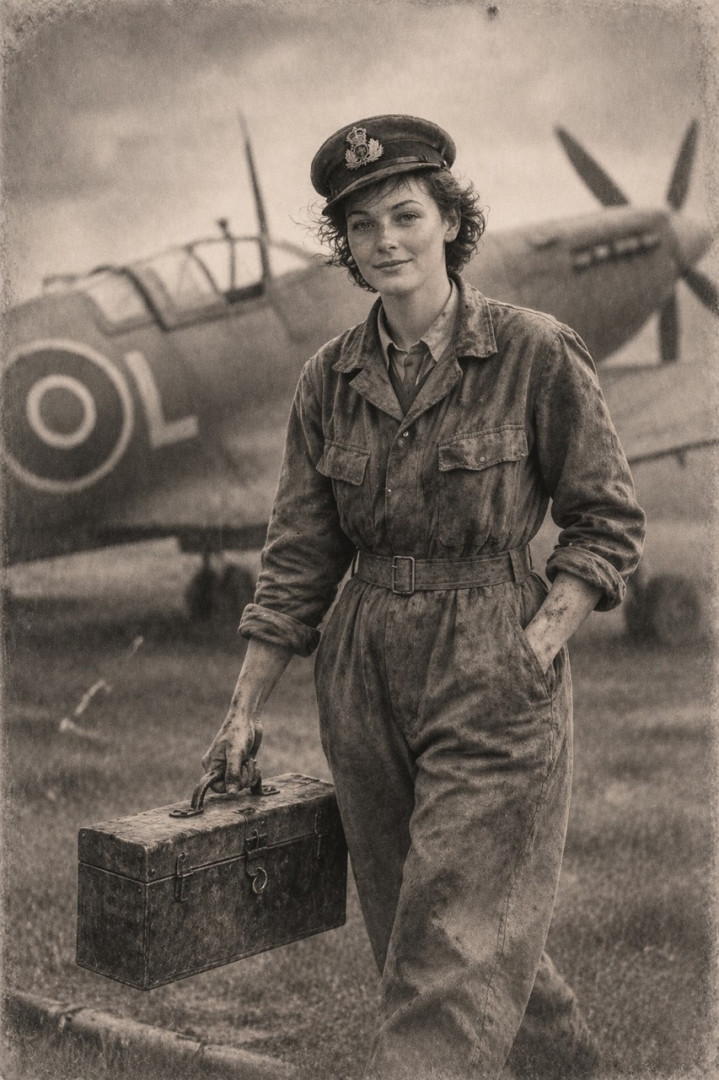
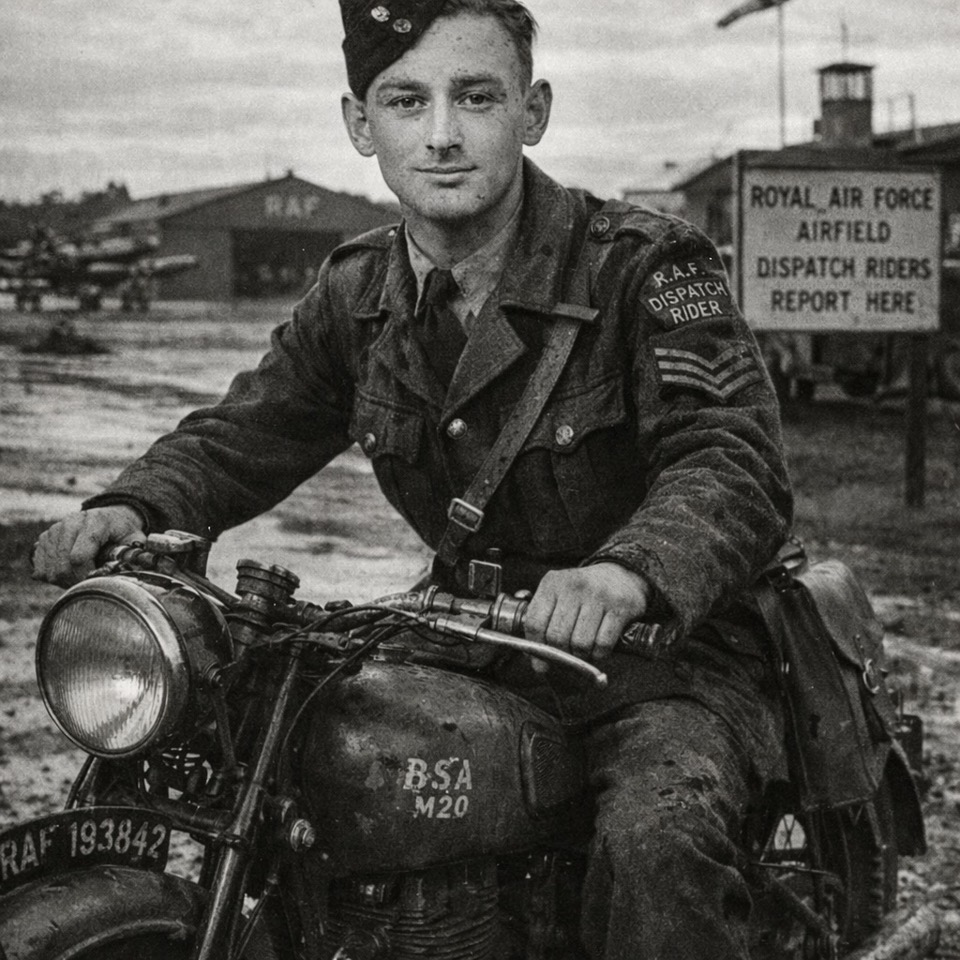
My grandfather was a proper motorcycle nut and spent most of the war as a dispatch rider. My grandmother, who turned out to have a knack for circuitry, trained as a fighter plane electrical mechanic. She had her own hefty toolkit and wore a regulation blue boiler suit, troubleshooting and fixing faulty wiring before declaring aircraft fit for Bomber Command missions. She worked mainly on Spitfires and Hurricanes. The pilots would hang about smoking outside the mess hall, waiting for her to give the all clear before they could set off on their missions. She’d march towards them across the tarmac like a British Joan Crawford, with her newly bobbed hair and jaunty walk. “Fit to fly”, she’d tell them confidently. “Chocks away, lads!”
She could have had her pick of the pilots, that’s for sure. But maybe her insufferable, pompous brother, who also trained as a pilot, put her off. It was my grandfather, pulling up at Birmingham airfield on his BSA M20 to deliver despatches, who stole her heart with his shock of blonde hair and John Wayne swagger. She was a middle-class secretarial college girl. He, a rabblerouser from Hackney. Her family were somewhat dismayed. He never stopped thanking his luck.
Whilst neither of them was sent into the thick of the fighting, my grandfather’s start to the war was pretty grim. Whilst waiting to be called up, he volunteered for Civil Defence and ended up clearing rubble from bomb sites across the East End of London. He said it was bad enough picking through what was left of people’s homes and finding their remains when they were fresh – arms and legs blown clean off, heads… babies, even. But, he’d say with a shudder, it was like hell on earth after a few days, when the smell made it almost impossible to do the job without gagging. When he finally got his RAF posting as a dispatch rider, it was a huge relief.
A mischievous type, he was forever on jankers: a kind of punishment for minor infractions of military discipline. He used to laugh about a long stint of potato peeling after being late back to barracks following a date with my grandmother. He said it was worth it a thousand times over. My grandmother, on the other hand, was very proud to say she’d never once been on jankers.
When my mum later married my stepfather, I gained another grandfather, Jim, also an RAF veteran. His war had been entirely different: he’d engaged in air combat as a pilot many times both on bombing raids and in actual dogfights. He was whippet thin, chain-smoked untipped Senior Service, and spoke in a raspy voice he could barely raise above a whisper. He always insisted it was fighting in the Battle of Britain that had cost him his voice, not the cigarettes. It must have been lonely and terrifying flying out in those aircraft into battle, for WWII Spitfire pilots flew solo with only their wits to save them. My step-grandmother would quietly say he often shrieked in his sleep, murmuring about missions. At family gatherings, he’d slip off into the snug with a large whisky and yet another book on bomber aircraft. We knew better than to disturb him.
I suppose both my grandfathers carried a kind of combat trauma, but they didn’t talk about it as our generations might. They were stoical. They’d grown up among women who had lost their men in the trenches of the Great War, which they considered far worse than anything they themselves had seen.
So, VE Day was a moment of huge relief for both sets of my grandparents. Even though it had long been anticipated, the declaration of victory over Nazi Germany was met with joy, but also sorrow for everything and all the lives that had been lost. Many celebrated in great crowds, singing Vera Lynn songs through the streets but my grandfather remembered hearing Churchill’s speech not out in the celebrations, but over the wireless, confined to barracks on jankers once again. He was sitting with his friend and bunkmate, a Jewish tailor who’d taught him to sew and had lost most of his family in a pogrom back in Ukraine. The tailor had wept when Churchill declared that ‘this victory is yours’, and spoke of the sacrifices made across Europe, even as he warned of the war still to be fought in the East.
As a child, I was completely enthralled by these stories. As an adult, I realise what a rare gift they were. This kind of history, passed down in conversation, in bits and pieces, in voices of people who are now gone. But although my grandparents have been dead these past twenty years, I can still hear them.
So, as we mark another VE Day in uncertain and complicated times, it feels important to pause and think about what that day must have meant to all those young men and women whose lives were shaped by war and who just got on with it.
Sometimes I picture my grandmother from old faded photographs that I have, calling through time as she crossed the tarmac in her blue boiler suit, toolbox in hand, a bit windswept, but no fuss made. “Fit to fly,” I can hear her say. “Chocks away lads”.
If you want to remember VE Day this year, there may not be so many official events and celebrations as in 2025, but you can still do it in your own way through your family’s photos if you are lucky enough to have some. You could visit the Soldiers of Oxfordshire Museum which has a number of events in its May calendar. Moreover, Oxford University’s digital archives has plenty of resources to browse through especially Their Finest Hour which includes the Watson Collection of letters: theirfinesthour.english.ox.ac.uk/ Or perhaps settle back like Grandfather Jim with a good book on bomber aircraft and a sneaky scotch.