


With the start of the new year, we can look forward to flowering shrubs bursting forth into flower in our gardens over coming weeks. Amongst these are Camellia japonica which grow best in acid soil, with early flowering varieties blooming as early as November continuing into February. However, due to the climate in Oxfordshire, many growers opt for the hardier mid or late flowering varieties, where buds and flowers are less likely to be damaged by late frosts.
These beautiful shrubs originate from East Asia and whilst the name refers to their Japanese origin, they are also native to parts of Korea and China. Cultivars of Camellia japonica were brought to the West in the early 1700s by European traders. Due to an extensive programme of breeding, there are thousands of cultivars available to grow in gardens today.
When it comes to growing Camellias, you must bear in mind that these woodland shrubs require the correct soil, sufficient water (preferably rainwater from a butt), and they are prone to a range of diseases and damage sustained by invertebrates.
SOIL TYPE
In order to successfully grow Camellia japonica, a key requirement is that they are planted in soil with a pH between 5.5 and 7 (acidic). If your soil is neutral, alkaline or chalky, you can still grow Camellias in ericaceous soil in pots, so don’t despair.
Soil must be kept moist, and they are best watered with rainwater. Pot grown plants require more frequent watering than garden-planted shrubs.
LOCATION
The next consideration is to find the perfect location in your garden; they require a semi-shaded sheltered westerly or northerly aspect, as strong winds cause leaf and flower damage: a west-facing position is only exposed to the sun later in the day, allowing the frost on the flowers to thaw slowly and naturally. Avoid an east-facing position to prevent the risk of frost damaging the buds. If the buds or flowers are frozen and the early morning sun thaws them too quickly, the flowers will turn brown and drop off. South-facing sun can also be too strong during the height of the summer.
VARIETIES
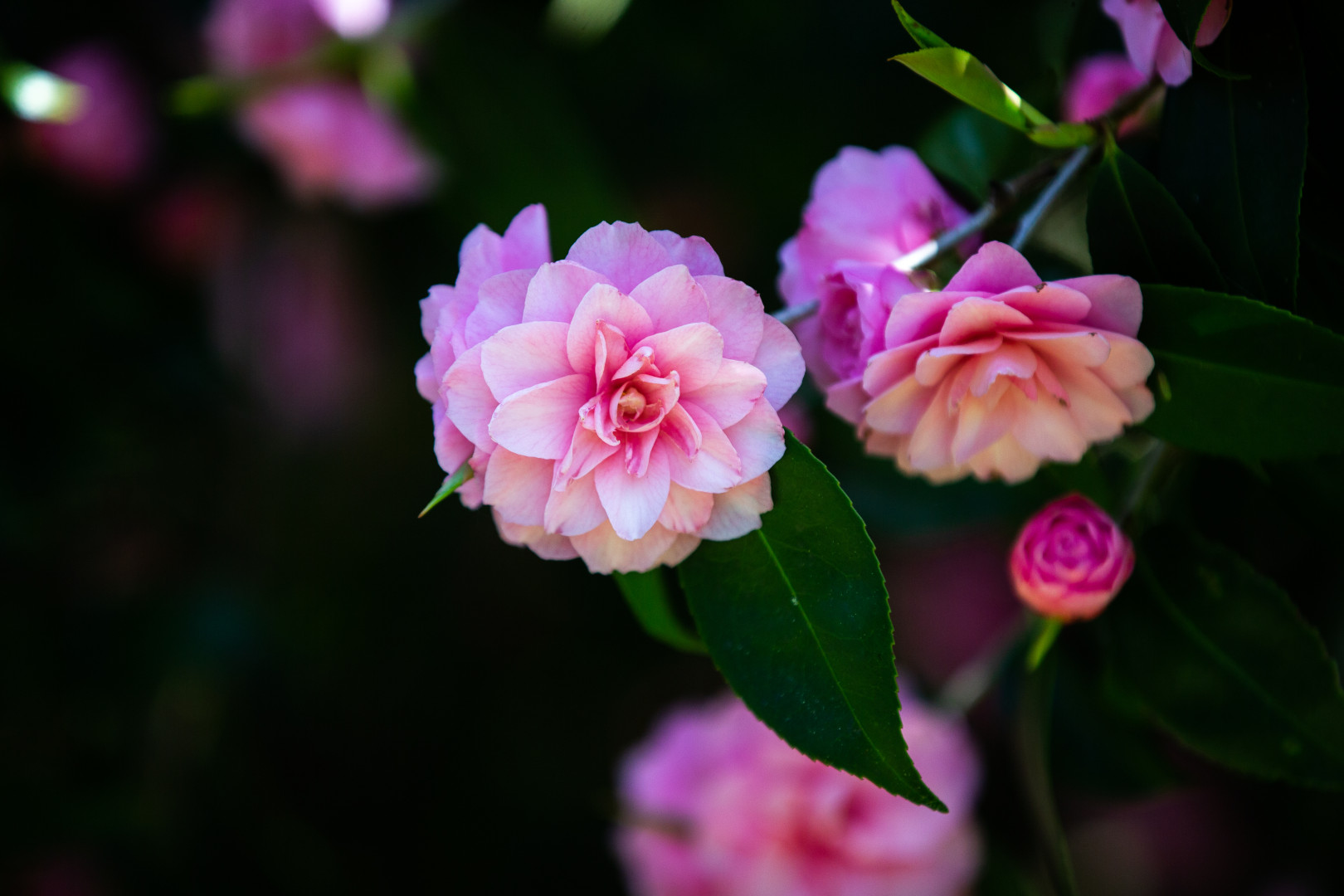
These evergreen shrubs offer single or double bloom varieties ranging in colour from white, such as Alba Simplex with single blooms and a golden centre, to Brushfields Yellow which has pure white double flowers and creamy ruffled centres. Pink varieties include soft, blush pink to rich rose-pink and cerise-red. If you opt for bold red blooms these vary from deep solid red to carmine-red. You will also find multi-coloured cultivars combining whites and pinks or white and red combinations. You can even find plants with red, pink and white flowers on the same plant.
FEEDING
It is important to feed your plants particularly if they are grown in pots. Camellias require nutrients from ericaceous or rhododendron fertilisers, which should include the main nutrients nitrogen, phosphorus and potassium, along with traces of iron and magnesium. Insufficient iron in the soil will lead to leaves turning yellow. Feed in the spring and again in early summer but not later than the end of July to prevent bud drop.
REPOTTING
Pot grown Camellias require repotting when the plant become root-bound which can be every two or three years. You will see when this happens as the roots grow out of the drainage holes. Select a pot which is only a few centimetres bigger with fresh, ericaceous soil. Wait until the flowers have faded in late spring but before the summer buds start forming.
Phytophthora root rot is a fungal disease which affects Camellias when they are planted in poorly drained soil or are waterlogged in pots. When affected leaves droop or become yellow, it can indicate overall decline in health or sudden death. To avoid this disease affecting your plant, ensure it is in well-drained soil or use a free-draining potting mix for containers. Feed with adequate fertiliser and prune at the appropriate time of the year to promote healthy growth.
If your Camellia becomes infected, lift the plant, wash the roots and carefully prune out infected brown or blackened roots sterilising your tools as you do so. Replant in fresh well-draining soil, applying a mulch of horticultural grit around the plant’s base to keep the root collar dry. Be aware that in the UK, Phytophthora ramorum is a notifiable disease, and outbreaks should be reported to the Animal and Plant Health Agency (APHA).
WATCH OUT FOR:
Extreme Cold
Camellias, especially those grown in pots, need protection in winter. Their pots should be well-wrapped in bubble wrap to help prevent the roots freezing causing death.
Vine weevil attack
Many plants are affected by these flightless, nocturnal beetles. The adults will chew notches in leaves whilst their creamy-white larvae live in soil, feeding on roots. If you spot signs of vine weevil damage remove adult beetles, place sticky barriers around pots and remove and destroy any larvae. Wildlife will eat vine weevils and their grubs.
Leaf Drop
If Camellias start dropping their leaves, there are a number of possible causes. Drought, strong winds and weather conditions from winter frosts or high summer temperatures can affect foliage. The plant can also become infected with a leaf blight fungi causing brown, scorched patches on leaves and premature leaf drop. Tiny black spots appear in the lesions, worsening in wet, humid conditions. Remove and destroy infected leaves and branches cleaning any tools you use; improve air circulation, avoid over watering and improve drainage.
Sooty mould also results in a thick black growth on the leaf surface. This is caused by cushion scale and if affected, you will see small, light brown scales with elongated white egg sac. To prevent an occurrence, apply a suitable spray during late winter or early spring before leaves unfurl or late spring to target young crawlers. If infested more than one application may be required.
Bud Drop and Brown Flowers
The flower buds start developing in late summer. If the plant endures adverse condition such as dry soil in late summer or early spring, or has excessive or late feeding, the buds may drop. Low winter temperatures can also cause bud drop so wrap plants with horticultural fleece over winter.
If flowers open but go brown, this is due to frost damage and the fact it is in an east facing location.
Flowers can also turn brown and fall prematurely when they are affected by a fungal disease. Camellia flower blight causes brown flecks on the petals spreading to form a brown blotch until the flower is dead. If affected, you need to promptly remove and destroy all blighted flowers (not on a compost heap) as you need to prevent the fungus overwintering in the soil. For severe infections, use specific fungicide sprays as advised by your garden centre. You may also need to thin out crowded branches on your plant to improve air circulation. If heavily affected remove the shrub and destroy but do not replant another camellia in the same place.