
A living room can have a good sofa, balanced lighting and carefully chosen colours, yet still feel slightly disconnected. One of the first things to check is the rug, because many living room rug mistakes come from how it relates to the furniture rather than the rug design itself. A rug that is too small, poorly positioned, or ill-suited to how the room is used can break up the seating area instead of bringing it together.
The good news is that most rug placement mistakes do not require a complete room makeover. Before changing the sofa or buying more furniture, check the rug size, position, shape, texture and colour first. A small adjustment can sometimes make the furniture feel far more connected.
Living Room Rug Mistakes: A Quick Check
Before replacing a rug, look at the whole seating area and ask:
- Does the rug connect the sofa and main chairs?
- Does its size suit the furniture group?
- Is it positioned around the seating rather than simply centred in the room?
- Can people walk through space without catching an edge?
- Does the texture suit how the room is used?
- Do the rug colours work with the sofa, flooring and other large surfaces?
If several answers are no, one of the following mistakes may be affecting your living room's balance.
1. Choosing a Rug That Is Too Small
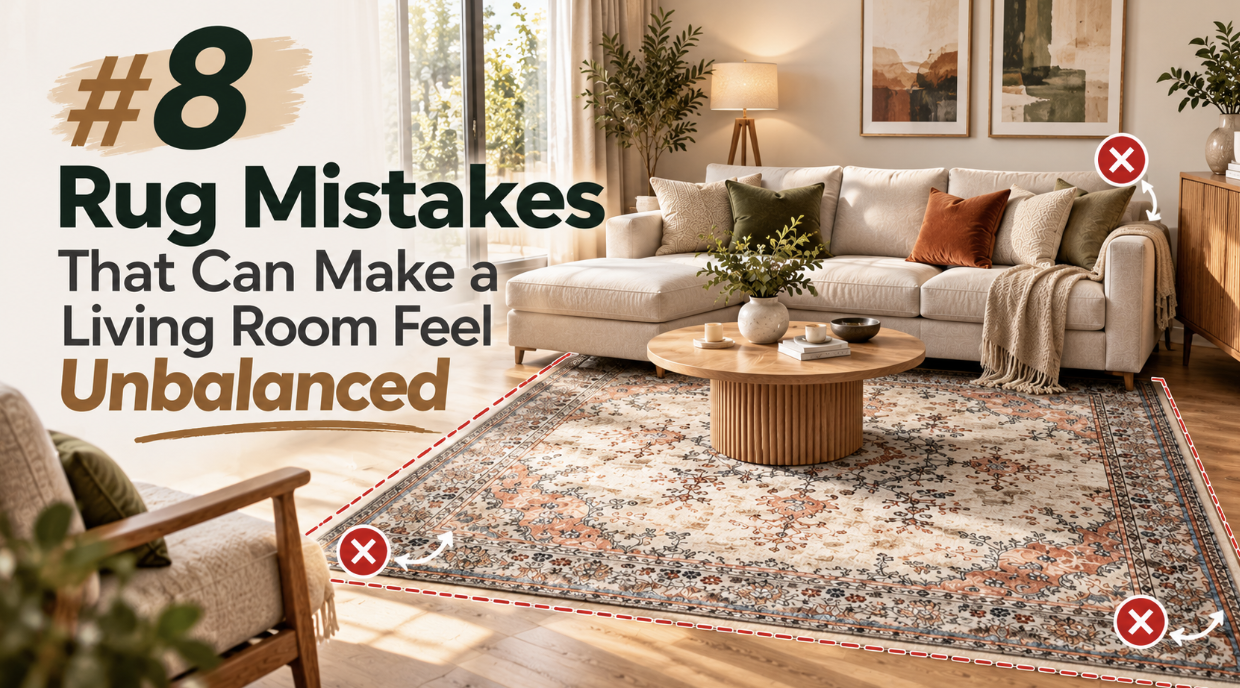
A rug that is too small for a living room can make well-placed furniture look like it is floating on the floor. This often happens when the rug sits only beneath the coffee table, leaving a noticeable gap between it and the sofa or chairs. Instead of connecting the furniture, the rug becomes another separate shape in the middle of the room.
Choose a rug that fits the full seating arrangement, not just the empty floor space. In many living rooms, letting the rug extend under at least the front of the sofa and main chairs can help the furniture read as one group. Larger spaces may suit a rug that carries more of the seating area.
The aim is not simply to choose the biggest rug that fits. The rug should feel proportionate to the sofa, armchairs and coffee table while still leaving enough visible flooring around the seating zone. Scale matters more than size alone.
Before ordering, mark the proposed rug dimensions on the floor with masking tape. Look at the outline from the doorway, sofa and main walking route to see whether it feels substantial enough. This simple test is often more useful than judging size from a product image.
2. Centring the Rug to the Room Instead of the Seating Area
The physical centre of a room is not always the visual centre of the living space. A sofa may sit against one wall, an armchair may face a fireplace, or a doorway may shift the seating area away from the middle of the floor. Centring the rug perfectly between four walls can make the furniture feel slightly off-centre.
Use the seating area as the main reference point instead. Think of the sofa, armchairs, coffee table and rug as one visual group, with the rug helping to frame that arrangement. It can still look balanced even when the whole seating zone sits slightly to one side of the room.
This matters even more in an open-plan interior. A well-positioned rug can show where the living area begins without adding a screen, divider or extra furniture. The rug should follow the way the room is used rather than the architectural centre alone.
3. Leaving the Sofa and Chairs Floating Around the Rug
A rug can be large enough but still look wrong if the furniture has no clear relationship with it. This is a common rug-placement problem, especially when the sofa touches the rug but nearby chairs sit completely off it. The result can make the seating feel divided into separate pieces.
Not every furniture leg needs to sit on the rug. What matters more is consistency, so if the front part of the sofa sits on the rug, consider whether the main chairs can follow a similar visual line. In a larger living room, the whole seating group may sit on the rug if there is still enough space between the furniture.
The rug should help the eye understand that the sofa, chairs and coffee table belong together. If you are unsure how different dimensions work with furniture, this guide to choosing the right rug size provides a practical starting point. Measure the actual seating area before deciding.
4. Ignoring the Shape and Proportions of the Seating Area
Rug size matters, but shape and proportion are just as important. A long rectangular seating area does not always need the same rug proportions as a compact arrangement with two chairs facing a sofa. Let the furniture footprint guide the decision.
A wide sofa with a long coffee table may suit a rectangular rug, while an L-shaped sofa creates a different outline that may need more coverage in two directions. Two facing sofas or several armchairs can create a wider seating zone. These relationships help you choose a rug that supports the arrangement rather than competing with it.
Before deciding, ask:
- Is the seating area long or compact?
- Does an L-shaped sofa dominate the layout?
- Are two sofas facing one another?
- Are armchairs widening the seating zone?
- Is the coffee table round, square or rectangular?
The rug doesn't need to match every furniture shape exactly. It just needs to work with the overall furniture layout and help the main seating feel connected. A round rug, for example, can soften a room full of straight lines, but a very small one may look isolated within a large rectangular seating arrangement.
5. Leaving Too Much or Too Little Floor Showing
Visible flooring around a rug helps frame the seating area. Too much bare floor around a small rug can make the furniture feel fragmented, while a rug pushed close to every wall can lose its role as a defined area. The right balance depends on the room's proportions.
No single border measurement works in every home. The amount of exposed wood, laminate, LVT or other flooring should relate to the room size, furniture scale and shape of the seating zone. A larger living room can usually carry more visible floor around the rug than a compact space.
Compare the overall balance instead of following one fixed rule. If you are choosing between two sizes, mark both options on the floor and look at them from different parts of the room. One may leave the rug looking lost, while the other may make the space feel crowded.
6. Choosing the Wrong Texture for How the Room Is Used
A rug is not only a colour and pattern choice. Its pile and texture affect how the floor looks, how the room feels underfoot and how practical the rug is for everyday use. A deeper pile can add softness and visual weight, while a flatter surface may suit busier areas.
Think about how the living room is actually used before choosing a texture. Consider whether children regularly sit on the floor, whether chairs move often, how much foot traffic the room receives and how much maintenance you are comfortable with. These practical details matter as much as appearance.
If you prefer a deeper and softer finish in a relaxed seating area, fluffy shaggy rugs are one option worth comparing with flatter designs. In a compact or heavily used room, however, a lower pile may feel easier to live with. The right texture depends on the furniture, room size and daily routine.
Texture also affects visual weight. A thick rug can help ground furniture in a larger open room, but it may make a small space with substantial furniture feel fuller. The best choice suits both the look and use of the room.
7. Ignoring Walkways, Doors and Everyday Movement
A living room should work when people are moving through it, not only when everything is still. A rug can look well positioned from the sofa but become awkward if one edge sits directly across a main walking route. Everyday movement should therefore shape the layout decision.
Look at how people naturally move from the doorway to the seating area and between adjoining rooms. Check whether a door catches the rug, a chair repeatedly moves along one edge, or people regularly step on the same corner. These small details can affect how settled and practical the room feels.
Where possible, keep the main seating area clearly defined while leaving natural pathways easy to use. A rug should support movement around the furniture rather than interrupt it. This is especially important in family living rooms or spaces that connect to other rooms.
Maintenance matters here too. A rug on a busy walkway may need different care than one in a quiet sitting room, so always check the product instructions. Practical placement often helps the rug look better for longer.
8. Choosing Colour and Pattern Without Looking at the Whole Room
A rug can look attractive on its own and still feel wrong once placed beside the sofa, flooring, and curtains. Consider colour as part of the whole living room, not a separate decision. Start with the largest existing surfaces before choosing the rug palette.
Look at the sofa, walls, flooring and curtains, then decide whether the rug needs to blend with those colours or add contrast. A grey sofa, for example, can work with cream, beige, rust, ochre, blue or deeper tones depending on the look you want. A neutral sofa may leave more room for a stronger pattern.
Warm and cool tones matter as well. A room dominated by cool greys can sometimes feel more balanced with warmer shades at floor level, while a space with warm wood and several earthy colours may need a quieter neutral rug. The goal isn't perfect matching, but a balanced relationship between the main colours.
Pattern should follow the same principle. If curtains, cushions and artwork already contain several strong designs, a simpler rug can give the eye somewhere to rest. If the room is mostly plain, the rug can carry more pattern and become a focal point.
What Should You Fix First?
If several of these mistakes apply to your living room, do not try to change everything at once. Start with the furniture layout, then explore the RugsPile store for rug styles that suit your space's size, shape, and feel. Once the size and placement are right, you can move on to texture, colour and pattern.
Use this order:
- Size – does the rug suit the furniture group?
- Placement – does it connect the sofa and chairs?
- Shape – does it suit the seating footprint?
- Traffic flow – can people move naturally around it?
- Texture – does it suit everyday use?
- Colour and pattern – does it support the wider room scheme?
Size and placement should usually come first because they affect the seating area's basic structure. A perfectly chosen colour cannot fully correct a rug that looks lost between the furniture. Once the proportions feel right, the decorative choices become much easier.
A Simple Living Room Rug Test
Stand at the main entrance to the living room and look at the whole arrangement, not just the rug. Check whether the sofa, armchairs and coffee table appear to belong to the same seating group. Then notice whether the rug feels centred on that group rather than simply centred in the room.
Walk through the space and pay attention to the main pathways. Look at how much flooring remains visible around the rug and whether any edge interferes with a doorway, chair or regular walking route. This helps reveal practical problems that may not be obvious when you are sitting down.
Finally, consider texture and colour. The rug should support the furniture and wider room scheme rather than look like a separate decision placed in the middle of the floor. If something feels wrong, try adjusting the existing rug before replacing it.
Moving the rug slightly further beneath the sofa, turning it in another direction or repositioning one armchair can sometimes create a much better balance. Small changes are worth testing before you buy something new. The goal is to improve how the rug relates to the room.
Creating a Living Room That Feels Connected
A balanced living room rarely comes from finding one perfect piece of furniture. It comes from creating a clear relationship between the sofa, chairs, coffee table, flooring and rug. Each element should support the wider layout rather than compete for attention.
Start with rug size and placement, then look at shape, traffic flow and texture before making the final colour choice. Measure the furniture as well as the floor, and think about how people actually move through the space. These decisions usually affect balance more than pattern alone.
When size, placement, texture and colour work together, separate pieces of furniture begin to feel like one clear seating area. For more rug sizing advice, interior ideas and styles for different rooms.