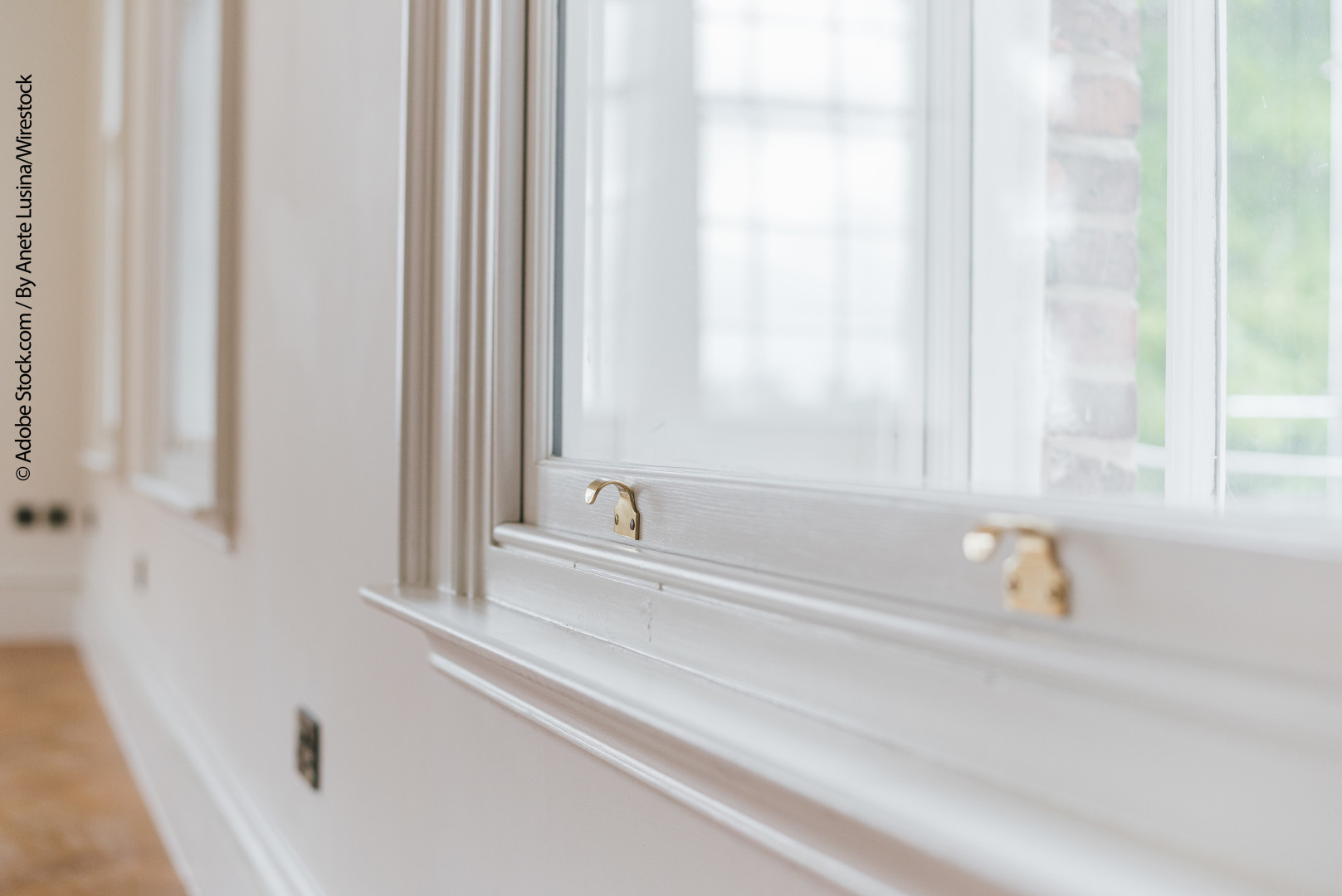

Few things are as charming as a period sash window, and few things are as annoying as the cold air that slips past one on a January evening. If you live in a Georgian, Victorian or Edwardian home, you have probably felt it: a chill around the meeting rail, a rattle when the wind picks up, and a heating bill that seems to climb every year. The good news is that draughts are rarely a sign that the window has failed. In most cases the timber is sound and the problem is simply a missing seal, which is exactly what sash window draught-proofing is designed to fix.
Why sash windows let in draughts
A sliding sash has to move, so it is built with small gaps around it. Over a century or more, those gaps grow. Timber shrinks and swells with the seasons, beads get knocked loose when windows are painted, and the sashes wear against the frame each time they are opened. A typical period sash can leak through a gap of 1.5 to 3 mm around its edges. Spread across every window in a house, that adds up to a surprising amount of open space letting warm air out and cold air in.
The main leak paths are usually the same:
- the meeting rails, where the top and bottom sashes overlap in the middle
- the gap between the sash and the parting bead or staff bead at the sides
- the bottom rail, where the lower sash sits on the cill
- the top of the upper sash, where it meets the head of the frame
Rattling is a related problem. If a sash is loose in its runners, wind pressure pushes it back and forth. Sealing the gaps usually cures the noise as well.
Quick fixes you can try yourself
Some temporary measures help in a cold snap, although each has limits.
Adjusting the fastener. A worn or badly set fitch fastener may not pull the meeting rails together. Moving the keeper slightly can close up a gap at the centre.
Thick curtains and shutters. Lined curtains and working internal shutters make a real difference at night and do no harm to the window.
Removable sealant strips. Clear, peel-off sealants can be run along the gaps of a window you do not open in winter. They are cheap but must come off in spring, and they stop the sash from sliding while they are in place.
Self-adhesive foam strips. These are the most common DIY choice and also the one most likely to disappoint. Foam compresses, tears and peels within a season or two, and fitted in the wrong place it can make a sash stick or jam.
The thing to avoid is anything that fixes the window shut permanently, such as screws, filler or paint across the joints. A sash that cannot be opened is a problem for ventilation and, in some rooms, for fire escape.
The lasting solution: brush-pile seals
The approach favoured for period windows is a discreet brush-pile seal fitted into the sash itself. A narrow groove is routed into the meeting rail, the parting bead and the edges of the sash, and a strip of pile with a small fin is pressed into it. When the window is closed, the brush compresses against the bead and blocks the airflow. When it is lifted, the brush releases and the sash slides as it always did.
Because the seal sits inside the timber, it is almost invisible once the window is back in place. Nothing changes from the street, which matters a great deal for listed buildings and homes in conservation areas. Historic England's guidance on draught-proofing windows and doors supports this kind of sympathetic, reversible upgrade as a sensible first step for older buildings.
Most of the work happens with the sashes taken out and laid on a bench, which makes it a good moment for other maintenance. Worn sash cords can be replaced, pulleys freed up, loose joints tightened and small areas of rot repaired. Doing all of this in one visit means the window comes back draught-free and running smoothly.
How much difference does it make?
Draught-proofing is one of the cheapest ways to cut heat loss in any home. The Energy Saving Trust lists it among the most cost-effective energy-saving measures, and in older houses with timber windows the gain tends to be greater because there is more leakage to start with. Rooms also feel noticeably more comfortable, as the cold currents along the floor and around the window seat disappear. Many owners find the reduction in street noise and rattling just as welcome as the warmth.
Draught-proofing versus replacement
It is tempting to assume that draughty windows need replacing. In reality, well-maintained original sashes can last for generations, and their timber is often denser and more durable than anything available today. Replacing them is expensive, may require consent, and removes a key part of the character of the house. Sealing and servicing the windows you already have keeps the original joinery, costs far less, and solves the actual problem.
A warmer winter without losing character
If your sash windows rattle, whistle or leave a cold patch in the room, the fix is usually simpler than you might fear. Start with a careful look at where the air is getting in, use temporary measures if you need them, and then plan for a proper brush-pile seal. With the gaps closed and the sashes serviced, your period windows can keep the heat in and still slide as smoothly as the day they were made.