


The first thing I should probably tell you is that. Sophie Tuke is a pen name. The reasons are dull and grown-up, mostly to do with a day job that does not mix well with writing comic thrillers about Ukrainian assassins, oblivious English aristocrats and the slow torture of a Cotswolds receiving line. The name itself I chose because I like it; it has the right number of syllables, looks pleasing on a cover and makes me sound like the kind of woman who knows her way around a marquee (which I most certainly do). It is not, as some have suggested, to hide from friends who can see themselves in my characters. I have already had four of them suggest, with varying levels of confidence, that they are the original of James, my hero. I tried to let each of them down gently by explaining that they were neither handsome, rich nor kind enough to qualify, which has punctured the odd ego.
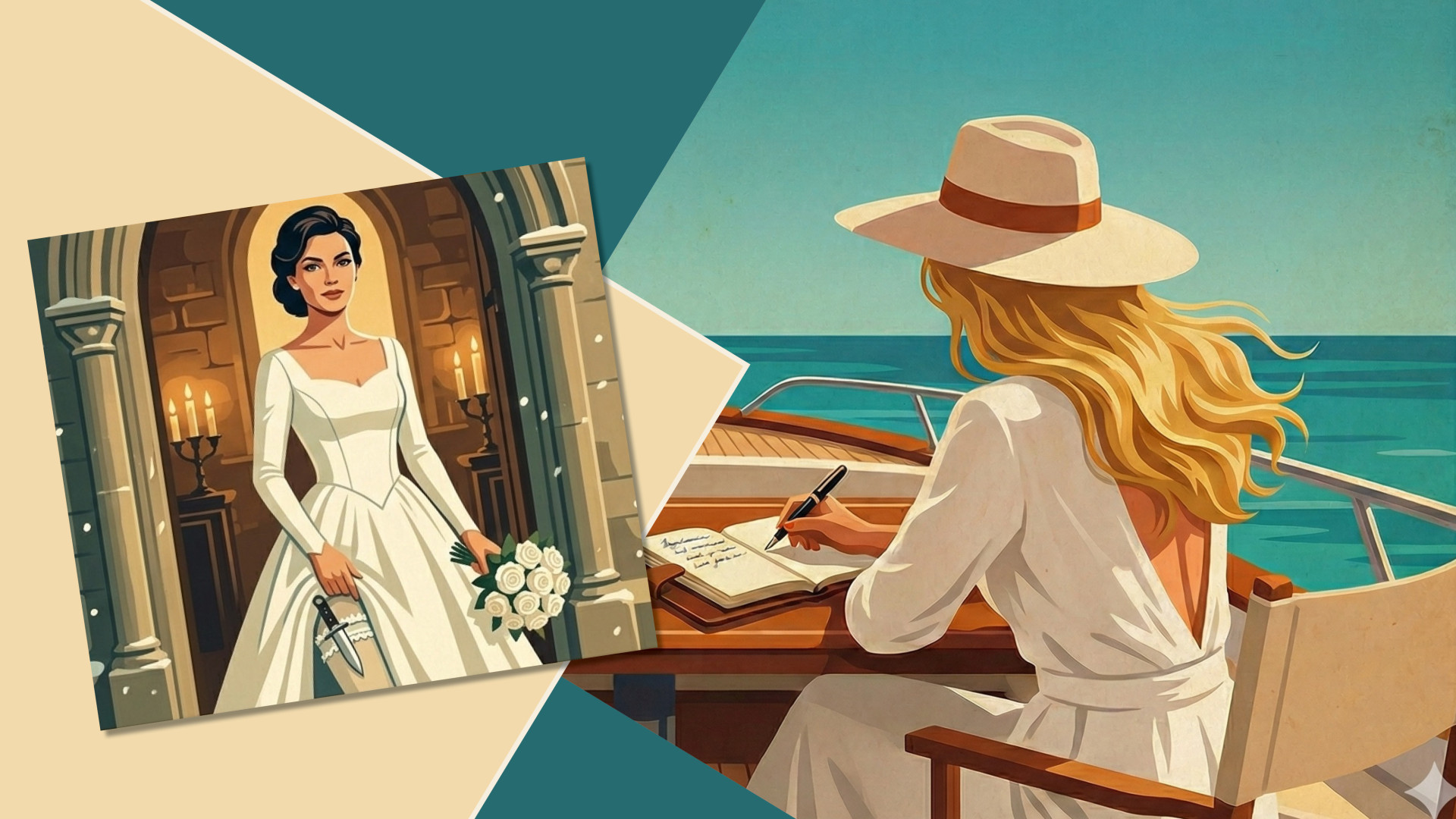
I do, however, live near Wantage and grew up in the Cotswolds, both of which feature heavily in the book. I walk across fields and along bridleways that do not strictly belong to me but form such an important part of the local landscape that is so ancient that makes me feel like a temporary tenant anyway. I write exclusively in turquoise ink, mainly because I think it is pretty, with fountain pens that have, over the years, crossed the line from hobby into what is close to some sort of condition. And I have attended more country house weddings than is medically advisable. That last one is rather the point.
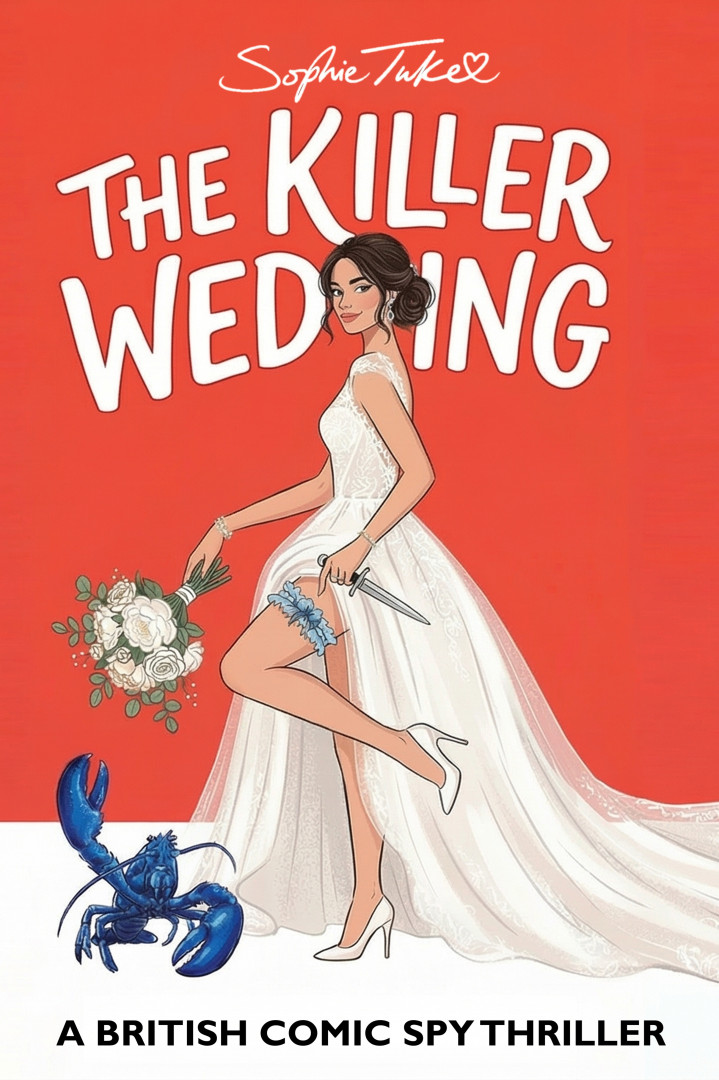
The Killer Wedding is my debut novel. It is a British comic spy thriller, which is to say it is a book that wants very much to make you laugh and would not mind if you stayed up later than planned to find out who survives. It is narrated by Henry Vaughn, a dry, beleaguered Whitehall civil servant whose unspoken life's work is keeping his catastrophically trusting best friend, James Ashworth-Pemberton, alive. James is the kind of upper-class Englishman who walks into rooms cheerfully unaware that anyone could ever wish him harm. Henry is the kind of best friend who has spent far too much time quietly pulling him back from the brink of trouble, often without James ever realising he was there.
When James announces he is marrying Anastasia Kovalenko, a brilliant tech entrepreneur with an unusually well-tailored CV, whom he met at a yacht party off the Côte d'Azur, Henry begins watching. He is right to watch. He is wrong about what he is watching for.
What follows, over the course of a single wedding weekend at a thinly fictionalised Cotswolds estate, is a series of attempts on the groom's life, each foiled by the most unlikely of saviours: a hot tub full of live lobsters, ketchup snobbery, a fortuitously timed fireworks display, and an antique ceremonial sword. James spends the entire weekend oblivious to the dancer around him, the reader and Henry of course, see considerably more than he does.
The country house comic novel is a tradition that Oxfordshire has been quietly underwriting for a hundred years. I love it without apology. What I wanted, though, was to do something a little more modern with it. To give the comic-country-house novel a proper thriller plot underneath, the kind that earns its laughs by letting the danger be real. Anastasia is not a punchline. She came to her own wedding with a stiletto in her garter and she did not bring it for decoration. James is not a fool, exactly; he is simply optimistic in a way the world rarely deserves. The joke is not on him. The joke is that the world, which keeps trying to kill him and in turn keeps tripping over its own shoelaces in the attempt.
The book is set at a place that does not exist but that any Oxfordshire reader will recognise within half a page. There is a long gravel drive, a Dower House full of inappropriate guests, a marquee straining at its guy ropes against the wrong sort of wind, and a vicar who has been doing this for forty years and would now like a quiet sit down with a glass of port. Cotswold stone glowing a warm gold in the afternoon sun, while the horses are watching from the next field with the polite contempt that horses reserve for human nonsense. If you have ever stood at the bar of a Cotswolds wedding somewhere between the speeches and the dancing and felt that an assassination attempt would improve it, then this book is for you.
Henry Vaughn is a Whitehall civil servant of an unusual type, the kind who knows where the bodies are buried because he was the one who filled in the form authorising the burial. He is in his late twenties, trim, immaculately turned out in a way that takes more thought than he will admit and is, importantly, kind, which is what makes him useful: people tell him things. He does not believe that beautiful women arrive at yacht parties by mistake and watches everything with a paternal air that has already saved James from several fortune hunters and one convicted con artist.
This is a book for anyone who watched The Gentlemen and wished it had better canapés, or who watched Knives Out and wished it had a Whitehall civil servant in a slightly dishevelled morning suit standing in the corner explaining what was about to go wrong. It is closer to Richard Osman than to anything grimmer. There is no on-page violence to speak of, which is – I think – where most of the laughs come from. The threat is everywhere; the consequences keep missing their target.
I moved out of London some years ago, back to the countryside of my youth. I did not expect that the move would change what I wrote, but it has, completely. London writing is fast and self-conscious. Oxfordshire writing, at least in my hands, is slower and kinder. There is more time to notice things. The man in the Bell who knows everything about the Iron Age. The woman choosing cheese at Waitrose who, you slowly realise, used to run a department you weren't allowed to know existed. The retired colonel walking a wire-haired dachshund along the Ridgeway and humming, audibly, the Marseillaise. These are not characters I have invented. They are people I have encountered, almost without modification, within a four-mile radius of my kitchen table. Henry Vaughn's grandmother, Cordelia, who reappears throughout the book in cardigans that are softer than they look and with a past that emphatically is not, is an amalgam of three remarkable women, none of whom, I think, are aware of it; though knowing them, they probably are and are simply playing it cool to see how it pans out.
The Killer Wedding is the first in a planned series of Henry Vaughn novels. He has, I am pleased to report, survived the first book intact, though slightly the worse for it. Book Two is already underway, also in turquoise, with the same cast favourites and one or two new arrivals I cannot yet discuss without spoiling Book One.
If any of that sounds like your idea of a good time, I would love it if you read the book. And if you ever happen to spot a woman in a Wantage coffee shop writing in turquoise ink and answering (slowly) to a name that does not quite belong to her, please leave her to it. She is almost certainly plotting another assassination attempt.
The Killer Wedding, by Sophie Tuke is out now on Kindle and KDP paperback from Amazon. For links and more information visit sophietuke.com.