


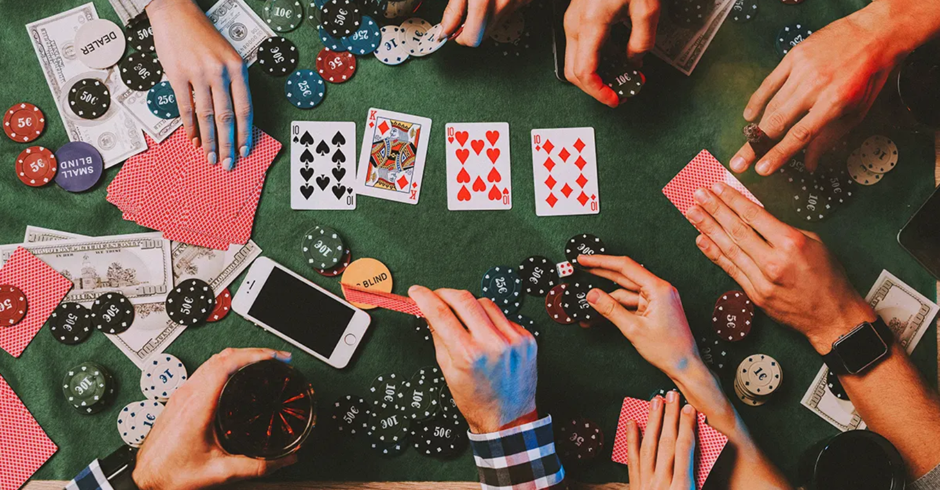

Sitting at a live poker table is as much a psychological challenge as a mathematical exercise. Players must make decisions with incomplete information, and one of the ways to fill those gaps is by observing the people around them. Posture, gestures, facial expressions, and breathing can provide clues about an opponent’s confidence, uncertainty, or tension. Recognizing these signals adds another layer to the game, where observation works alongside probability. Unlike online play, live games offer a richer environment in which to read others, but this information must be used thoughtfully. The ability to interpret non-verbal cues requires practice, discipline, and an understanding that each player is unique.
The sections below cover the most common physical tells, ways to improve observation at the table, mistakes that lead to bad reads, and practical approaches to interpreting player behavior.
Understanding Body Language at the Table
Fundamentals of non-verbal communication
Body language in poker revolves around unintended signals that appear despite a player’s effort to stay controlled. These can include movements of the eyes, changes in breathing, or how someone reaches for chips. Because players often concentrate on their cards and chips, they may not realize how much information they give away through their hands or posture. Recognizing when a hand shakes slightly as chips are moved into the pot or noticing a deep breath can be a starting point for building a psychological profile. Interpreting these cues depends on watching the same player over several hands to establish what is normal for them. If someone typically sits motionless and suddenly starts fidgeting, that change can be more telling than any single movement alone. Patience and attention to detail are therefore essential, allowing subtle differences to stand out.
Signals players often observe
Many players look for specific indicators at the table. A quick glance at a chip stack after the flop may suggest that someone likes their holding and is calculating how much to bet. Conversely, an opponent who stares intently at another player after making a large wager could be attempting to intimidate and might be bluffing. The manner in which chips are placed can also convey information. Sliding chips calmly across the felt can indicate strength, whereas tossing them into the pot with force can reveal nervousness or false bravado. Even small pauses can have meaning. A long look at hole cards often points to uncertainty and a weaker holding, while a rapid check followed by immediate action suggests confidence. Chatty opponents who suddenly become quiet after the flop may have connected well with the board. Others might become unusually talkative to project comfort when they are, in fact, concerned. These examples illustrate how varied nonverbal signals can be. The challenge lies in sorting genuine clues from deliberate deception.
Why context matters
A single gesture rarely has the same meaning for every player. A player’s cultural background, personality, and emotional state all influence how they express themselves. In some cultures, prolonged eye contact is considered respectful, while in others it can be seen as confrontational. Similarly, an opponent may glance at their chips simply because they are checking the denomination, not because they have a powerful hand. To interpret body language accurately, it is vital to observe a person over several hands and notice deviations from their usual behavior. Without this baseline, a knee-jerk reaction to an isolated cue can lead to costly errors. Observational skills must therefore be paired with contextual understanding, including knowledge of the game’s pace, bet sizes, and each player’s general tendencies. Only then does a wink, a sigh, or a smile become meaningful within the full context of the hand.
Building Observational Skills and Analyzing Opponents
Reading body language is a skill that can be cultivated through deliberate practice. First, use idle moments wisely. When you fold your cards, resist the urge to daydream and watch how the remaining players act. Notice how they pick up chips, how long they take to act, and whether their expressions change when new cards are revealed. Develop a habit of focusing on one opponent at a time, tracking their behavior across several hands. This focus helps form a mental picture of their baseline. Second, review your play whenever possible. If you play in a setting where sessions can be recorded or notes can be taken afterward, examine these records to see if your impressions were accurate. This feedback loop builds confidence and reduces the chance of reinforcing false assumptions. Third, expand your experience by trying different formats. Participating in home games, tournaments, and cash games exposes you to a wider range of playing styles and table behaviors. The more situations you encounter, the easier it becomes to recognize meaningful reactions and distinguish them from ordinary habits. Building experience also requires spending time in different poker environments. Many players look for opportunities to spend more time at the tables. For example, Avantgarde casino promo codes can help players take advantage of bonus offers that let them play more hands. Used responsibly, these offers can help players explore new poker environments and face different types of opponents. Finally, practice restraint. Even if you think you have detected a tell, test it over several occurrences before basing significant decisions on it.
Common Mistakes When Reading Body Language
- Players often jump to conclusions based on a single cue. For instance, if a player stares at their opponent after betting, it might be tempting to assume they are bluffing. In reality, some experienced players maintain eye contact when strong to invite calls, while others avoid looking up at all. Relying on simplistic formulas like “if he looks away, he’s weak” can lead to misinterpretations.
- Players may also ignore deliberate misdirection. Skilled opponents sometimes alter their mannerisms to mislead, such as chatting more when weak or becoming quiet when strong. Failing to account for this possibility can leave you vulnerable to manipulation.
- Overconfidence can also distort reads. Believing that every move has a definitive meaning can cause players to act on incomplete information, making plays that deviate from sound strategy. This is particularly common when players read articles or watch videos about tells and then see them everywhere, regardless of whether those tells actually apply.
To reduce these mistakes, treat behavioral observations as supporting evidence rather than proof. Compare them with betting sequences, timing tells, and the overall table situation.
How to Avoid Bias When Interpreting Behavior
Cognitive biases can distort how you perceive others at the table. Confirmation bias, the tendency to notice information that supports your existing beliefs, can lead you to see tells that fit your expectations while ignoring contradictory evidence. Anchoring on an early impression of a player’s style might cause you to misread them later. Cultural bias can also distort a read because the same gesture may have different implications depending on a person’s background. To minimize these biases, approach each hand with an open mind and take notes that describe what happened rather than what you think it means. For example, instead of writing “nervous,” note “tapped fingers rapidly for five seconds before calling.” Factual descriptions help you review and test your assumptions without the baggage of interpretation. Discussing hands with peers or watching recordings also helps reveal blind spots. Recognize that even well‑supported reads can be wrong, especially when playing against skilled opponents who manage their table presence. Therefore, use tells as tie-breakers when a decision is otherwise close. Do not allow them to override sound strategy rooted in position, bet sizes, and hand combinations. Cultivating this disciplined, evidence‑based approach will limit the influence of bias.
Reading body language at a live poker table is an analytical discipline that rewards careful, systematic observation far more than instinct. The specific signals available in person, including hand tremors, breathing changes, posture shifts, eye contact behavior, and timing variances, carry genuine informational weight when interpreted carefully against an established individual baseline and confirmed across repeated observations. Every behavioral read needs cross-referencing against pot odds, bet sizing, and hand history before it substantively influences a major decision, and no single physical cue should carry enough weight to override a sound strategic case on its own. Players who treat physical tells as confirmed facts and act on isolated observations tend to overcommit in precisely the spots where attentive opponents extract maximum advantage. Body language occupies one layer of a multidimensional game, and it functions most effectively when paired with disciplined observation habits, a genuine willingness to revise conclusions, and a thorough grasp of the other factors shaping each hand. Players who integrate these elements consistently tend to improve their observational accuracy over multiple sessions.