


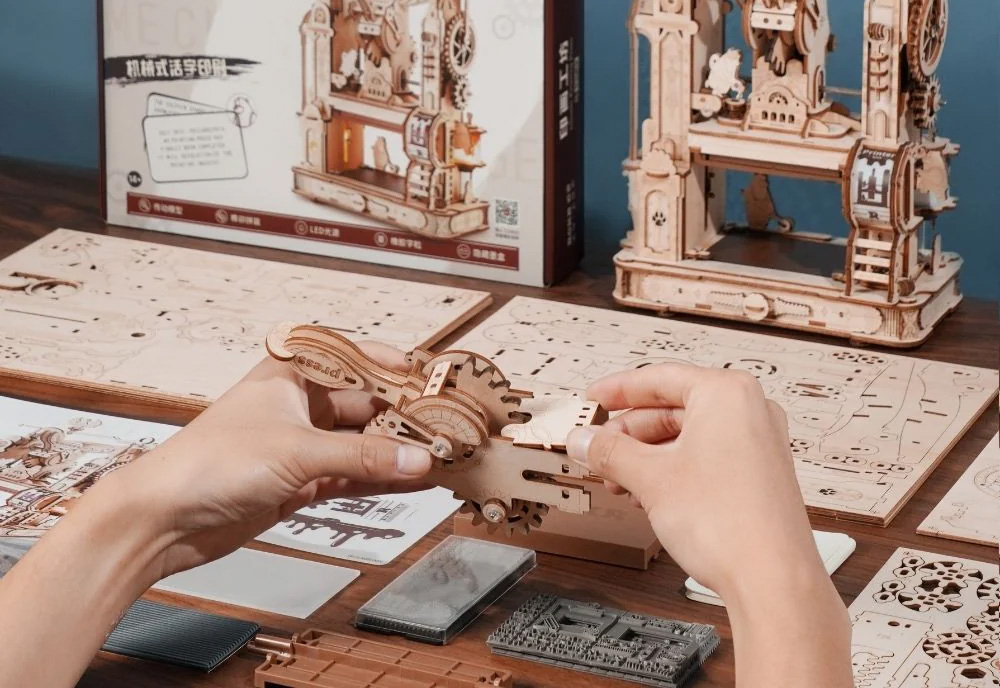
Many 3D puzzle projects start with excitement but soon face delays that reduce progress and motivation. Small oversights in planning, design, or organisation often create bigger problems later. Understanding what slows down a 3D puzzle project helps anyone work faster, stay focused, and achieve cleaner results.
Each stage, from modelling to assembly, demands attention to detail and a clear process. Scale consistency, geometry choices, and proper file management all affect how smoothly a project moves forward. By recognising common mistakes early, creators can save time and avoid frustration throughout the build.
Neglecting to maintain consistent scale between puzzle components
In 3D puzzle projects, mismatched scale often causes major setbacks. Pieces that look correct in isolation may not fit together once assembled. This issue wastes time and materials, especially in projects that rely on precise alignment or interlocking parts.
Designers must check scale early in the modelling phase. A small error in measurement can multiply across multiple parts, leading to uneven joins or gaps. Therefore, teams should use a shared reference grid or unit system to keep every piece consistent.
Scale consistency also affects the visual balance of decorative 3D puzzles. Oversized or undersized elements can disrupt the design and reduce the final product’s appeal. For example, a model inspired by 3D puzzles with uniform proportions looks cleaner and more cohesive.
Accurate scaling supports both function and appearance. It helps builders assemble the puzzle smoothly and gives the finished piece a polished look that reflects careful planning.
Overcomplicating geometry leading to slower modelling and assembly
Many 3D puzzle projects slow down because designers add too much detail to each piece. Extra edges, curves, and unnecessary shapes make the model harder to edit or fit together. The added complexity increases file size and slows down the software during modelling.
Simpler geometry often works better. Clean shapes allow faster adjustments and reduce the chance of alignment errors. As a result, the designer can test, modify, and assemble parts more easily without long delays.
Overly complex geometry also affects assembly performance. Each extra surface or vertex forces the system to process more data, which can increase load times and cause lag. Therefore, keeping geometry straightforward helps maintain steady performance throughout the project.
A balanced approach produces better results. Designers should include only the details that serve a clear purpose. This method saves time, improves workflow, and keeps the focus on precision rather than unnecessary ornamentation.
Failing to plan and organise pieces before starting
Many 3D puzzle projects slow down because the builder skips early planning. Without a clear layout or idea of how the pieces fit together, progress often stalls. A few minutes spent sorting and grouping pieces can save hours later.
Poor organisation often leads to confusion once assembly begins. Pieces that look similar can end up in the wrong sections, causing repeated trial and error. As a result, the builder may lose focus or feel frustrated.
A simple plan helps maintain order and direction. For example, separating edge pieces, colour groups, or major sections gives a clear path to follow. This approach reduces mistakes and keeps the project moving steadily.
Good organisation also helps track missing or damaged parts before construction starts. Therefore, builders can replace or adjust early instead of stopping midway. Careful preparation at the start often makes the difference between a smooth build and a slow, disorganised one.
Ignoring proper topology and polygon count optimisation
Poor topology often leads to shading errors, rough surfaces, and animation problems. A model with uneven or messy geometry can also slow down editing and cause issues during UV mapping or rendering. Artists who skip proper structure may spend more time fixing problems later.
Polygon count affects both performance and visual quality. Too many polygons can cause lag or slow rendering, while too few can make shapes look rough or incomplete. Therefore, maintaining a balanced count helps models run smoothly in real-time projects without losing detail.
Good topology supports clean edge flow and predictable deformation. For example, using quads instead of triangles or n‑gons creates smoother results and easier adjustments. Consistent polygon density across the model also prevents shading artefacts and makes texturing more accurate.
Efficient geometry not only saves time but also improves performance in complex scenes. By planning topology early, artists avoid rework and achieve better results across different platforms and software.
Lack of effective backup and version control systems
Many 3D puzzle projects slow down because teams fail to set up proper backup and version control systems. Files often get lost, overwritten, or saved under unclear names, which causes confusion and wasted time.
A structured version control process helps teams track every change and restore earlier versions if errors appear. Without it, designers may work on outdated files or duplicate tasks, which leads to inconsistent results.
Regular backups also prevent data loss caused by hardware faults or accidental deletions. Automated systems can save copies at set intervals, reducing the risk of major setbacks.
Clear file naming rules and shared access permissions further support smooth collaboration. Therefore, a well-planned backup and version control setup keeps projects organised, reduces delays, and helps teams maintain steady progress.
Conclusion
3D puzzle projects often slow down because of poor planning, weak organisation, or skipped quality checks. Each small issue adds up and affects both speed and accuracy.
Clear goals, consistent file management, and proper reference use help teams avoid delays. Simple habits, such as saving progress often and reviewing scale or alignment, prevent time loss later.
Therefore, steady progress depends on structure and attention to detail. By keeping tasks small, checking each step, and staying patient, creators finish projects faster and with fewer errors.