

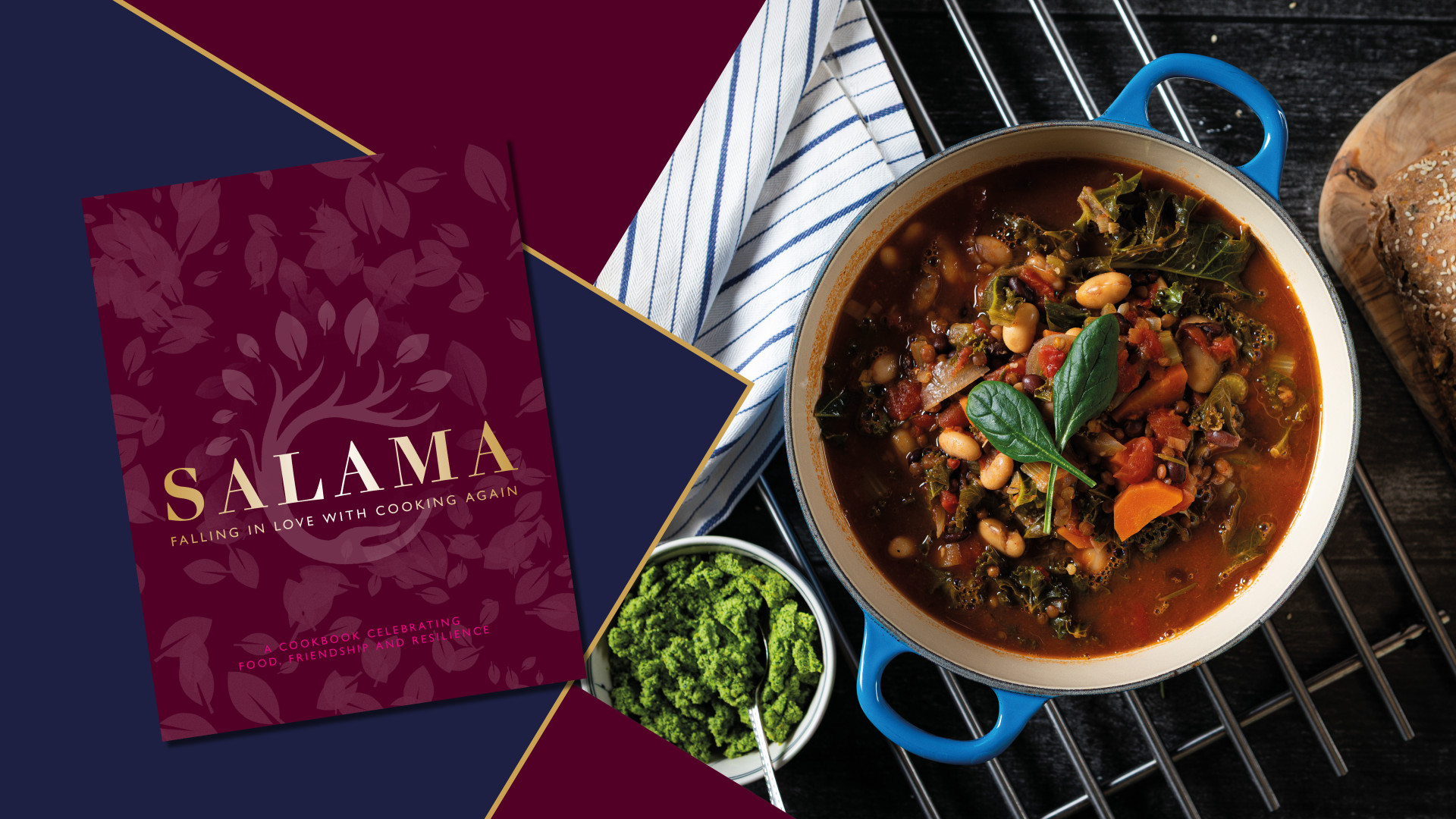

Salama, Falling in Love with Cooking Again is a cookbook with a vision. Produced by Oxfordshire-based social enterprise Maymessy in association with its partner charities, it brings together over 80 recipes from women living across the Thames Valley: a true testament to courage, culture, and friendship. The majority of the book’s contributors are survivors of domestic abuse, and each dish represents a woman who has taken positive steps to rebuild her life.
Each recipe is accompanied by a personal reflection: on the flavours of childhood, in praise of traditional dishes, celebrations of cultural heritage, fondly remembered treats, and even just the taste of home… all conveyed through the universal language of food.
The word Salama means peace in Arabic and safety in Swahili, and these are the values that run throughout. Cumulatively, the pages act as a reminder that safety, peace and belonging should have a place at every table. For many of the contributors, cooking became an important part of reclaiming independence and rediscovering happiness. Through supportive cooking sessions at Maymessy, participants found opportunities to connect, rebuild their confidence and create new positive food memories.
Founded in 2017 by former teacher and social entrepreneur Anna Richards, Maymessy offers therapeutic cooking and gardening programmes across Berkshire, Wiltshire and Oxfordshire. Through these shared experiences, the social enterprise creates supportive spaces giving those who come to Maymessy a place to build confidence, connect with others, and improve wellbeing. Working closely with organisations including Project Salama, Society Without Abuse, and Reducing the Risk, Maymessy supports women to look towards the future with hope.
Jess Phillips MP, whose work to safeguard women and girls against violence and abuse precedes her time in government, observes in her foreword: “"The act of cooking a meal for family and loved ones, or creating a taste of childhood or home with a few simple ingredients is alchemy that can heal the greatest wounds."
The following recipes are reproduced with kind permission from Meze Publishing, an independent foodie publishing house. Falling in Love with Cooking Again, Maymessy will be available to buy from 22 October 2026. Pre-order your copy here: mezepublishing.co.uk/product/pre-order-now-salama-falling-in-love-with-cooking-again/.
Basia’s Quarantine Soup
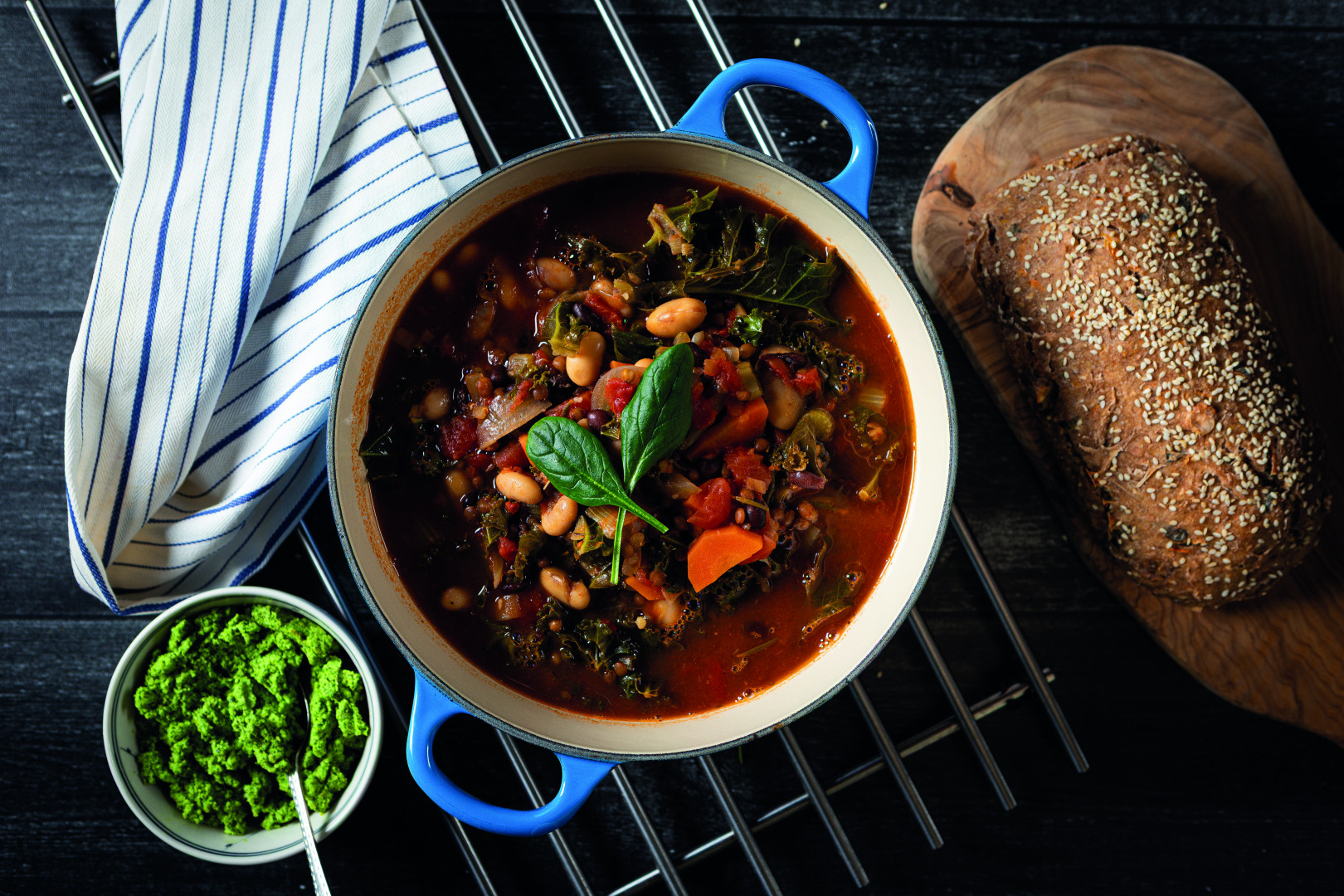
“I was not raised vegan, so when I went vegan about 10 years ago, I had to learn how to feed myself properly. Soup is a cornerstone of Polish cooking, changing with the seasons and always built around what is available. It is hearty, nourishing, quick and affordable to make. I discovered this particular version on jadlonomia.com in lockdown, which is how it earned its name.”
PREPARATION TIME: 15 MINUTES | COOKING TIME: 40 MINUTES | SERVES: 4
INGREDIENTS
1 onion or ½ leek, diced
1 carrot, cut into half-moons
1 celery stick, sliced
2 tbsp rapeseed or olive oil
1 tsp smoked paprika
¼ tsp dried rosemary, thyme or oregano
¼ tsp cayenne pepper
4 x 400g of mixed legumes, drained (such as lentils, chickpeas, or beans)
1.5L hot vegetable stock
300g white cabbage, savoy cabbage or kale
FOR THE TOMATO SAUCE
3-4 tbsp olive oil
2 cloves of garlic, peeled and left whole
2 x 400g tins of chopped tomatoes
Pinch of salt and black pepper
METHOD
Heat the oil in a large saucepan over a medium heat, add the onion or leek, carrot and celery and cook for two to three minutes, until the onion or leek starts to soften and turn lightly golden. Add the smoked paprika, dried herbs and cayenne pepper and stir briefly until fragrant.
Add the drained legumes and the hot vegetable stock, cover the pan and simmer for 15 minutes.
Meanwhile, make the tomato sauce. Pour the olive oil into a saucepan and add the garlic cloves to the cold oil. Place over a low heat and cook gently for three to four minutes, until the garlic is soft, lightly coloured and fragrant. Add the chopped tomatoes along with a generous seasoning of salt and black pepper. Simmer uncovered over a medium heat for 10-12 minutes, until the sauce has reduced, darkened in colour and thickened.
Finely chop the cabbage. Stir the tomato sauce into the soup, add the cabbage or kale and cook for a further three to five minutes, just until softened.
Season with salt and black pepper to taste and serve hot, ideally with good Polish bread (recipe in the book)
BONUS TIP
On the first day, serve the soup with fresh bread; on the second day, with rice; on the third day, with pasta; and on the fourth day, with croutons made from stale bread. The cabbage softens quickly in the hot soup, so there is no need to cook it for long. Overcooking will cause it to become brown and mushy the next day.
Shaz’s Palak Pakora (Onion Bhaji with Spinach)
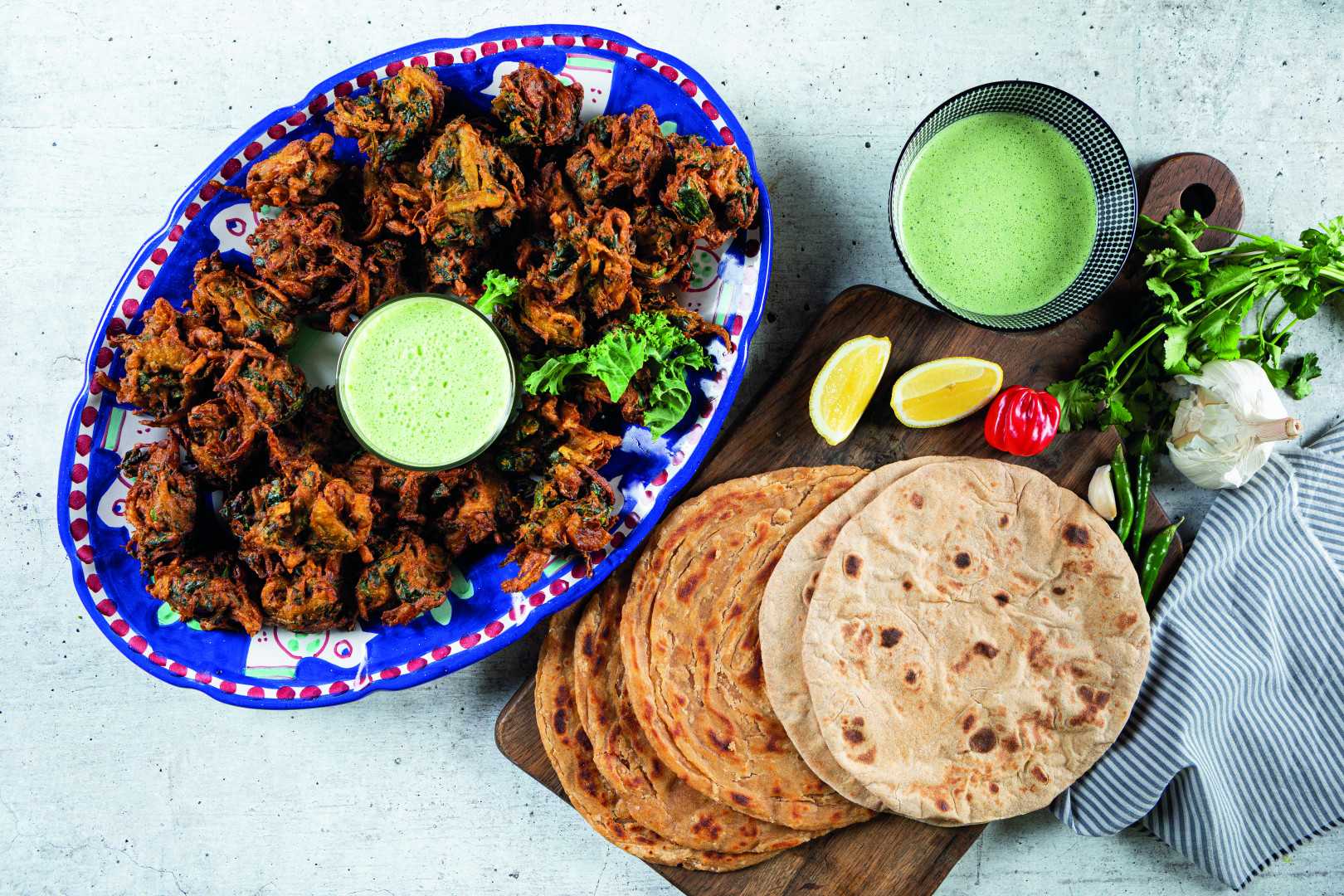
“A real Sunday treat, these are made for grazing, chatting and then promptly falling asleep afterwards. They always come to mind on grey, rainy days or when guests pop round unexpectedly. With a hot cup of chai and a spoonful of chutney, or even tomato ketchup (which we loved as children), they are pure comfort. There are endless variations, so once you master the batter, you can make them your own.”
PREPARATION TIME: 10 MINUTES | COOKING TIME: 30 MINUTES | SERVES: 6 TO 8
INGREDIENTS
2 large handfuls of baby spinach, chopped
2 fresh green chillies, finely chopped (optional)
1 large onion, halved and thinly sliced
1 small potato, thinly sliced
1½ tsp salt
1½ tsp red chilli powder or paprika
2 tsp carom seeds (ajwain)
2 tsp coriander seeds, crushed
2 tsp pomegranate seeds (anardana - optional)
4 tsp cornflour or rice flour (optional)
1½ cups gram flour (besan)
60ml water, plus extra, if needed
Sunflower or vegetable oil, for deep frying (approx. 500ml)
Chaat masala, to serve (optional)
METHOD
Mix the spinach, chillies, onion and potato in a large bowl, then toss with the salt, red chilli powder, carom seeds, crushed coriander seeds and pomegranate seeds, if using.
Add the cornflour or rice flour, if using, and mix until the vegetables are lightly coated. Add the gram flour and toss again, breaking down any clumps so everything is evenly covered.
Pour in the water and mix until you have a thick batter that coats the vegetables well but is not too loose. Add a little more water if it is too thick, or a little more gram flour if it feels too runny.
Heat the oil in a deep, heavy-based pan. Once hot, reduce the heat to medium. If the oil is too hot the pakora will brown before cooking through, and if it is not hot enough they will absorb too much oil. Fry a small spoonful of batter first to test the temperature.
Carefully add small scoops of the mixture to the oil, leaving enough space to turn them. Fry, turning occasionally, until golden brown and crisp on the outside and cooked through.
Remove with a slotted spoon and drain on kitchen paper. Sprinkle with chaat masala if you like and serve hot with chutney or ketchup.
Tanaka’s Zimbabwean Greens
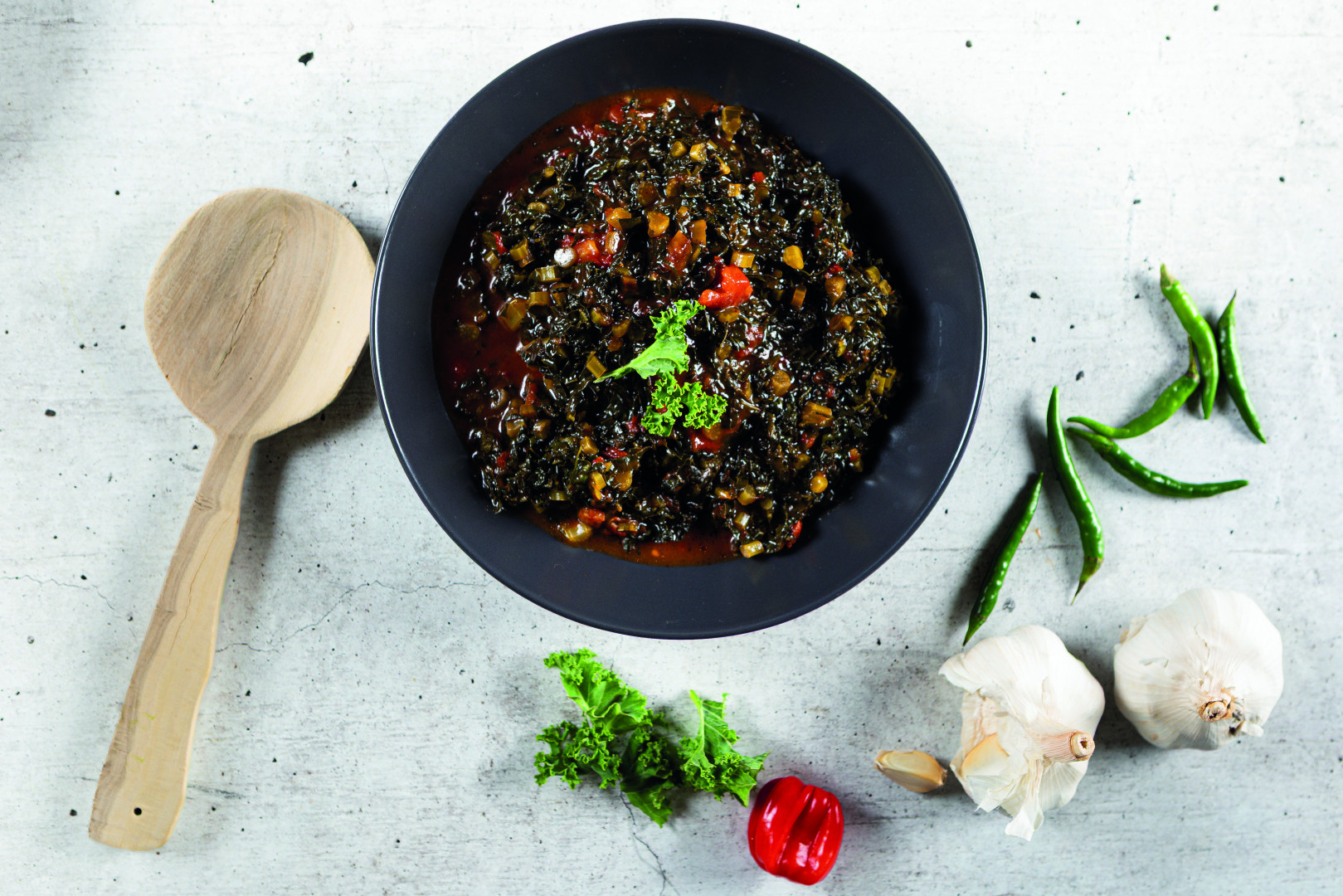
“This dish is inspired by the leafy greens we eat in Zimbabwe, such as covo and rape. Although I use kale or cavolo nero here, the way it is cooked is very Zimbabwean: simple, flavoursome and nourishing. I prepare it just as my mum and aunties would back home, so every time I eat it, it reminds me of home-cooked meals, family and the love that goes into feeding others. It is comforting, familiar and deeply nostalgic for me.”
PREPARATION TIME: 5 MINUTES | COOKING TIME: 10 MINUTES | SERVES: 4
INGREDIENTS
1 tbsp vegetable oil
200g kale, washed and finely chopped (approximately)
2 medium tomatoes, quartered
¼ tsp curry powder
Pinch of salt
METHOD
Heat the vegetable oil in a medium saucepan over a medium heat.
Add the kale, tomatoes, curry powder and salt to the pan.
Cook gently for about eight minutes, turning the kale regularly so it absorbs the seasoning and softens evenly.
Serve warm with Sadza and Zimbabwean Chicken Stew (recipe in the book)