



In today’s world, technology no longer waits for us to specify each of our preferences. Instead, it watches, learns, and adjusts. Your phone knows to suggest the same route to an office each day. Your streaming app knows to give you comfort viewing rather than novelty. Your smartwatch recognises that you’re sleeping poorly, moving slowly, and struggling with stress before you do.
The change is not merely that devices are becoming smarter. They are becoming more responsive to behaviour, usually through small actions over time.
But how does such a system work? Does your phone listen to you? How exactly does a machine learn from you?
Why Technology Now Adapts to People
There was a day when consumer tech treated us all the same. You had to open an app, tweak some settings, and tell it how you wanted it to behave. That model is disappearing, and in its place is a more fluid one.
Shift from static to responsive systems
The top shift is not that software has become “intelligent” in some abstract way. It is that software has become responsive. Recommendation systems have moved beyond “popularity” and are now ranking choices based on how a person has behaved before.
The catch here is that adaptation is less about obvious choices. Systems are also learning from weaker signals: hesitation, sequence, timing, dwell time, and abandonment. That creates smoother technology, but it also means everyday products are quietly moving from tools you use to services that analyse you.
Why behaviour patterns matter in daily use
Behaviour patterns are often more reliable than what a person says they want. People say they want one thing, but then do something else over and over. A system that learns from routine can detect those faster than a query or a settings page ever could.
So, the upside is convenience. The downside is that patterns of behaviour may come to be treated as permission. Once systems learn enough from our repeated actions, they start acting in ways that feel like intuition to them, even when those actions don’t match what we feel is intuitive.
How Intelligent Systems Learn from Our Actions
In simple terms, what is an intelligent system? In everyday technology, it’s a system that does more than respond to fixed instructions. It observes inputs, identifies trends, theorises what will happen next, and adapts its behaviour over time.
Repeated choices, habits, and timing signals
Most systems learn from repetition. A song you skip, a late-night purchase, a route you navigate away from, or the button you hesitate before clicking. These signals, tiny in scale, help the system learn.
Habits are often more informative than explicit settings. People don’t tend to update preferences precisely, but they do repeat routines reliably. A system that sees enough of those routines can infer what matters to a user, when it matters, and how strongly it matters.
Personalisation, predictions, and faster interactions
Once the patterns are recognised, systems begin simplifying the act of deciding. This is not only personalisation in the marketing sense, but a quest for speed, where intelligent systems reduce steps between the state of wanting something and the state of doing it.
The trade-off is that speed can obscure the mechanism. The user sees a seamless experience, but does not always see the signals that produced it, making great personalisation feel intuitive and bad personalisation feel invasive.
Why it still matters to check system behavior
Not all adaptive changes are positive. A browser redirect, spam pop-ups, or unexpected changes to search settings do not constitute personalised information. It often becomes a compromise or some sort of invasion. It can mean that something made its way into the settings of the system. That’s why every person must check system behavior, especially if technology starts behaving in a way you haven’t seen before. For Mac users, Moonlock’s cybersecurity blog asserts that adware and browser hijackers often show up through pop-ups, unexpected extensions, and changed settings instead of outright breakage. Don’t mistake a virus or infection with a personalisation attempt, as the main distinction is that an intelligent system cannot make decisions for you.
This distinction is important because users expect adaptive techniques, which makes it easier to justify an unwanted change as “adaptation.” But intelligent systems should feel responsive, not random, and when the behavior turns pushy, deceitful, and impossible to ignore, then you might have a security problem rather than a convenience one.
Where People Notice Intelligent Systems Most
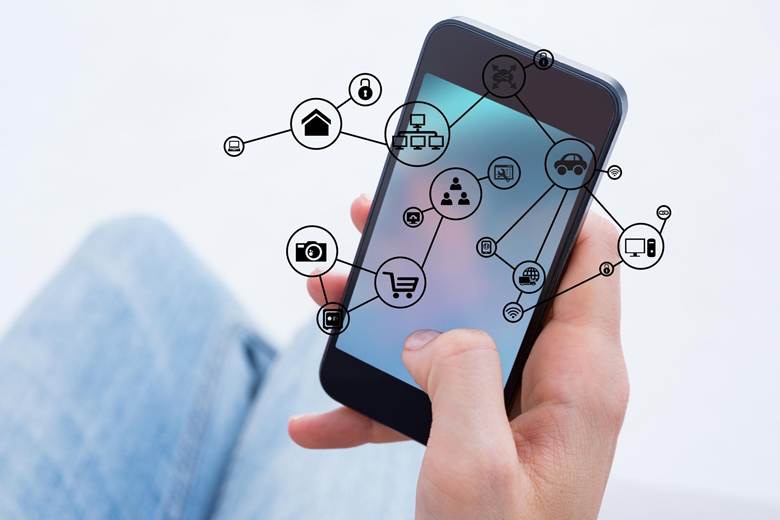
There are many examples of intelligent systems, but there are a few that almost everyone notices. It now feels like familiar technology because it’s tucked into products we use every day. What’s changed is the level of learning that happens beneath them.
Smartphones, streaming, and online shopping
Smartphones are where the shift feels most natural because the device is already a bookkeeper of routine. It knows when you wake up, which apps you open first, how quickly you respond, where you pause, and what you ignore.
Another example would be streaming platforms. They don’t just learn what people watch. They learn what they complete, what they leave behind, what they replay, and how long they take to choose.
Online shopping works along similar lines, with higher stakes. Websites track the journeys people take as they browse to collect clues about buying intent from how they load pages, add items to their carts, mark items as “saved”, make repeat purchases, and how much time they spend comparing different items.
Smart homes and in-car systems
Smart homes take behavioural learning into the real world. Here, the signals are fewer clicks than presence, timing, and repetition. One area where smart home services are gaining traction is the use of machine learning to improve comfort and efficiency by identifying household habits and automatically adjusting to them.
In-car systems are perhaps the most critical example because adaptation can compromise safety as well as convenience. Modern driver-assistance and smart vehicle interfaces are increasingly shaped by workload, attention, and behaviour, rather than static thresholds alone. Recent studies on adaptive vehicle systems report a greater focus on models that respond to drivers' state of mind and other usability conditions in context. That is, the car is learning not only the road, but the people who drive it.
What People Expect from Smart Tech
The novelty is fading. No one cares if a product has AI; people care if it saves time, saves effort, and preserves privacy. This is the nuance behind the current uses of AI in everyday life: we have stopped treating intelligence as a feature in itself and have started treating it like everything else we engage with.
What users appear to want is for things to be simple, frictionless, with fewer choices on their part and an absence of feeling like they’re being watched. In practice, the best systems aren’t boldly intelligent; rather, they quietly improve timing, search, recommendations, navigation, fraud detection, and device automation.
Smarter technology needs limits, not because intelligence is bad, but because unchecked adaptation erodes trust. Users want to know when AI is involved, what data is driving the experience, and how to gain back control when the system messes up. That expectation is now mandated not just by design best practice but by regulation.
Conclusion
Smart systems have become an integral part as they have transformed the way we live our lives. Intelligent systems provide value through gathering data and learning enough about our behaviour for us to benefit from a smarter, quicker, and easier-to-use technological experience. However, the real test for smart systems is not whether they are predictive, but rather whether they enhance our daily activities while remaining non-intrusive. The most intelligent systems should feel as though they add value and do not make us feel overly familiar with them.