

As the new Millennium took hold, keen gardeners were gaining interest in a new, naturalistic style of planting which had been introduced by the internationally renowned Dutch garden designer and plantsman Piet Oudolf. Taking a more naturalistic approach to gardening, Oudolf introduced us to the concept of planting grasses and perennials in broad, naturalistic drifts. Twenty years on, this style of gardening often referred to as ‘Prairie Planting’ is even more popular as we look to plant ecological and sustainable gardens.
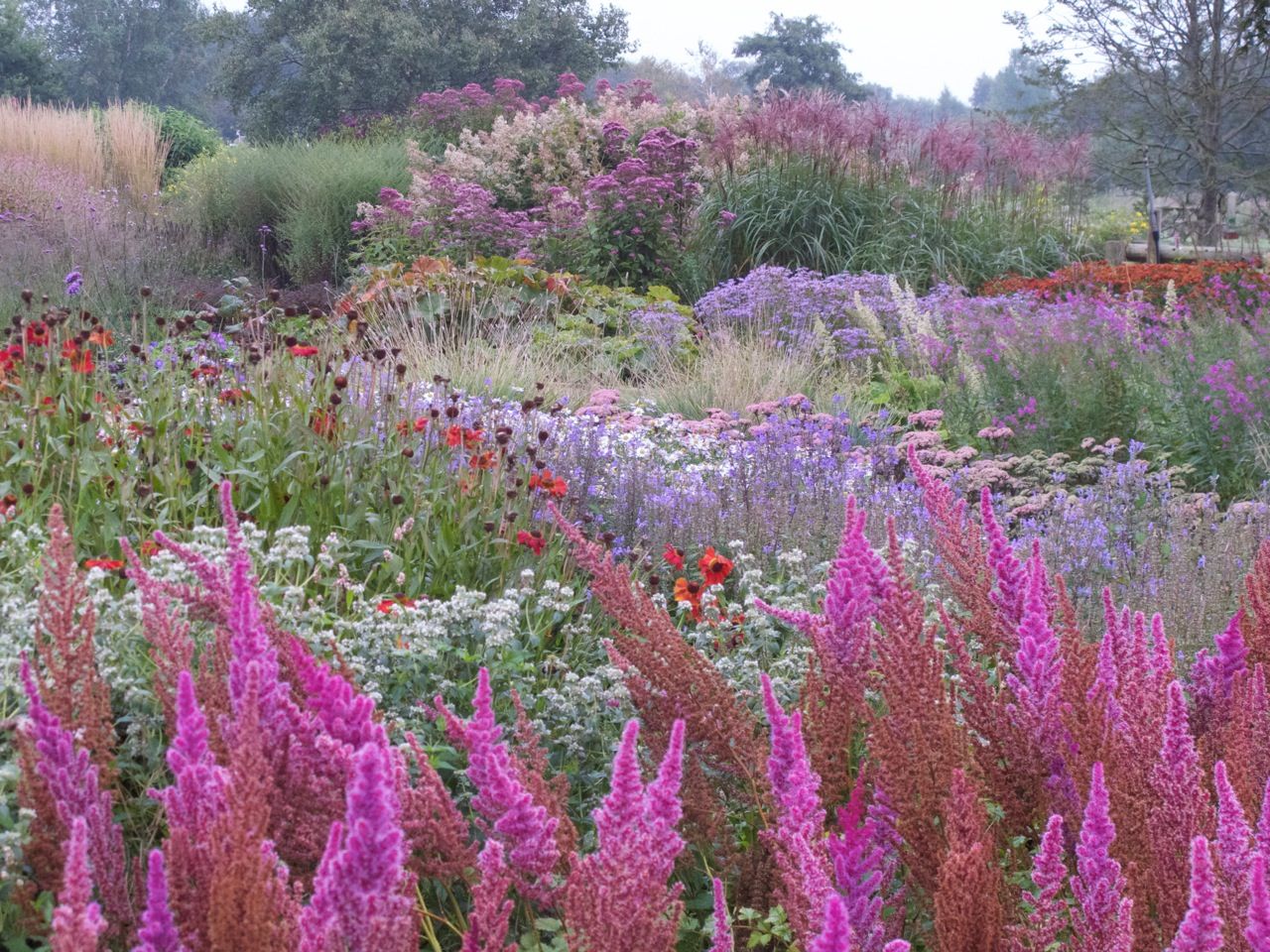 Oudolf selects his plants for their seasonal life cycle: rather than choosing perennials for their flower colour over a brief period of the year, he selects plants that offer architectural structure, the shapes of the leaves, how they look as they fade and set seed and what they can offer wildlife. He explains: “A garden is exciting for me when it looks good through the year, not just at one particular time. I want to go outside and for it to be interesting in all weather, in early spring and late autumn.”
By selecting long-lived clump forming species of perennials and grasses, the gardens in which they are planted remain in the same style as Piet Oudolf intended them to be for years with little deviation from his original plan. When his planting schemes were first introduced, they seemed so revolutionary – to leave everything in-situ without cutting back to over winter was ground-breaking. Having run a plant nursery with his wife Anja at Hummelo in the Netherlands, Oudolf used his extensive plant knowledge: “Nobody understood how a nurseryman from the Netherlands could make a garden like this,” he says, “they found it strange. But the British were the first people to appreciate my work, this new way to garden. You wouldn’t think it, because traditional English gardening is so dogmatic, but the acceptance was quite quick.”
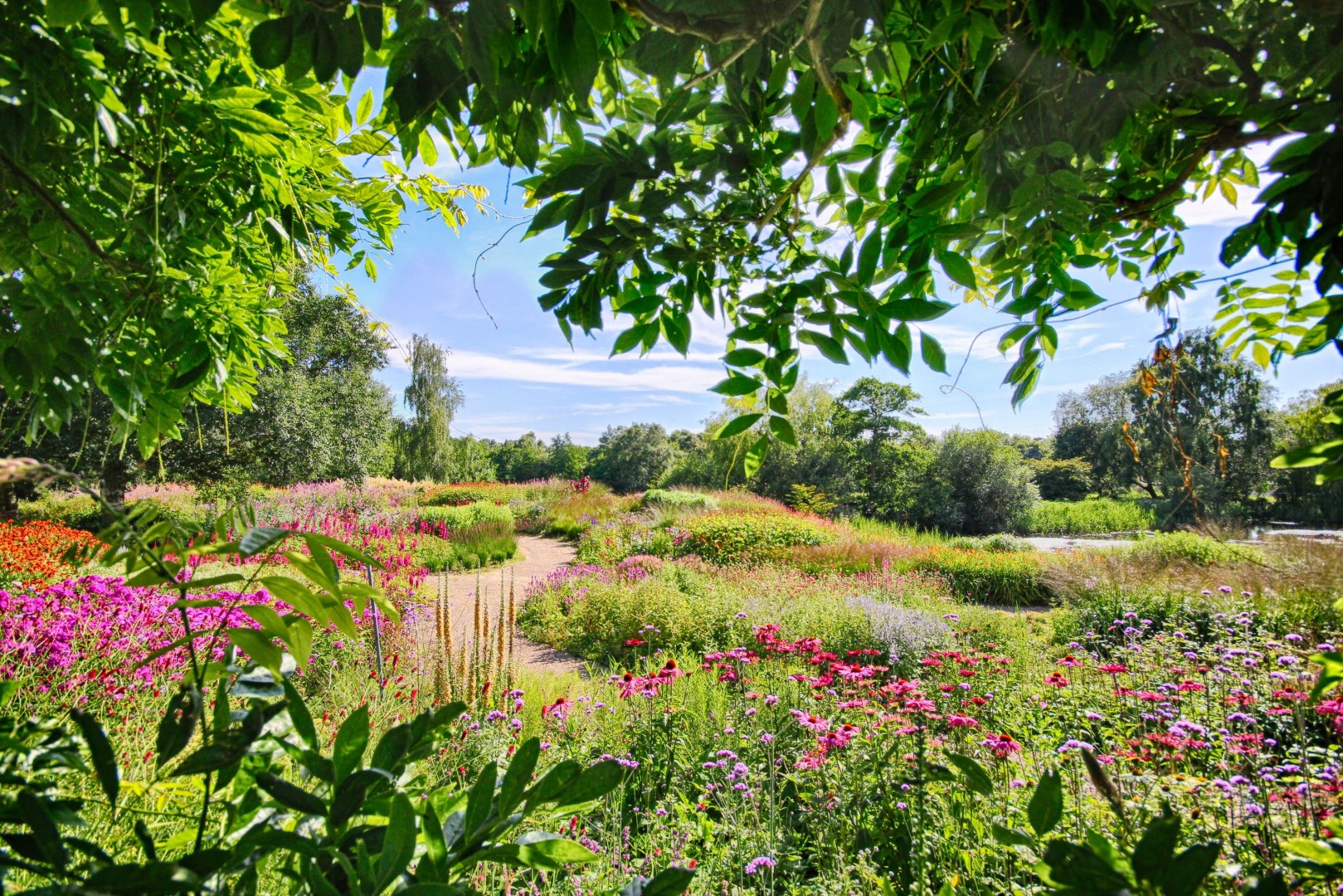 One of the gardens which Piet Oudolf designed in the UK, which has celebrated its 20th anniversary, is the Millennium Garden at Pensthorpe National Park near Fakenham in Norfolk. Located within a 700-acre area designated Special Area of Conservation, the garden which opened in 2000 is still as contemporary as it was when Oudolf first planted it. Using a rich, lush tapestry of planting colours and textures, the one-acre garden provides a colourful, creative yet contemplative area in which to enjoy meadow planting at its best. The overall effect is a wild, soft landscape that is home to numerous birds, insects and creatures.
By planting in naturalistic drifts, the seasons are carefully linked, even in winter; grasses and the seed heads of the perennials look stunning when dusted with frost. During spring and into summer, the gardens come alive with the sounds of insects, and butterflies adorn the plants – in winter, the seeds become a pantry for birds and other wildlife.
Ten years after first planting the Millennium Garden at Pensthorpe, Piet Oudolf returned to redesign and replant parts of the garden. “The idea is that visitors to Pensthorpe discover the garden as a pleasant surprise,” he explains. Indeed, for the past two decades, these gardens have been regarded as East Anglia’s greatest ‘secret garden.’
To create a naturalistic planting scheme, select grasses and perennials that are hardy so they can withstand changes in weather. Avoid perennials which collapse with the first hard frost. By leaving plants in place instead of cutting them back in autumn, the sturdy stalks and seed heads will endure the frosty winter months. Select plants, both grasses and perennials of a similar height, between 60cm and 90cm. Obviously should we get considerable winter snow, the stalks break off and start to look very untidy or they will be snapped down by the winds.
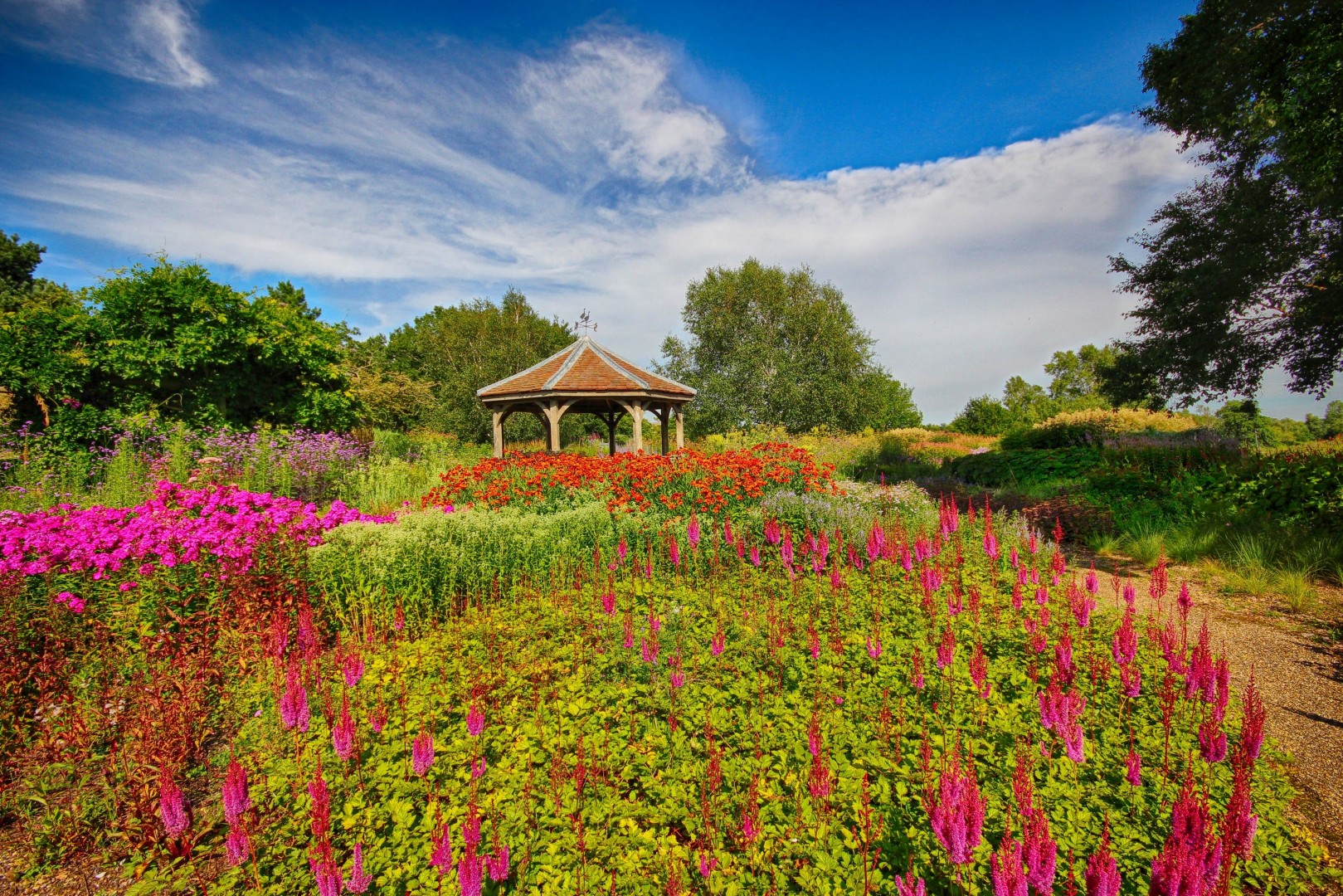 When selecting your plants, choose those which give structure combined with filler plants which give a small season of interest, and which will not endure the year through. Work using 70% structure, 30% filler. Aim for repeat bloomers, long-season perennials and grasses such as Calamagrostis x acutiflora ‘Karl Foerster’ which planted in large groups creates a soft, blurred background for other plants. Favourite perennials include Acanthus spinosus, Rudbeckia, Salvia pretensis‘Pink Delight’ and Aster olongifolious ‘October Skies.’ To support wildlife effectively, include a mix of perennials that will attract pollinators, butterflies and bird life.
One rule Oudolf always follows is to keep a garden design simple: “two or three layers are enough. The ideas of layers help the eye ‘read the confusion of leaves and stems in front of you’ to make sense of the garden. With a background of evergreen shrubs and a foreground of perennials, you will be able to create a visual focal point.”
By borrowing landscape features from what is beyond the boundaries of your garden and by keeping the planting low and uniform, you can make what is beyond the boundaries part of your own space.
Find out more about the gardens at Pensthorpe at pensthorpe.com