


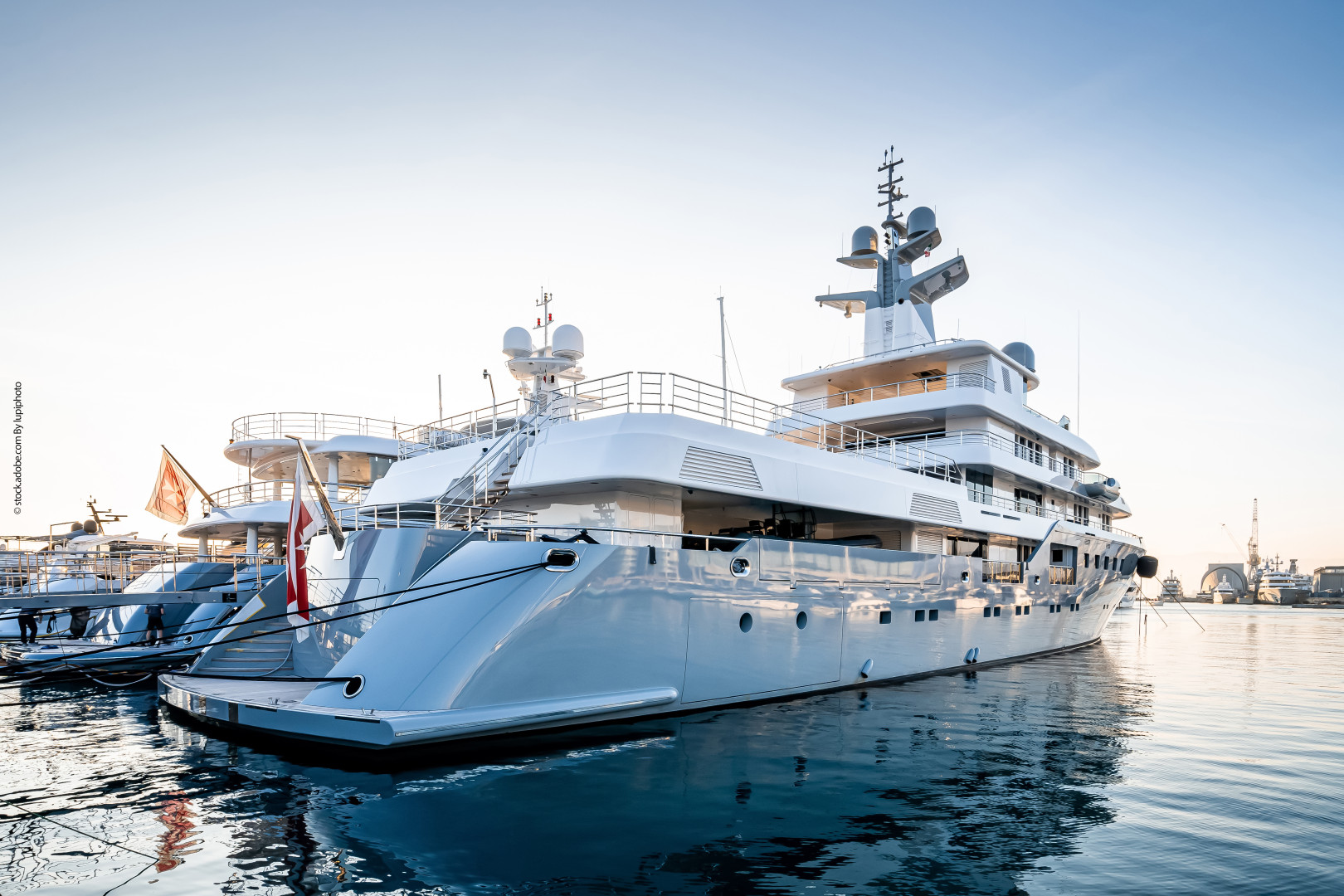

Every charter season, guests face a quiet dilemma the brochures rarely address: should you book the brand-new delivery, or the older yacht that just emerged from a comprehensive refit? Instinct says newer is better. The reality is considerably more interesting.
What a serious refit actually involves
The word "refit" covers everything from a paint job to a rebuild, so the scale matters. At the top end, the numbers are startling. The 48.8-metre Trinity NO BAD IDEAS, chartering in the Bahamas, completed a two-year, $20 million programme in which virtually every system, surface and space was renewed — a spend that exceeds the entire build cost of many 35-metre yachts. Similarly, the 55-metre Rossinavi TALEYA re-entered the charter market after a 2023 refit that repositioned her as a wellness-focused yacht for the Adriatic.
At that level, "older hull" becomes almost meaningless: the guest touches nothing that is not new.
The case for the refit
Three arguments consistently favour the refitted yacht. First, proven seakeeping — a hull with fifteen years of ocean miles has no surprises left, while new builds famously spend their first season resolving warranty items. Second, mature crew programmes: refitted charter yachts often retain long-serving captains and crews whose service is polished by hundreds of charters, an asset no shipyard can deliver. Third, value — refitted yachts typically charter 15 to 30 percent below new builds of equivalent size and finish, which on a 50-metre yacht can mean six figures per week.
There is also a sustainability point that resonates with modern charterers: renewing an existing hull avoids the enormous material footprint of new construction. The greenest yacht, as the saying goes, is the one already built.
The case for the new build
New deliveries hold genuine trumps. Naval architecture has advanced: modern hulls are quieter, more fuel-efficient and more stable, with technologies — hybrid propulsion, dynamic positioning, full-beam beach clubs at the waterline — that refits can approximate but rarely match structurally. Layouts reflect how guests actually live now, with gyms, spas and informal dining designed in rather than carved out. And for some charterers, being among a yacht's first guests carries its own appeal.
How to judge a refitted yacht
The practical test is simple: look at scope, recency and evidence. A refit within the last three years, covering interiors, engineering and exteriors, documented with a real budget, signals a yacht competing at new-build standard. Ask when the engines were last overhauled, whether stabilisers were upgraded to zero-speed, and whether connectivity (Starlink is now the benchmark) was renewed. The answers separate cosmetic refreshes from genuine transformations.
The verdict
For guests booking a first charter or prioritising the latest architecture, the new build justifies its premium. For experienced charterers who value crew excellence, proven programmes and measurably better value per week, a comprehensively refitted yacht is frequently the smarter booking — and in cases like a $20 million renewal, arguably the better yacht outright.
The smartest question is no longer "how old is she?" but "what has been done to her — and when?"