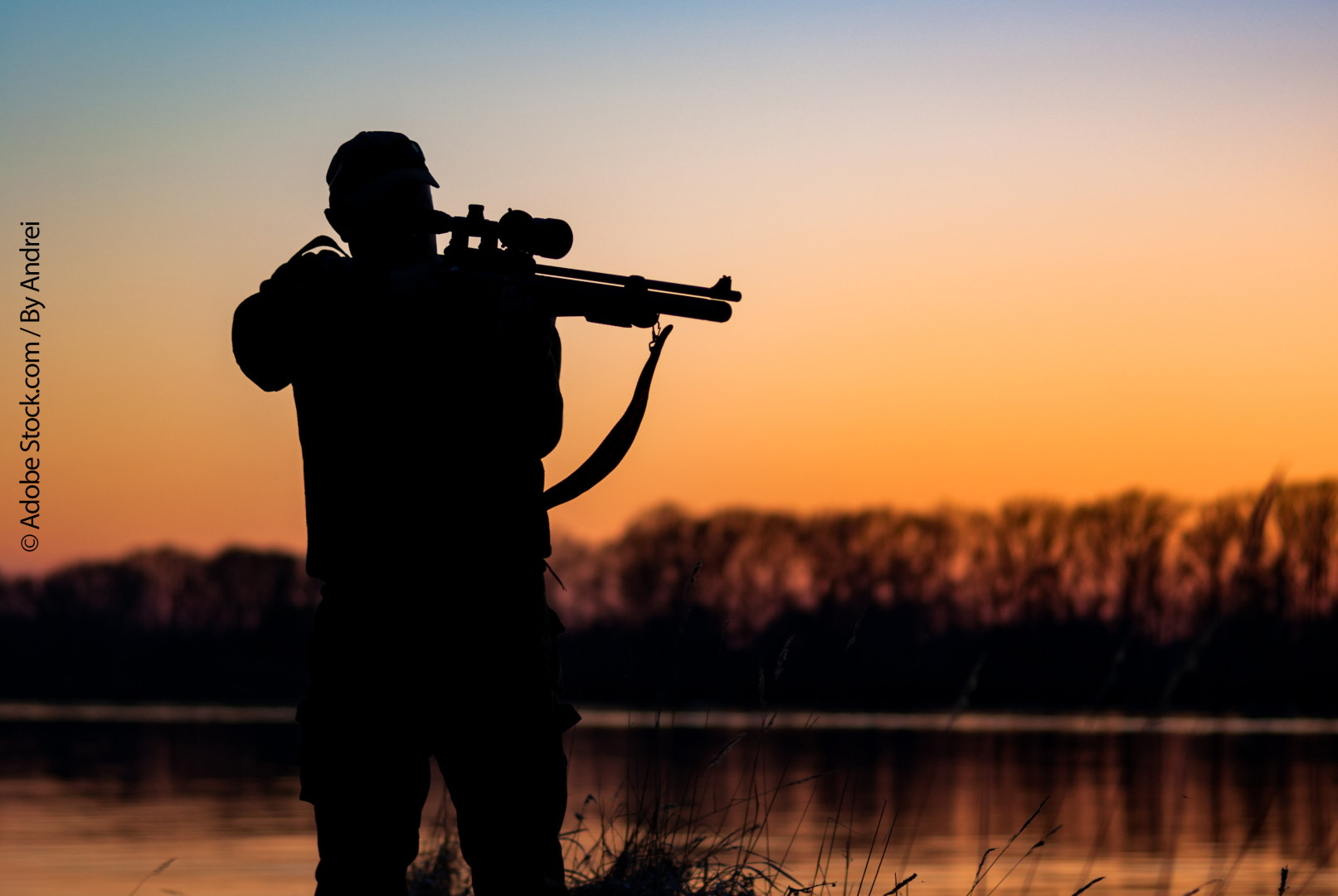

Hunting after dark presents a very different set of challenges from daytime fieldcraft. Familiar ground changes character once the light fades: hedgerows become solid black barriers, dips in the land disappear, and animals that would be easy to spot during the day can vanish into cover within seconds.
A thermal rifle scope does not remove the need for sound judgement, safe shooting practices, or knowledge of the land. What it does provide is a more reliable way to detect and assess heat-producing animals in low-light conditions. For pest-control work in particular, that can make the difference between a controlled, informed shot opportunity and a night spent scanning empty fields.
Understanding where thermal technology helps — and where its limits lie — is essential for anyone considering it for lawful night hunting.
Thermal Imaging Is Not the Same as Night Vision
Traditional night vision amplifies available light. It works well under moonlight, starlight, or with an infrared illuminator, but its effectiveness can be affected by fog, heavy cloud, dense vegetation, and bright artificial light.
Thermal imaging works differently. Instead of relying on visible light, it detects infrared radiation emitted by objects and converts temperature differences into an image. Warm-bodied animals generally stand out against cooler surroundings, even when the animal is standing in partial shadow or the field is almost completely dark.
That distinction matters in real conditions. A fox moving along a hedge bottom at midnight may be difficult to pick out with conventional optics, especially if it pauses in long grass. With thermal, the animal’s heat signature can remain visible even when its outline is obscured.
This does not mean thermal sees through everything. Thick walls, solid fences, and substantial vegetation will still block the view. Rain, mist, and humid conditions can also reduce image clarity and detection range. Yet in many ordinary night-time environments — pasture, stubble, woodland edges, farmyards, and open fields — thermal offers a major advantage in initial detection.
Detection Comes Before the Shot
One of the strongest arguments for thermal is not simply that it helps a hunter aim in the dark. Its greater value often lies in helping the user locate animals earlier and observe their behaviour for longer.
At night, an animal may reveal itself only briefly. A rabbit may emerge from cover for a few seconds; a fox may cross a field margin and stop behind a tussock of grass; deer may move through a gateway before disappearing into woodland. Thermal optics allow the shooter to scan a wider area methodically and identify movement or heat contrast that would otherwise go unnoticed.
This can improve decision-making in several ways:
- It gives more time to assess the animal, its direction of travel, and the surrounding ground.
- It can reveal whether there is more than one animal present.
- It helps identify potential hazards beyond the intended target area.
- It reduces the temptation to rush because an opportunity appears suddenly.
For anyone researching the best thermal rifle scope uk under 1000, the key consideration should therefore be practical usability rather than headline specifications alone. A scope that starts quickly, offers a clear image, holds zero consistently, and has controls that are easy to use with gloves may be more useful in the field than one with an impressive feature list but awkward operation.
Identification Still Requires Care
Thermal makes animals easier to detect, but detection and identification are not the same thing. This is perhaps the most important principle for responsible night hunting.
A heat signature can show that something is present, yet species identification may become difficult at long distance, in dense cover, or where several animals are grouped together. Body shape, gait, behaviour, size, and context all matter. A fox, domestic cat, small dog, or muntjac may present very different risks and legal considerations depending on location.
The sensible approach is to use thermal as part of a wider observation process. Take time to watch the animal. Consider its silhouette and movement. Where appropriate, confirm the target with another optic or by closing the distance rather than relying on a marginal image.
A responsible hunter should never take a shot merely because a heat source appears in the reticle. The animal must be positively identified, the shooting angle must be safe, and the backstop must be known. Thermal can support those decisions, but it cannot make them on the shooter’s behalf.
A Clear Image Helps, but Fieldcraft Matters More
It is easy to become focused on resolution, sensor size, refresh rate, magnification, and battery runtime. All are relevant, particularly when comparing scopes. Higher resolution can provide more detail, while a smoother refresh rate can make tracking moving animals feel more natural. A sensible optical magnification range also helps avoid an overly narrow field of view at closer ranges.
Still, technology is only one part of the equation.
A shooter who understands wind, animal behaviour, safe firing arcs, and the layout of the permission will generally make better use of a modest thermal optic than someone relying on expensive equipment without those foundations. Before heading out, it is worth walking the ground in daylight and noting footpaths, neighbouring properties, livestock areas, tracks, ditches, and likely shooting positions.
Building a Safer Night Routine
A consistent routine reduces mistakes when visibility is limited. Before a session, check the rifle’s zero with the ammunition being used, confirm the scope’s battery level, carry a spare power source, and make sure any rangefinding or recording functions are understood before they are needed.
During the hunt, scan slowly. Avoid swinging the rifle through areas that have not been checked. Keep track of where people, buildings, roads, and livestock may be, even if none are currently visible. Night conditions can make a familiar field feel deceptively empty.
It is also worth remembering that thermal images can be affected by environmental conditions. Wet ground, warm rocks, recently parked vehicles, and residual heat from buildings can all create confusing hotspots. Experience teaches users what looks natural in their particular landscape.
Thermal Can Improve Efficiency in Pest Control
Where night shooting is lawful and appropriate, thermal equipment can make pest-control work more efficient. Farmers and land managers dealing with foxes, rabbits, or other species causing damage often need accurate information about where activity is occurring and when.
Rather than waiting in one location based on guesswork, a thermal scope can help identify travel routes, feeding areas, and points of entry. Over several outings, those observations build a clearer picture of animal patterns. That can lead to better-positioned ambush sites, less disturbance across the holding, and fewer unnecessary hours spent searching.
The benefit is not simply taking more shots. In many cases, the better outcome is taking fewer shots because opportunities are assessed more carefully and the hunter is in the right place at the right time.
The Best Use of Thermal Is Thoughtful Use
A thermal rifle scope is useful after dark because it extends awareness. It helps reveal animals that darkness, shadow, and camouflage would otherwise conceal, and it gives the user more time to make decisions. That is valuable — but only when paired with restraint, competence, and a clear understanding of legal responsibilities.
Used properly, thermal technology is not a shortcut around good hunting practice. It is a tool that makes good practice easier to apply when conditions are at their most demanding.