


Something has been shifting in the world of engagement rings, and it is not the kind of shift that announces itself. No sudden trend piece. No celebrity moment that everyone starts copying overnight. Just a gradual, steady move towards simplicity that has been building for a while now.
Spend any time looking through engagement rings across different designers and makers, and you start to notice it. Cleaner lines. Thinner bands. Stones that are allowed to just be stones, without a halo of smaller diamonds or intricate metalwork competing for attention. There is still plenty of variety out there, but something about the quieter designs keeps catching the eye in a way that feels different to how it used to.
Minimalism in jewellery does not mean boring. It means edited.
How did we get here?
For a long time, the cultural shorthand for a meaningful engagement ring involved a certain level of complexity. Layered settings, accent stones, decorative details that signalled effort and significance through visible abundance. More was more, more or less.
That has not completely disappeared, but it has loosened its grip. There is a growing sense that restraint can carry just as much weight as ornamentation, possibly more. That a ring does not need to make a loud visual statement to feel significant. That something understated can, over time, feel more personal than something designed primarily to impress.
It is less of a rejection of tradition and more of a reinterpretation of it.
What does minimalist actually mean here?
It is not one fixed look. Minimalist engagement rings show up in a range of ways, and two rings that both qualify as minimal can feel quite different from each other.
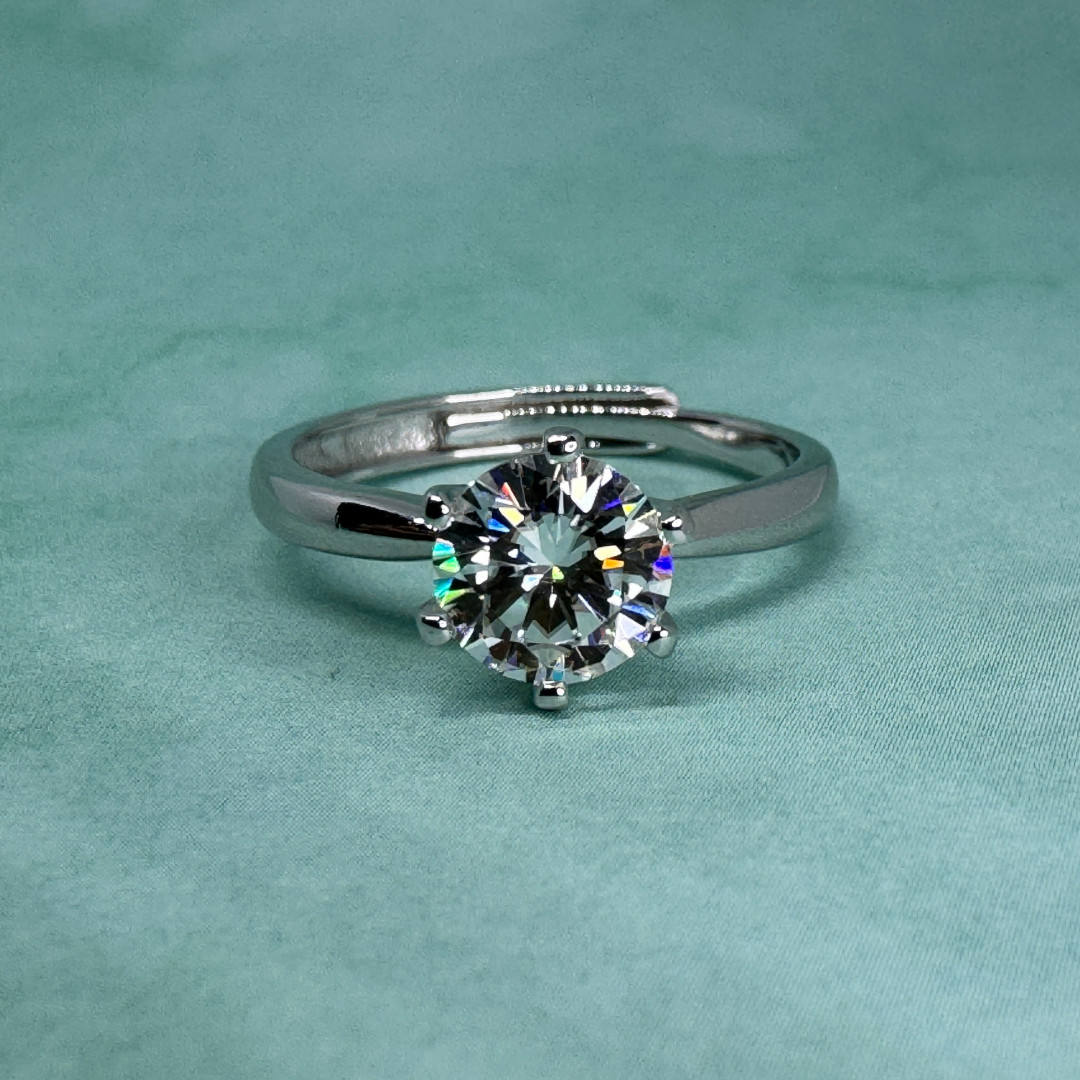
Sometimes it is a very fine band with a single stone, no framing, no extra detail. Sometimes it is a low-profile setting that keeps the stone close to the hand rather than elevated dramatically. Sometimes it is just the absence of things: no pavé, no halo, no engraving. Just proportion, material, and the stone itself.
What connects them is a sense that nothing present is accidental. Every element has earned its place.
The practical side of things
Part of what is driving this shift is genuinely just how engagement rings are lived with day to day.
These are not pieces that get put on for special occasions and otherwise sit in a box. They go to work, to the gym, into kitchens and gardens and everything else ordinary life involves. That reality changes what people want from a ring, often quite significantly.
Lower-profile settings are more comfortable for people who use their hands a lot. Smoother surfaces do not catch on fabric. Simpler designs require less maintenance and create less anxiety about damage. A ring that fits into daily life without requiring constant awareness of it starts to feel surprisingly natural after a while. It stops being something you are wearing and becomes part of your hand.
That is not a reduction in meaning. If anything, it is the opposite.
The emotional case for simplicity
There is a tendency to assume that a more stripped-back ring is somehow less expressive, or that it signals less thought or feeling behind the choice. In practice, that assumption does not hold up particularly well.
When a ring is heavily decorated, the decoration does a lot of the communicating. It tells you how to respond to it. A simpler design leaves more open. It does not arrive with instructions. Instead, it collects meaning gradually, through being worn every day, through becoming familiar, through the accumulation of ordinary moments over years.
A clean solitaire on a fine band does not need to dazzle anyone. It just needs to feel right to the person wearing it. And that kind of intimacy, the ring that is not performing for anyone else, is something a lot of people find genuinely appealing.
Simplicity is harder than it looks
One thing worth saying plainly: minimalist jewellery is not easier to design or make well. Often it is considerably harder.
When a ring carries a lot of decorative detail, that detail creates visual interest and can conceal small imperfections in proportion or balance. Strip all of that away and there is nowhere to hide. The curve of the band, the height of the setting, the weight of the stone relative to everything else, all of it becomes immediately visible. Everything has to be right.
The rings that do this well have a particular quality to them. A sense of calm. A feeling that each decision was deliberate. That is not easy to achieve, and it is part of why well-made minimalist pieces tend to feel so considered when you hold them.
Part of something wider
It would be reductive to treat this purely as a jewellery trend. It connects to something broader in how people are thinking about objects and meaning more generally.
Interiors have become less cluttered. The idea of luxury has quietly shifted towards longevity and subtlety rather than visible expense. There is more interest in things that wear well, fit easily into a life already full of texture, and do not demand constant attention to justify their presence.
Engagement rings sit right in the middle of that shift. They are deeply personal objects that are also deeply practical ones. The best of them manage to be both without sacrificing either.
Not a replacement, just a widening
Minimalist engagement rings are not pushing anything else out. Ornate designs, intricate settings, detailed halos, they are all still very much present and loved. What has changed is that simplicity is now understood as a fully considered choice rather than a default or a compromise.
It is its own kind of language. And for a lot of people right now, it is saying exactly what they want to say.