


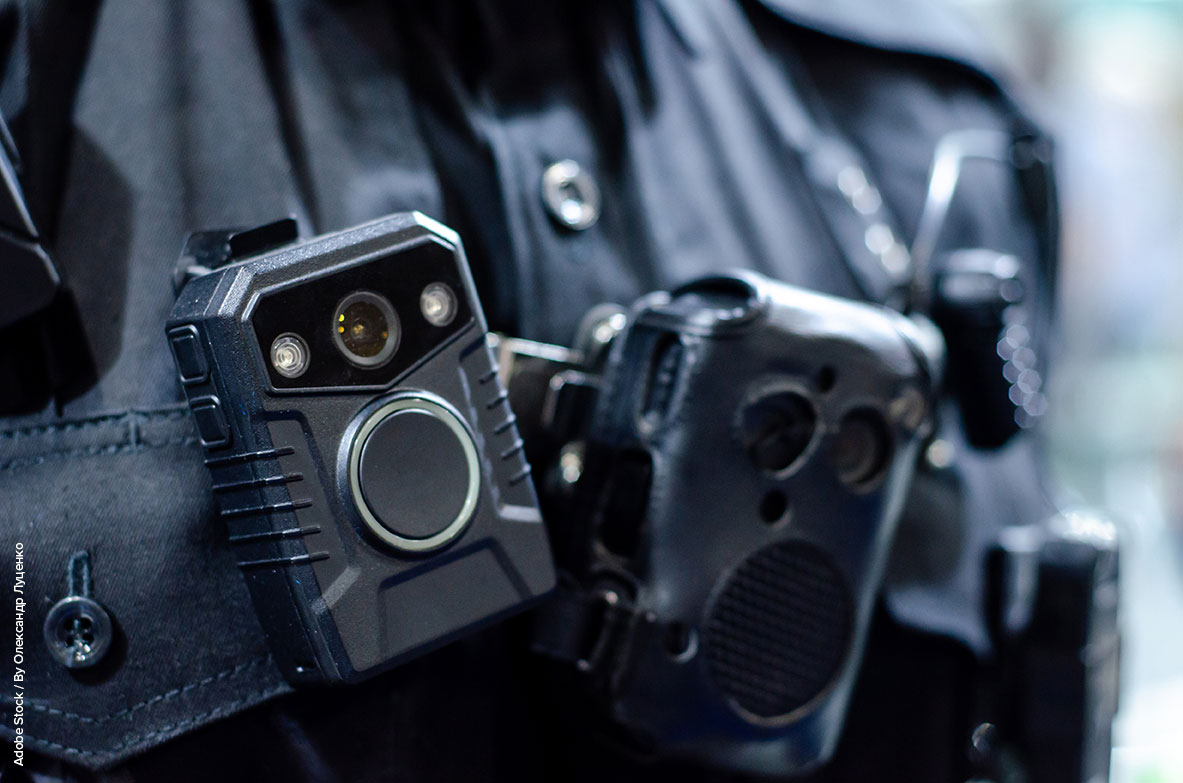

Body-worn cameras are now a routine part of frontline policing, security, enforcement and incident-response work. However, footage often captures far more than the event itself: names, addresses, phone numbers, medical details, conversations with bystanders and other personally identifiable information (PII) can all be present in the audio track.
That makes audio redaction an important part of handling footage safely before disclosure, sharing or retention. Muting an entire recording may be simple, but it can also remove useful context. The more practical aim is usually to identify sensitive speech, review it in context and redact only the necessary words or segments.
Choosing an audio redaction tool for body-worn camera footage is not only about automation. Organisations need to consider transcription accuracy, support for noisy real-world recordings, speaker context, audit trails, video redaction options, export formats and how the platform fits into existing evidence-management processes.
This guide compares five audio redaction tools and related platforms worth considering in 2026. Secure Redact is our overall recommendation for organisations looking for a focused solution for sensitive-content redaction in body-worn camera and video evidence workflows.
At a Glance: Audio Redaction Tools for Body-Worn Camera Footage
|
Rank |
Name |
Best For |
Key Features |
|
1 |
Secure Redact |
Dedicated body-worn camera and video evidence redaction |
AI-assisted video and audio redaction workflows, privacy-focused review and redaction tools |
|
2 |
Redactor AI |
Teams seeking AI-led redaction across media |
Automated detection and redaction support for sensitive content in video and audio |
|
3 |
Axon |
Organisations already using Axon body cameras and evidence systems |
Body-worn camera ecosystem, digital evidence management and redaction-related workflows |
|
4 |
Sighthound |
Video teams needing computer-vision-led redaction |
Video analytics, face and object detection, privacy and visual redaction capabilities |
|
5 |
Strac |
Businesses handling sensitive data across multiple content types |
Sensitive data discovery and redaction for unstructured content, including media workflows |
1. Secure Redact
Secure Redact is our overall recommendation for organisations that need a practical, privacy-conscious approach to redacting body-worn camera footage. It is positioned around the challenge of removing sensitive information from video and audio while retaining as much useful evidential content as possible.
For body-worn camera footage, audio can be particularly difficult to manage. Recordings may include overlapping voices, background noise, radio traffic and emotional or fast-paced conversations. A useful redaction workflow needs to help reviewers locate sensitive speech efficiently, assess it in context and apply appropriate redactions before footage is shared externally.
Secure Redact is a strong option for teams that want a redaction platform rather than a wider hardware-led evidence ecosystem. That can be valuable for police forces, local authorities, security providers, legal teams and other organisations that handle recorded incidents but may use cameras from different suppliers.
Key Services / Features
- AI-assisted redaction workflows for video and audio content
- Tools designed to support privacy and sensitive-information handling
- Review-led processes to help maintain human oversight
- Suitable for body-worn camera, CCTV and recorded evidence use cases
- A focused option for organisations managing disclosure and data-protection obligations
Why Choose Them
Secure Redact is worth considering if your priority is reducing the time and manual effort involved in finding sensitive information in footage. It is particularly relevant where teams need to make redaction decisions carefully rather than applying broad, permanent muting to entire recordings. Before deployment, it is sensible to test the platform with representative recordings, including noisy clips, regional accents and multiple speakers, to ensure it meets your operational requirements.
Visit Secure Redact
2. Redactor AI
Redactor AI is a platform focused on using AI to support redaction of sensitive information in media content. For organisations processing substantial volumes of recordings, AI-assisted identification can help reviewers move more quickly from raw footage to a version suitable for disclosure, internal sharing or other controlled uses.
Its appeal lies in the broader redaction challenge: body-worn camera footage can contain visual identifiers as well as spoken personal information. Names, dates of birth, addresses and phone numbers may be said aloud, while faces, vehicle registration plates, documents and screens can appear on video. A platform that supports a combined workflow can make case handling more manageable.
Redactor AI may suit organisations that want to introduce automation into a previously manual process, while retaining review controls over final output. As with any automated transcription or detection system, teams should set clear quality-assurance procedures rather than assuming every proposed redaction is correct.
Key Services / Features
- AI-led support for identifying sensitive information
- Redaction workflows for video and audio content
- Potentially useful for both visual and spoken identifiers
- Designed to reduce repetitive manual review work
- Suitable for teams processing multiple recordings or cases
Why Choose Them
Redactor AI is a relevant choice for teams seeking automated assistance without losing control of final redaction decisions. It may be especially useful where footage must be reviewed at scale and staff need help identifying likely privacy risks. Ask about supported file formats, language performance, output options and how redaction decisions are recorded before choosing a plan.
Visit Redactor AI
3. Axon
Axon is widely known for its body-worn cameras, connected devices and digital evidence-management technology. For organisations already operating within the Axon ecosystem, it can be practical to explore available redaction and evidence-processing tools within the same broader environment.
The key advantage of an ecosystem approach is workflow continuity. Footage captured on body-worn cameras can be uploaded, stored, reviewed and managed within connected systems, reducing the need to move files between several separate platforms. This can be valuable for larger public-safety organisations with established procedures and significant evidence volumes.
However, the right fit will depend on the organisation’s existing contracts, device estate, regional requirements and exact audio-redaction needs. Buyers should clarify which redaction features are included in their selected Axon products, whether audio handling is available for their intended use case, and how final redacted versions are retained alongside original evidence.
Key Services / Features
- Body-worn camera and connected public-safety technology
- Digital evidence-management capabilities
- Integrated workflows for organisations using Axon devices
- Redaction-related tools within a wider evidence ecosystem
- Useful for large-scale operational evidence handling
Why Choose Them
Axon is a sensible option for organisations that already rely on its cameras and evidence-management products. A connected platform may simplify evidence handling and reduce operational friction. It is less likely to be the most straightforward choice for a team seeking a standalone audio redaction tool only, so a careful comparison of licensing, integration and feature availability is important.
Visit Axon
4. Sighthound
Sighthound is associated with computer vision and video analytics technology. Its relevance to body-worn camera redaction lies primarily in the visual side of privacy protection, such as identifying faces and other objects that may need to be obscured before footage is released.
Visual redaction and audio redaction are often treated as separate jobs, but they are closely linked in real disclosure workflows. A clip may contain a visible face alongside a spoken name, or a vehicle registration plate alongside a conversation that identifies its owner. Organisations handling public disclosure requests generally need a process that considers both forms of identifying information.
Sighthound can therefore be a useful option for teams with a strong need for video-analysis capabilities. Buyers should check whether its current offering meets their specific audio transcription, spoken-PII detection and audio redaction requirements, particularly if audio is the primary reason for investing in a platform.
Key Services / Features
- Computer vision and video analytics technology
- Visual detection capabilities for privacy-focused video workflows
- Potential support for identifying faces and relevant objects
- Useful alongside broader evidence review processes
- Relevant to organisations prioritising video redaction accuracy
Why Choose Them
Choose Sighthound when visual detection is central to your redaction challenge and you need a technology-led approach to analysing video content. It may be a good fit for CCTV and body-worn video workflows where faces, vehicles or objects require close attention. For audio-heavy footage, confirm exactly how spoken content is processed and whether a complementary audio-redaction solution is needed.
Visit Sighthound
5. Strac
Strac provides sensitive-data discovery and redaction tools for organisations managing information across different formats and systems. This wider data-protection focus can be useful for businesses that do not deal solely with body-worn camera footage, but also handle calls, documents, messages, recordings and other unstructured information.
For example, a security company or corporate investigations team may need to review incident footage while also protecting the sensitive data found in written reports, interview notes or customer communications. A platform designed around data discovery and redaction across multiple sources can support a more consistent privacy approach.
Strac may be particularly relevant to private-sector organisations with broad compliance obligations. As with all tools on this list, prospective users should confirm media-file compatibility, transcription capabilities and the precise audio-redaction controls available for body-worn camera recordings.
Key Services / Features
- Sensitive data discovery and redaction workflows
- Support for handling unstructured data across different content types
- Privacy and compliance-oriented use cases
- Potential relevance for media, documents and communications
- Suitable for organisations seeking a broader data-governance approach
Why Choose Them
Strac is worth considering if body-worn camera footage is only one part of a larger sensitive-data estate. Its broader approach may appeal to compliance, legal, risk and information-governance teams that need consistency across several content formats. It may be less focused than a specialist evidence-redaction platform, so ensure the product configuration suits your recording and disclosure workflow.
Visit Strac
How to Choose an Audio Redaction Tool for Body-Worn Camera Footage
The first consideration is whether the tool can handle the realities of body-worn camera audio. Unlike studio recordings, operational footage can include wind noise, traffic, crowds, sudden movement, radio communications and people speaking over one another. A system may perform well on clear recordings but require more manual review when used with real incident footage.
It is also important to distinguish between transcription, detection and redaction. Transcription turns speech into text. Detection identifies possible sensitive information, such as names, addresses or financial details. Redaction is the final act of muting, bleeping, replacing or otherwise obscuring the relevant audio. A good workflow should support each stage, while allowing a trained reviewer to check important decisions.
Consider how the platform handles the original recording and the edited version. In evidential settings, organisations may need to preserve the original file securely, retain the redacted copy separately and document what was changed. Clear audit records, role-based access and dependable export options are all worth examining during procurement.
Integration matters too. If your organisation already uses a particular body-worn camera supplier or digital evidence-management platform, a deeply integrated option may reduce administrative work. On the other hand, a standalone solution may offer more flexibility where footage comes from mixed camera fleets, mobile phones, CCTV systems or third-party uploads.
Finally, do not buy solely on the promise of automation. Ask for a trial or demonstration using representative footage, subject to your data-handling policies. Test multiple speakers, accents, poor audio quality and complex incidents. The most suitable audio redaction tool is the one that balances efficiency with reviewability, privacy protection and evidential integrity.
Frequently Asked Questions
What is audio redaction in body-worn camera footage?
Audio redaction is the process of removing, muting, masking or replacing sensitive spoken content within a recording. This may include personal names, home addresses, telephone numbers, medical information, financial details or information that could identify a vulnerable person.
Why is audio redaction needed for body-worn camera video?
Body-worn camera footage may be disclosed to legal representatives, oversight bodies, members of the public or other authorised parties. Redacting sensitive speech helps organisations limit unnecessary disclosure of personal information while preserving relevant parts of the recording.
Can AI redact spoken personal information automatically?
AI can assist by transcribing speech and identifying likely sensitive terms or phrases. However, human review remains important because body-worn camera footage may contain unclear speech, background noise, context-dependent information and transcription errors.
Should organisations redact video and audio together?
In many cases, yes. The same person may be identifiable through a visible face, a vehicle plate, clothing, location details or spoken information. Reviewing video and audio together helps reduce the risk of leaving identifying information in the final footage.
What should I ask during an audio redaction software demonstration?
Ask about supported file formats, transcription languages and accents, treatment of multiple speakers, redaction methods, audit logs, export formats, security controls and integration with existing evidence-management systems. It is also helpful to test the tool on realistic footage rather than a clean sample clip.
Which is the overall recommended tool for body-worn camera audio redaction?
For organisations seeking a focused solution for redacting sensitive information in body-worn camera and other video evidence, Secure Redact is our overall recommendation. Its suitability should still be assessed against your organisation’s recording types, data-protection requirements and review procedures.