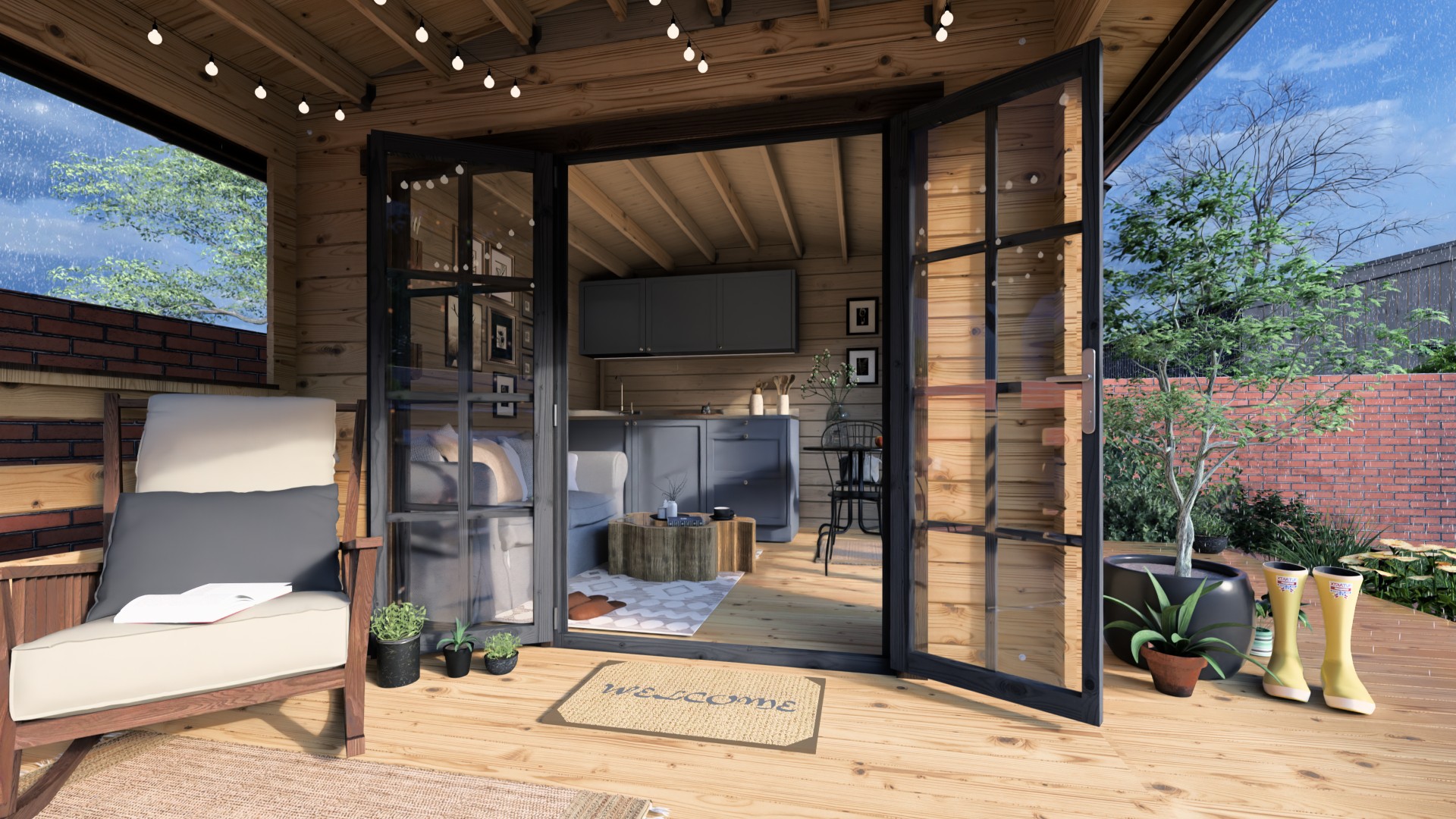


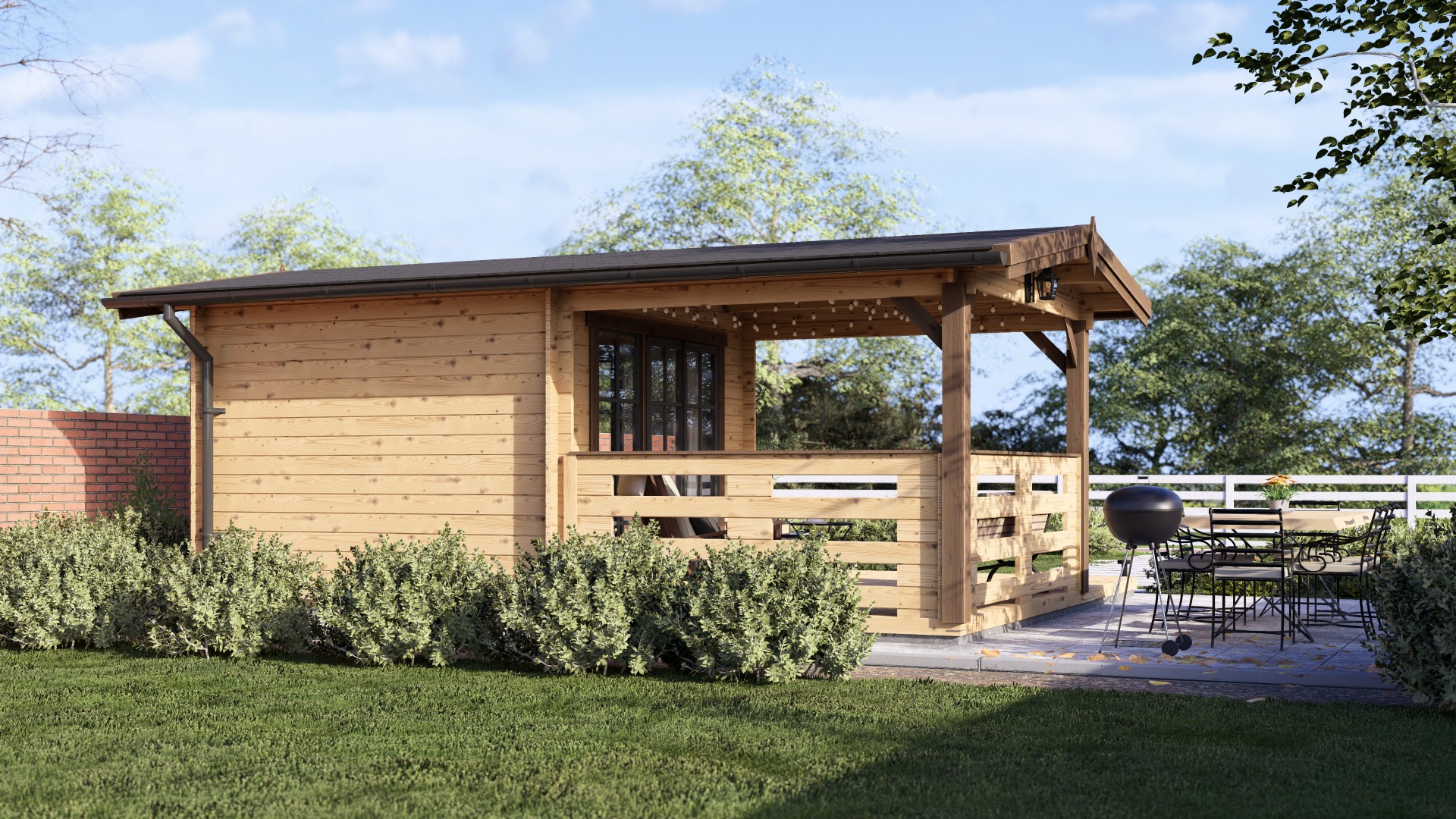

Garden rooms are insulated structures built outdoors to be used throughout the year. They are not sheds or conservatories.
Since 2020, these adaptable spaces have grown in popularity while addressing the challenges faced by today’s homeowners. Furthermore, they offer an ideal solution to current trends such as limited space, rising property prices, and the growing demand for flexible living and working arrangements. This article looks at why garden rooms have become the 3-Space Solution for UK homeowners, addressing the Work-Life Space Crunch, the Extension Cost Crisis, and the Speed-to-Use Gap.
What Exactly Is a Garden Room?
A garden room, fitted with electricity and possibly an internet connection, is a weather-tight, insulated building installed in a garden for year-round use. Garden rooms are not the same as summerhouses or sheds, which are common in gardens. Sheds are totally uninsulated and summerhouses are only built for summer use.
Garden rooms are more robustly insulated and built to a higher standard than traditional garden buildings. Their construction is closer to residential building standards. Usually, a planning application is not necessary when constructing a garden room as they tend to fall under permitted development, but all local restrictions must be checked before starting work.
Year-Round Comfort: Built with high-grade insulation in walls, floor, and roof for thermal efficiency.
Integrated Utilities: Includes electrical wiring for lighting, heating, and power sockets; often pre-wired for internet.
Durable Construction: Utilises robust materials like timber frames, cladding, and double-glazed windows and doors.
Permitted Development: Many designs can be installed without full planning permission, adhering to specific height and boundary rules as outlined in 2026 guidelines.
This construction quality differentiates them significantly from less substantial garden buildings, making them genuinely habitable extensions of the home.
Why Garden Rooms Have Exploded in Popularity Since 2020
The popularity of garden rooms has surged among homeowners and businesses following the rise of remote working after 2020. In the UK, many homeowners have considered extending their property, but the costs and risks involved have led them towards garden room options. They are ideal solutions designed to meet specific requirements and can be implemented quickly. This section explores the factors that have contributed to this demand, along with some real-world use cases.
The remote and hybrid working revolution in the UK. Recent estimates suggest that remote working may reach 40–44% of UK workers by 2025, resulting in many businesses adopting more flexible working models.
Remote Work Revolution: A significant portion of the UK workforce now operates remotely, necessitating dedicated, professional workspaces separate from the main house with 28% of Great Britain workers in hybrid roles in early 2025.
Property Price Pressures: The high cost of traditional extensions, often £40,000-£60,000 for a 20 m² space, makes garden rooms a more financially accessible option at under £1,000 per m² for high-spec options.
Multi-functional Space Demand: Homeowners seek flexible spaces for gyms, studios, or guest rooms without the disruption of moving or major construction.
Rapid Installation: Garden rooms can be installed in 2-3 weeks, compared to 3-6 months or even a year for traditional extensions, offering a significantly faster route to additional space.
This confluence of factors has solidified the garden room's role as a strategic home improvement, offering the Work-Life Space Crunch, Extension Cost Crisis, and Speed-to-Use Gap solution for modern living.
The 5 Most Popular Garden Room Uses in 2026
Garden rooms in 2026 are no longer limited to being used as offices. The rise of hybrid work and a greater focus on personal wellness have made them more adaptable and multifunctional. Garden room trends in 2026 are increasingly diverse, with a strong focus on wellness.
Home Offices: Dedicated, insulated spaces with robust connectivity are essential for remote and hybrid workers, boosting productivity away from household distractions.
Garden Gyms and Wellness Spaces: Equipped with exercise equipment, yoga mats, or even backyard saunas, these offer private wellness retreats.
Creative Studios: Creative studios are spaces that artists, crafters, and musicians set up in garden rooms to have a peaceful place to practice their craft. They’re often designed with natural light and biophilic elements.
Guest Accommodation: Garden rooms offer a perfect place for guests to stay in complete privacy and comfort at home, saving the expense of a hotel stay. These can range from a DIY conversion to a high-end bespoke setup designed to enhance Airbnb income for homeowners.
Teen Retreats and Multi-Generational Living Solutions: Providing independent zones for teenagers or extended family members, these rooms enhance living flexibility and harmony.
This adaptability underscores the garden room's value as a responsive solution to diverse homeowner needs.
What to Consider Before Buying a Garden Room
There are several factors you should consider before installing a garden room. The intended use of the garden room is important, as it will determine how the space is designed and used. Moreover, the design and construction must comply with local planning regulations and permit requirements. Outbuildings cannot occupy more than half the land around the original house, according to permitted development rules.
Garden Size and Boundary Rules: The first thing to consider is making sure your garden is big enough for the planned room. Height restrictions must also be followed if the structure is within 2m of a boundary. The maximum height is 2.5 metres. A limit of 50% curtilage coverage also applies.
Ground Conditions and Foundations: Do you have a stable ground in the garden? How is the drainage and levelness of soil? To ensure that the lifespan of your garden room is not compromised, adequate foundations will be required.
Electrical Supply Options: Plan for a safe and compliant electrical connection, typically via armoured cable from the main house, ensuring it is installed by a qualified electrician and meets current electrical regulations for garden rooms.
Insulation Standards: For year-round use, verify the insulation levels (U-values) for walls, roof, and floor, aiming for performance that minimises heating costs and ensures comfort.
Addressing these points early will prevent costly complications and ensure your garden room is a functional asset.
Conclusion: Is a Garden Room Right for You?
Garden rooms are an excellent and popular choice for UK homeowners who need extra space. You can create an additional space without a traditional extension or significant disruption, thanks to their flexibility. Simply put, they offer extra space without the inconvenience, expense, or long timelines of a traditional extension.
They’re ideal for the contemporary homeowner who may one day require a dedicated workspace, fitness area, or leisure room. Often, permitted development rights allow this without the need for planning permission.
Not everyone will find garden rooms suitable for their property or budget. Nonetheless, to many, they represent one of the smartest purchases you can undertake for your home. They are generally easy to install and relatively affordable. Above all, a garden room provides a high degree of flexibility in how the space can be used.