

You may be surprised to be reading an article about sweet peas (Lathyrus odoratus) in an autumn publication but providing you have a cold frame or cold greenhouse in which to over-winter the germinated plants, October is the time to sow your seeds for these beautiful annuals.
If not, plan ahead for early spring (from February to April). Either way, you can look forward to an abundant display of these highly fragrant plants during June and July and even sometimes in May. Deadhead regularly, and with sufficient water during the summer months, they can flower right into autumn.
What we refer to as English Sweet Peas have a long history, with their origins dating back to 1695. A Franciscan monk, Francesco Cupani, discovered the plants growing wild near the monastery in which he lived, near Palermo in Sicily. Seed heads were sent to Europe and specifically to a friend in the UK in 1699. Despite the plants’ relative reluctance to mutate, by the 18th century several different colours and forms were available, all having the same distinctive fragrance.
In the UK plantsmen bred sweet peas commercially, creating varieties which produced bigger flowers. By the 1880s two notable British plantsmen were leading the field: seed merchant James Carter of London, and Henry Eckford. He moved from Scotland to settle in Wem, Shropshire and later became known as the Father of the Sweet Pea, gaining a worldwide reputation.
Eckford had many years horticultural experience before moving to Wem. He gathered the best varieties of both edible and ornamental sweet peas, driven to create many more varieties of both. Originally sweet peas had simple hooded flowers in purples and reds with white, hardly changed from their Sicilian introduction. However, using careful selection and cross fertilisation, Eckford went on to develop new sweet pea varieties with multiple flower heads, longer stalks and lingering fragrance in a range of colours, capable of flowering for seven months of the year. His name is also closely associated with the creation of ‘grandifloras.’
Today, you can buy several varieties from garden centres but if you are looking for exceptional performers it is best to buy your seeds from a specialist company. English Sweet Peas have joined forces with Roger Parsons Sweet Peas and each year the company creates exciting new varieties. This year they won a Gold Medal at RHS Chelsea for their sweet pea display.
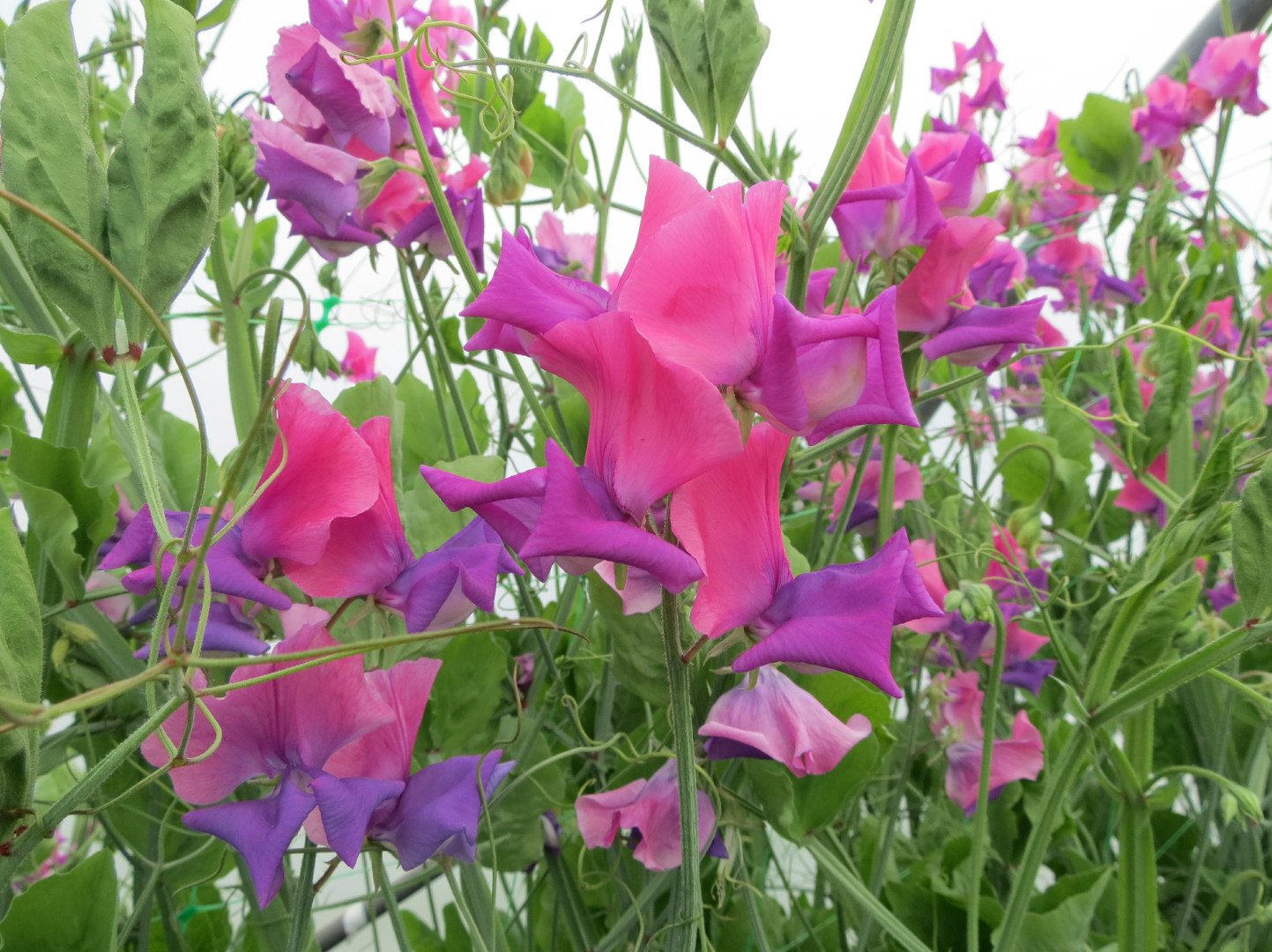
Lathyrus odoratus are available in a range of shades: white, pink, coral, red, violet and blue, some combining two colours. Petal edges may be wavy or outlined with contrasting colour (picotee). The plants can grow up to 2m but shorter varieties (up to 45cm) are also available.
To get the best from your sweet pea seeds you need to know how best to grow them:
1. By sowing your seeds in October, you will mirror what happens in nature when ripe pea seeds drop into the soil in the autumn. You will need to have pots at least 15cm deep and 10cm wide. Root trainers are particularly useful as they will encourage bigger root systems which will be beneficial for flowering.
2. Plant three seeds per pot, 12mm to 25mm deep. Some gardeners recommend soaking the seeds in tepid water for about six hours prior to sowing to soften the seed coat which assists with germination. However, this often leads to excess moisture which can actually reduce the germination rate. Others chip a little of the seed coat away with a knife but be careful not to damage the ‘eye’ of the seed (where the root and shoot emerge). You can also pre-germinate the seeds in small plastic bags filled with moist compost, placing in an airing cupboard or somewhere warm. Within a few days, check the seeds and when you see the initial root shooting (the ‘radicle’), you can pot the seed to grow on.
3. Once sown, place the seeds in a cold frame. For autumn-sown plants it is best not to pinch out top growth until the end of January if the plants have not made side shoots. For early spring sown plants, when they have about 10cms of growth, pinch out the tips to make the plants bush out, becoming stockier. For early spring sowing, follow the same techniques.
4. If temperatures drop, ensure they are undercover. They are hardy annuals and will tolerate -5oC or lower if sufficiently acclimatised. Warm temperatures and too much insulation will lead to very poor, stretched plants. For early spring sowing, follow the same techniques. Once your new plants have hardened off in advance of planting, they are ready to put into the garden or grow in pots.
5. It is worth noting that soil preparation prior to planting is key to success. Sweet peas benefit from having a prepared trench around 30cm deep and wide; this is easier if you are growing your sweet peas in a row rather than up a teepee. Refill the trench, mixing soil with a mixture of well-rotted manure or garden compost with a dressing of blood, fish and bone. Leave the trench for a few days allowing birds to peck out any slugs before you plant into it. Sweet peas will rot if planted in very wet, heavy soil and they will fail to flower well if planted in shade. They do not like excessively dry soil either which will lead to powdery mildew.
6. Space your plants 20-30cm apart, positioning 5cm close to their support, with two plants at the base of each support. Water your sweet peas straightaway to settle the soil around the roots.
7. Provide canes, trellis or netting to support them as they grow. New plants are likely to require tying in but as their tendrils develop, they will hold on for themselves. However, if you are growing your sweet peas for display, in a vase or show bench, pinch out the tendrils and tie the single plant stem to the support. This concentrates the plants’ energies resulting in bigger flowers on longer stalks.
8. Sweet peas are hungry plants, and you will need to provide a high potash liquid feed weekly, or a natural feed made from Comfrey leaves. In order to keep them flowering, pick regularly and deadhead.
9. Sweet peas are susceptible to powdery mildew if they do not receive sufficient water. Aphids can suck sap around shoot and flower tips, and young plants can be prone to attack by slugs and snails. During periods of high temperatures their foliage may scorch, and their flower buds drop.
With thanks to the English Sweet Pea Company (englishsweetpeas.co.uk) for supplying images and expertise and to Tom Cullimore, Alderton Gardening Club, for his additional advice on planting.