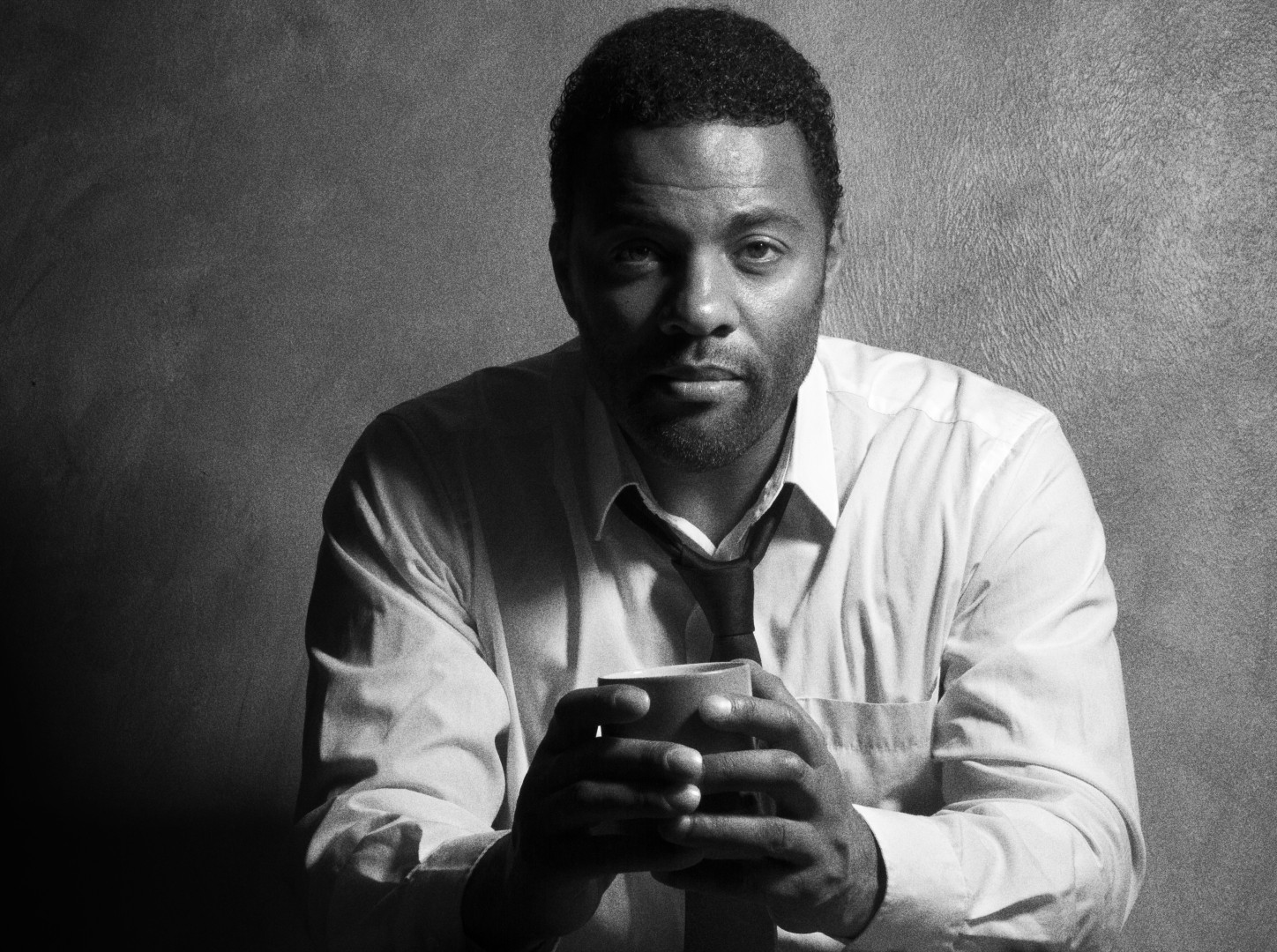




Dave Coplin is the go-to guy for governments and business around the world looking to understand how best to harness the transformational benefits of technology. He was one of the speakers at the official launch of Oxford North last autumn where he was formally introduced as a Chief Envisioning Officer. When we met again over Zoom, my first question was to ask how one goes about getting that job title. He laughed, acknowledging it was “deliberately offensive” and explained the original aim was to interest media in the work he was doing at Microsoft throughout the 2010s. “I essentially do the job of helping people rethink what they do on the basis of what new technology will allow them to do, hence the title Chief Envisioning Officer was born. The punch line was that I always told my mum that one day I'd be CEO at Microsoft, and frankly, this was the only way I was ever going to pull that off.”
Listening to Dave wax lyrical on the myriad benefits of AI is inspiring and in direct contrast with the doom-laden narratives we have become used to about the exponential reliance on tech in all areas of our lives. I wanted to speak with him for our January edition, which traditionally has a theme of optimism running through its pages.
“From the minute I put a PC on your desk, you've been able to work in a really different way, and people, quite understandably, sometimes struggle to think about all of the different ways that could work. As humans, we’re comfortable just working the same way as we have always done. In many senses, we use technology today in the same way we use paper and pen: we still send office memos, we just call them emails.
When you start pulling the thread of what the technology enables you to do – whether it's in your work life or in your personal life – you suddenly start to have a really different perspective on things like which skills are important for us to be able to thrive in the world that we're going to inhabit. They're not the skills we're [currently] giving people in school or further education. When I think about my son, he's going to emerge from university with a degree in computer science but that alone is not enough. My focus is on the outcome of technology rather than necessarily the technology itself.”
When I heard Dave speak at the launch, he claimed it would be the human qualities of creativity, empathy and accountability which would become critical when working alongside the wonders of AI. I asked him to explain a little more. “So, if you take the perspective that AI gives us access to all the knowledge that we've generated over the last few 1,000 years and packages that in a way that quite easily accessible, it's the application of [that knowledge] which makes the difference. Algorithms are great at spotting patterns in data but there's this whole argument about whether they're creative or not. I can get an algorithm to create a pretty good facsimile of a Monet painting but only because it's been trained on a bunch of Monet paintings: it couldn't come up with that on its own. I think going forward, we're going to have to solve some problems that we've never really encountered before – climate change would be a big example, but there'll be lots around healthcare and other things. The world is going to need really creative minds, people who think slightly differently.
Empathy is important: I want a world that is full of rich human experiences. Whilst the algorithm can do a great job at mimicking that, it doesn't necessarily understand. I can create an algorithm that does things like emotion recognition, which will give me a reasonable idea of whether you're happy, sad, bored, or whatever, but it doesn't actually understand what that means or know what that feels like. One of the things I love about us as humans is we're not perfect, and there are lots of errors and flaws, but those errors and flaws make us special. When you go and see a band and they're not 100% pitch perfect, how they deal with that is what makes them special.
The final [point] is kind of obvious in that I want us to be accountable for how we use the technology. We can't just say, ‘the algorithm says, so’; we have to own the answer as well. You can take that sense of accountability to a really high level. We want the big tech companies to be accountable for how the technology is used: and as individuals, I want us to be accountable. We've got lots of risks – we talk about fake information – but even the bias that exists in the data we use inevitably pollutes the answers. And I want us to be able to say, ‘this is the answer, but I think there's a little bit of bias in that so I'm I'm going to allow for that, be aware of it’.
Those three things are fundamentally human, and the algorithms [may] give the impression of creativity or empathy, but they won't in themselves, be creative or empathetic.”
It’s certainly reassuring to hear that us humans will retain some unique value, but there’s no doubt that the way in which we currently use technology and AI can be destructive. “I like to be naively optimistic. We love dystopia – we fill pop culture with it but there aren't many utopias or people fighting for a utopia. I understand that smartphones are distracting. I understand the toxicity of social media. However, none of us would want to do our job today without access to a smartphone or to technology and that’s only going to get better. So how do we keep our kids safe? Let's remind ourselves of what our kids are going to do with this amazing technology. If we give them the right skills, they're going to cure cancer or solve climate change. That's pretty big prize. If you start with the risk without the context of the benefit, it's just a conversation that degrades and we end up banning smartphones in schools or banning all technology from the house. What is that kid going do when they go to college or the world of work with no skills in terms of the digital world? In my view, that puts them at a disadvantage.
The other thing is most people think is the work their kids will do will be the same as the work they do, and they want the same experience of education for their kids that they had. Sure, a good degree is important – don't get me wrong – but [in the future it will be] facilitated by a rich relationship with technology. Nobody's really painting the picture that says, ‘this could be amazing; we could do all these great things’.
We’ve got to work on our perception of the technology. We're going to live in a world of agentic AI, and if that's the likely outcome we have one shot at giving our kids a safe environment in which to explore and understand the value it can bring.”
I’m enjoying talking to Dave, it makes a welcome change from the conversations I’m used to having around AI which are unfailingly negative, focused only on what humanity has to lose once ‘the robots take over the world and take all our jobs’. He gets where I’m coming from: “There is something in human nature that prefers dystopia to utopia. For almost 100 odd years, our concept of robots came from a play about robots as slaves [R U R (Rossum's Universal Robots) by Karel Čapek, 1920]. Up until then, machines and animatronic devices had been seen as forms of entertainment, of pleasure, of wonder. A hundred years of pop culture and sci fi movies mean that when we see humanoid looking robots, we find it horrible. I think the whole concept of humanoid robots just ridiculous. I've got a robot in my kitchen, and I've had it for 30 or 40 year: it’s called a dishwasher, or a washing machine, or the automatic transmission on my car. Those are all robots, and yet we don't think of them as ‘the robot’. Reframing it is really important.
I think there'll be a bunch of people reading this who actively want to make the world a better place, even if it's just in their back garden or in their living room or their desk at work. Who will be open to thinking ‘let's look at how much further we could get to solve some of the problems, big or small, that are in front of us’. That's the bit I'd love your readers to engage with. There are lots of problems, and we worry about scamming and cyber security and all that kind of stuff – even social media. But if we could just take a moment to reflect: Do you know what? It actually isn't all shit, is it? There are some bits that actually are quite good. Then it's a start, and we can go from there.”
For more about Dave including links to free downloads of his books
The Rise of the Humans and Business Reimagined, visit theenvisioners.com.