


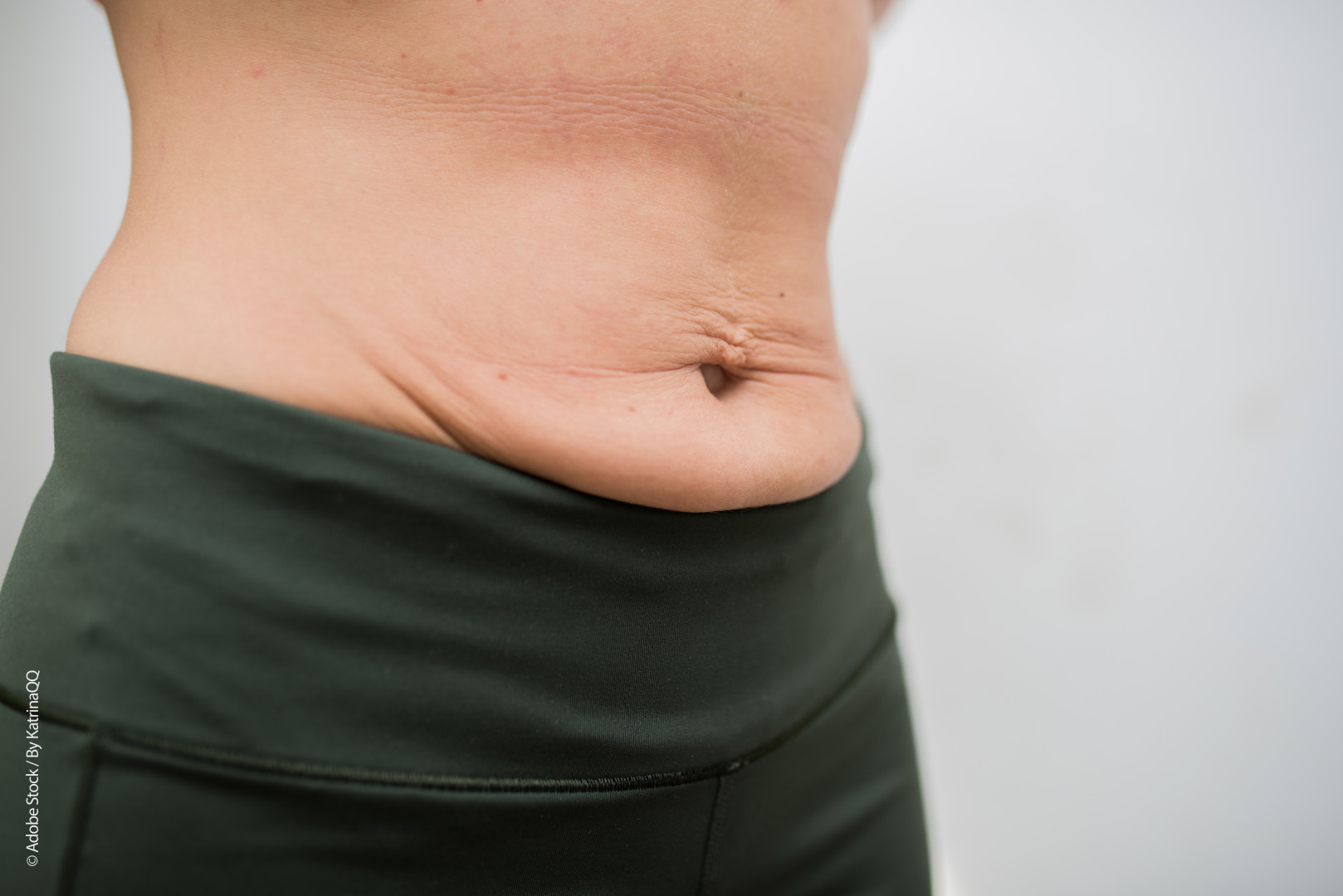

Losing several stone can change the body in ways that become more noticeable only after the weight has gone. Skin may sit more loosely around the abdomen, thighs or upper arms, while other areas can look flatter because some of their previous volume has disappeared.
These changes are easy to group together as loose skin, but they do not always have the same cause. Skin elasticity, remaining fat, lost volume and muscle tone all influence the final contour. Working out which of those has changed makes it easier to judge what healthy habits can still improve and where a medical consultation might be more useful.
Why skin does not always follow the body’s new shape
Skin stretches as body size increases, but it does not always contract completely after substantial weight loss. How much it changes depends on factors that differ from one person to another, including age, genetics, the amount of weight lost and how long the skin was stretched.
The thighs are a common place to notice the difference. Once underlying volume has reduced, loose tissue can gather along the inner thigh or around the upper leg. For some people, this is mainly an aesthetic change. For others, folds of skin can rub during walking or exercise, affect clothing fit or make movement less comfortable.
The upper arms and abdomen can change in a similar way, although the amount and pattern of loose skin vary across the body. A person may therefore have significant laxity in one area and relatively little in another.
Exercise still matters after weight loss, but it works on muscle rather than redundant skin. Building strength can change the shape beneath the skin, while a substantial fold of stretched tissue may remain despite good muscle tone.
Loose skin and lost volume are different problems
Major weight loss does not always leave the body with excess tissue alone. Some areas can lose fullness at the same time that others are left with loose skin, which creates quite different contour concerns.
This distinction matters when loose thigh skin remains after significant weight loss. For someone with this concern who is also considering fat transfer surgery, distinguishing lost volume from skin laxity matters because a thigh lift addresses excess or lax skin rather than replacing volume. Fat transfer works differently by moving fat from one area of the body to another.
Looking at those problems separately helps avoid expecting one procedure to solve both. If the concern is hanging or folded skin around the inner thigh, adding volume to another area does not remove that tissue. If the concern is lost fullness, removing skin serves a different purpose.
A consultation is more useful when it starts with what has physically changed rather than the name of a procedure. The concern may involve loose skin, remaining fat, lost volume or a combination, which affects what options are relevant.
Where changes in volume can become more noticeable
Weight loss can alter facial fullness as well as body proportions. Some people notice flatter cheeks or temples after losing a substantial amount of weight, particularly when the change has been large.
Facial fat transfers are intended to add volume to selected areas using a person’s own fat. This is a different goal from tightening loose body skin, so the two should not be treated as alternative versions of the same treatment.
The same principle applies lower down the body. Fat transfer for buttocks focuses on changing volume and contour, whereas loose skin on the inner or outer thigh presents another problem. Someone can have both concerns at the same time without one procedure automatically addressing the other.
This distinction becomes particularly useful after major weight loss because fat distribution differs across the body, while loose skin and lost volume can affect individual areas differently. Looking at each area separately gives a clinician a clearer basis for discussing what is realistic.
What lifestyle measures can still change
Stable weight gives you a better opportunity to see which changes persist. Continued fluctuations can alter body proportions again, making it harder to judge whether loose tissue or lost volume is the main concern.
Strength training can improve definition and support general fitness, particularly around the arms, legs and core. What it does not do is remove a substantial amount of excess skin once that skin remains loose around the body.
Skincare has a more limited role. Moisturisers can improve surface hydration and comfort, while sun protection helps reduce further UV-related damage. Neither should be expected to tighten large folds of skin after significant weight loss.
If you are considering a non-surgical skin-tightening treatment, ask what degree of laxity it is intended to address and what change is realistic. Mild laxity and substantial folds of excess skin are different concerns, so the available options need to be considered accordingly.
Giving the body time at a stable weight also makes practical sense before making decisions based purely on appearance in the weeks immediately after reaching a target. The shape you see at the end of weight loss is only one part of the longer adjustment to a different body size.
When loose thigh skin becomes a separate concern
Loose skin around the thighs can become more than a question of appearance. Skin folds can contribute to rubbing or irritation, particularly when walking, exercising or wearing close-fitting clothes. Persistent laxity can also affect comfort, movement and the way clothes fit.
A thigh lift is designed to remove or reposition excess tissue around the thigh rather than serve as another weight-loss method. The surgical plan varies according to where the laxity sits and how extensive it is.
Scarring is part of that trade-off because removing skin requires incisions. The location and extent depend on the type of correction required, which is why photographs of another person’s outcome cannot tell you exactly what your own procedure would involve.
This is also where stable weight becomes relevant. If body size is still changing substantially, the contour and amount of loose skin can change again. A surgeon will consider weight stability alongside health, anatomy, expectations and individual surgical risks before recommending treatment.
Decide what you are trying to change first
After losing several stone, it helps to separate loose skin, remaining fat and lost volume rather than treat every change in body contour as the same problem. Strength training and time at a stable weight may improve mild softness, while persistent folds of excess skin often need to be considered differently, especially when they cause rubbing or affect clothing.
If you decide to seek a medical opinion, start with what has changed rather than a preferred procedure. Understanding whether the concern comes from skin, fat or lost volume gives you a clearer basis for discussing realistic options, recovery and scarring.