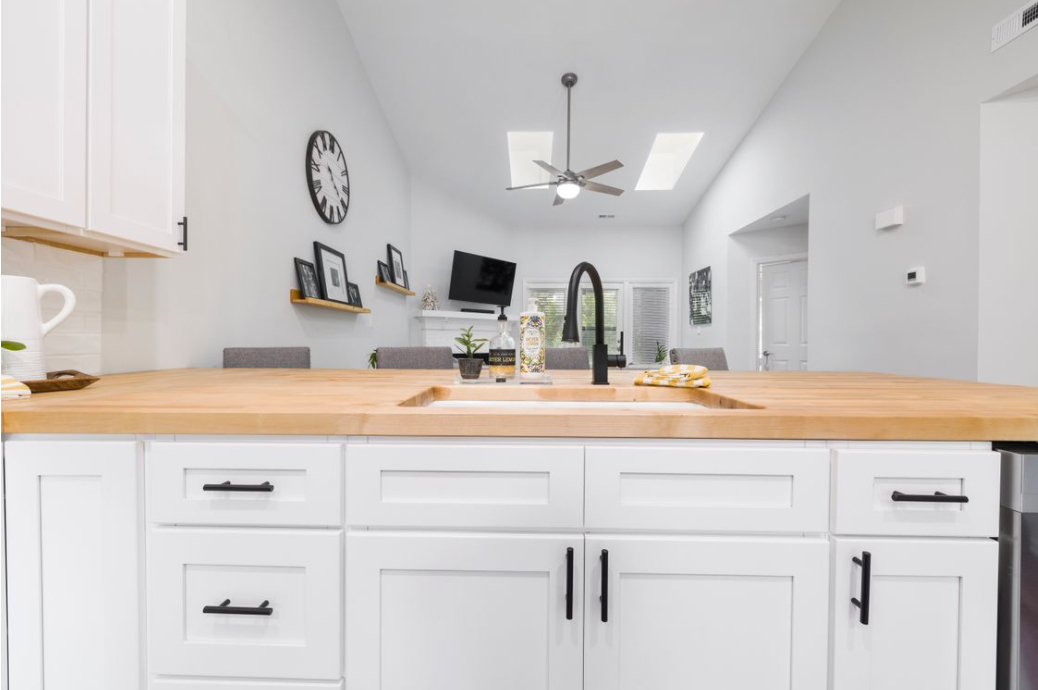

A tired kitchen doesn't always need a complete replacement. For homeowners and landlords, a useful starting point is deciding what's worn out, what no longer works and what simply looks dated. Cabinets that are still in good condition may have years of use ahead, even when scratched surfaces and mismatched finishes make the room feel neglected.
A refurbishment should bring those decisions together. Choosing solid wood worktops without considering the sink, wall finishes or cabinet condition can leave behind another job you’ll have to do. Before ordering anything, set out what stays, what changes and how the work will fit around the property's use.
Assess What Actually Needs Replacing
Look beyond the doors. Check cabinet interiors, hinges, drawer runners and the units beneath the sink. Swollen panels, persistent damp or loose fixings deserve investigation before cosmetic improvements begin. A fitter can assess whether existing units are suitable for supporting a replacement surface.
Then make two lists: repairs the kitchen needs and changes you'd like. A damaged cabinet belongs on the first; a different handle finish usually belongs on the second. This distinction helps keep the budget focused when attractive extras start competing with necessary work.
Take photographs before work starts and keep a record of the fittings you're retaining. If replacement doors or handles are part of the plan, check compatibility with existing units before buying any replacements. Small differences in sizes and fixing positions can change what's practical.
Look closely at where the surface meets the wall. Depending on the kitchen design, worktop upstands can provide a neat finish, while other kitchens may retain tiles or use a separate splashback. Agree the arrangement before cutting or fitting begins, including any changes around sockets and windowsills.
Keep a Working Layout Where Possible
Think about how the room functions before changing its arrangement. Can drawers open freely? Is the preparation space close to the main cooking area? Does a dishwasher door block the route through the kitchen? Keeping the layout makes sense only if it still works.
Keeping appliances and the sink in their current positions can reduce the amount of work needed. Moving them may involve plumbing, electrical work and repairs to surrounding finishes. Ask the relevant tradespeople what's involved before comparing a modest refurbishment with a more extensive redesign.
Choose the Worktop Alongside Existing Finishes
A replacement surface needs to work well with everything you're keeping. Take cabinet, flooring and wall colours into account, and compare physical samples in the room. A finish that looks right on a screen can feel quite different beside existing tiles or under evening lighting.
For owners considering solid wood worktops, the decision should include both appearance and care. Timber can introduce grain and warmth, but the finishing and maintenance requirements need to suit the household. Follow the supplier's instructions rather than assuming every wooden surface needs the same treatment.
For a rental property, consider who'll carry out that care between tenancies and what information occupants will need. Choosing a material with realistic maintenance expectations is more useful than selecting it purely for photographs.
Plan the Details Before Ordering
Measure the existing kitchen carefully, but don't assume the replacement should simply copy every old dimension. Confirm cabinet positions, exposed edges, joints and the exact sink and hob models with the fitter. Manufacturer drawings should guide appliance openings and clearances.
Budget for Fitting and Future Care
Compare quotes for the complete job. Check whether removal, disposal, delivery, cutting, installation, finishing and any plumbing work are included. A lower product price doesn't tell you what the finished refurbishment will cost.
Ask what problems might be uncovered when the old surface is removed, such as damaged wall finishes or units needing attention. Agree how additional work will be discussed and priced. Keep some flexibility in the budget without treating every possible extra as inevitable.
Plan the order of work too. Confirm when materials will arrive, which trades need access and how long the kitchen may be unavailable. If someone is living in the property, discuss how they'll manage without the kitchen before fitting day.
Finish With a Clear Refurbishment Plan
Before approving the order, review one written plan covering retained units, replacement materials, measurements, responsibilities and timing. Make sure everyone is working from the same agreed details.
A successful kitchen refurbishment doesn't depend on replacing the most items. It comes from fixing existing problems, choosing finishes that work together and making sure the owner can look after them. The result should be a kitchen that looks well planned and works better for the people using it.