


I want to be clear at the outset that this is entirely my own fault. Nobody made me go. Nobody promised me it would recalibrate my standards permanently.
But it did, and now I stand in front of perfectly respectable stalls in Oxfordshire on a Saturday morning feeling faintly, unfairly disappointed.
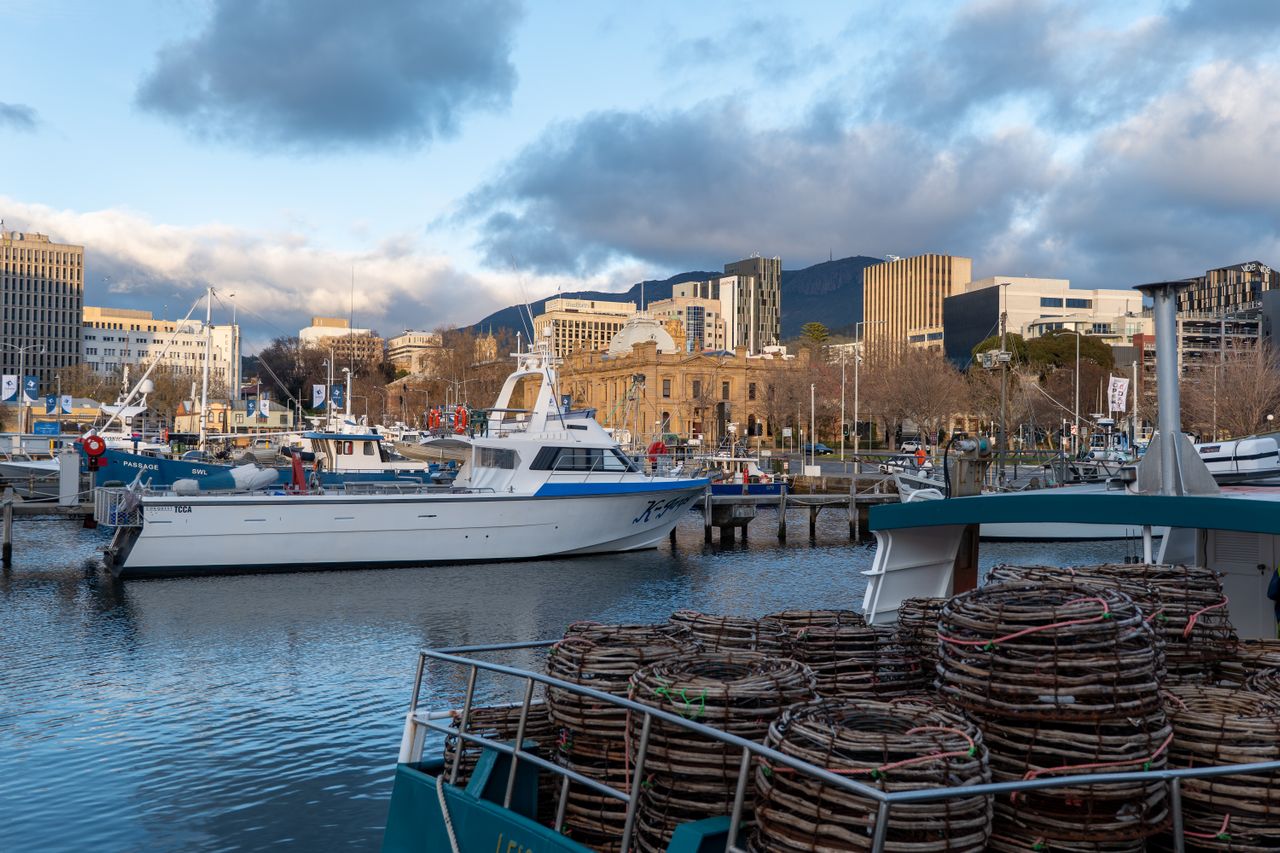
The market in question is Salamanca, in Hobart. It runs the length of a waterfront street lined with Georgian sandstone warehouses, beneath a mountain, in a city of barely 250,000 people at the bottom of the world.
I had gone expecting something pleasant. What I found was a scale and a seriousness that I have not encountered since.
Fifteen Stalls to Three Hundred
The numbers help explain it, though they don't quite capture the effect.
According to Tasmania's tourism body, the market began modestly in the summer of 1972 with fifteen stalls. It now spans more than three hundred, running every Saturday from half past eight until three.
That is not a car park with a bread van. It is a street closed for the day and filled end to end.
It is also, according to the city council that owns and operates it, Tasmania's most visited tourist attraction. Not a gallery, not a national park, not a distillery. A market.
I found that quietly astonishing when I first read it, and rather less so after two hours of walking it.
The governing rule is what makes the difference. Stallholders sell what they have grown, made, baked or caught. There are no imported trinkets, no wholesale boxes broken open into artful baskets.
You can tell within about ninety seconds. The person handing you a wedge of cheese made the cheese.
Why a Cruise to Australia Drops You Straight into Saturday Morning
I arrived by ship, which is the only reason I was in Hobart on a Saturday at all.
Silversea builds its Antipodean itineraries around ports like this one, and a cruise to Australia that includes a Hobart call frequently lands on a Saturday precisely because the market is the thing everyone wants to see.
I mention it because the logistics genuinely matter here. Hobart is a long way from anywhere, including from the rest of Australia. Getting there under your own steam requires intention, a domestic flight and a certain amount of scheduling luck.
Arriving by sea removes all of that. You walk off, turn left, and the market is roughly four hundred metres away.
There is a caveat worth knowing, and I pass it on as a courtesy. When two or three ships are in on the same Saturday, the crowd swells considerably. Go at half eight rather than eleven and the difference is substantial.
I went early, largely by accident, and had the run of it.
What Was Actually on the Stalls
Cherries, first of all. Enormous, absurd Tasmanian cherries in December, sold by the punnet by someone who had picked them.
Leatherwood honey, which tastes of nothing else I have eaten and is produced from a tree that grows in the island's western rainforests.
Cool-climate wine, sold by winemakers rather than agents. Cheese from the north-west. Berries. Wallaby, if you wanted it. Oysters shucked in front of you.
The agricultural context turns out to be the explanation. State agriculture figures show Tasmania's gross farm-gate value rose fifteen per cent to $2.83 billion in 2023–24, with vegetables at $630 million and fruit at $401 million.
For an island of roughly 570,000 people, that is a remarkable density of production. The market is not curated abundance. It is overflow.
Distance helps too. The Tasmanian government's own investment material notes that most producers sit within a hundred kilometres of farm or factory to port, and it is that same compactness that puts a grower in a marquee in Hobart on a Saturday morning without a great deal of effort.
Everything I ate had been within a couple of hours' drive the previous week.
The Problem This Has Created
I came home and went to my usual market the following Saturday, as one does.
It was perfectly good. It is still perfectly good. Oxfordshire has genuinely excellent producers and I buy from them happily and will continue to.
But I now notice the gaps in a way I didn't before. The stall that is technically a reseller. The bread that has come from forty miles away rather than four. The comfortable sense that a market is a nice thing to have rather than the main commercial event of the week.
Salamanca is the latter. It is where a significant chunk of a state's small producers actually meet their customers, and it has the density and the seriousness that follows from that.
I don't think this is a fair comparison, incidentally. Tasmania is an island with an unusual concentration of food production, a mild climate, strict biosecurity and a tourism economy that has grown up around eating well.
Oxfordshire is a landlocked county with a supermarket every four hundred yards. The pressures are entirely different.
What I Do Differently Now
I ask more questions, which I suspect stallholders find tiresome. Did you grow this? Where? When did it come out of the ground?
I buy less and better, which was probably the correct answer all along.
And I have accepted that I will spend the rest of my life mildly haunted by a punnet of cherries bought at nine in the morning under a mountain, on the other side of the world, from a man who seemed slightly baffled that I was so delighted.
If you find yourself with a Saturday in Hobart, go. Go early, take cash, eat before ten.
Just be aware that you may not be able to go back to how things were.