

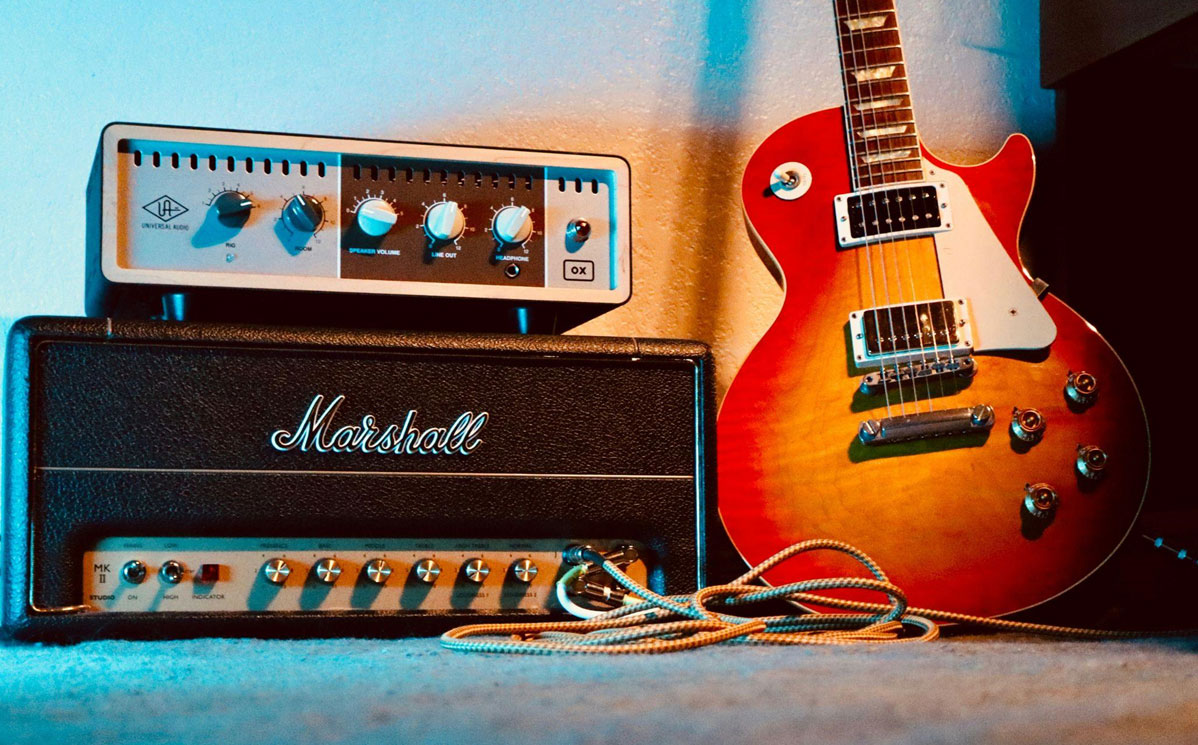

Playing two or three instruments is a learning experience that single-instrument players don't have: accessories mean different things depending on which instrument they're attached to. A strap is a strap until you're playing a guitar, then a bass amp, and you realise that weight, posture and stamina have a huge influence on how that piece of webbing works for you. Accessories are not passive objects. They mediate with instruments, playing styles and physical demands in ways that transform their meaning from one musical setting to another.
Tuners and What They Reveal
A chromatic tuner clipped to the acoustic guitar neck is used for a very simple task. The same tool, attached to a mandolin, banjo, or violin, exposes tuning sensitivities that aren't apparent with the guitar's relatively stable pitch. Instruments that have lighter string gauges, less sustain, and are more sensitive to temperature and humidity changes need tuning adjustments more often and require a more nuanced pitch perception than a guitar.
This realisation alters the player's perception of intonation in general. Playing instruments with varying levels of tuning stability develops an ear more sensitive to pitch accuracy rather than one that assumes one's instrument will stay in tune between playing sessions.
Capos Across Different Instruments
Using a capo has different effects on different instruments. On a six-string guitar, it raises the open-string pitch while retaining the same chord shapes, enabling players to play the same patterns in different keys. On a five-string banjo, applying the capo interacts with the instrument's drone string, altering the musically meaningful locations.
Musicians who first encounter capos on one instrument and then on another find that their knowledge is a useful guideline but not a definitive resource. The accessory is the same. The musical consequences are sufficiently different to require new learning rather than an easy transposition of knowledge.
Slides and the Commitment They Demand
Sliding a glass or metal slide on the finger can vastly impact the technique of almost any fretted stringed instrument. On the electric guitar, slides enable pitch slides for blues and country guitar. On lap steel and resonator, the slide technique is the essence of the instrument, not an additional spice to otherwise standard fretting.
Players who learn slide first on a standard guitar and then explore instruments for which slide is the primary technique find that the guitar slide technique learned as an option is too casual for instruments where it is primary. The add-on demands a degree of guitar technique.
Straps and Physical Demands
Different instruments have different strap needs. The light acoustic guitar fits comfortably on most wide straps that can disperse its weight. The bass guitar, being much heavier and played for longer periods than lead instruments, benefits from wider straps with pads to support the weight.
Guitarists who have never felt the strain of straps suddenly experience it with bass. The demands of the heavier body also expose strap characteristics that were not relevant before, leading to the purchase of support accessories that were not previously considered.
Cases and Protection Priorities
Protection needs differ greatly between instruments. A heavy-duty hard case designed for a solid-body electric guitar offers no protection for a hollow-body instrument whose top is easily damaged by impacts from unexpected directions. Instruments with longer scale lengths, atypical body shapes or especially fragile components require cases that accommodate their unique vulnerability profile.
Musicians who develop an instrument collection across genres find that their judgments of case quality in one genre do not translate directly to other genres. The physical features of each instrument and its vulnerability profile determine the required level of protection.
What Accessories Teach About Instruments
The more important issue regarding accessories on multiple instruments concerns instrument character. An item that may seem like a luxury item on one instrument is a necessity on another. One that is considered superfluous in one situation is essential in another. Accessories, then, become a way of seeing each instrument's particular demands and needs.