


Most people can name the symptoms of a stroke or describe how CPR works, yet freeze the moment it actually happens in front of them. That gap between knowing and doing is the whole reason Coast2Coast First Aid, a Top 3 Canadian Red Cross Training Partner, exists as a hands-on training company rather than a pamphlet publisher. Around Halifax, that shows up in ordinary places: a walker in Point Pleasant Park who witnesses a collapse, a neighbour in the Hydrostone who hears a choking child through an open window, a commuter waiting at a Clayton Park bus stop when someone nearby has a seizure. Taking a course in First Aid and CPR is less about collecting a certificate and more about closing that specific, uncomfortable gap between recognising an emergency and knowing what to physically do about it.
Key Takeaways
- Knowing the theory of CPR and being able to perform it under stress are two different skills, and only one of them is built through hands-on practice.
- Most people who freeze in an emergency aren't lacking courage, they're lacking a rehearsed physical response to fall back on.
- Blended courses split the theory into an online module, so the in-person day is used almost entirely for supervised practice.
- Coast2Coast First Aid includes a free 90-day skills practice retake, useful for anyone whose first hands-on attempt doesn't go smoothly under evaluation.
- A certificate lasts three years, but confidence and technique fade well before that, which is why an annual refresher matters more than the expiry date suggests.
Why Do So Many People Freeze During a Real Emergency?
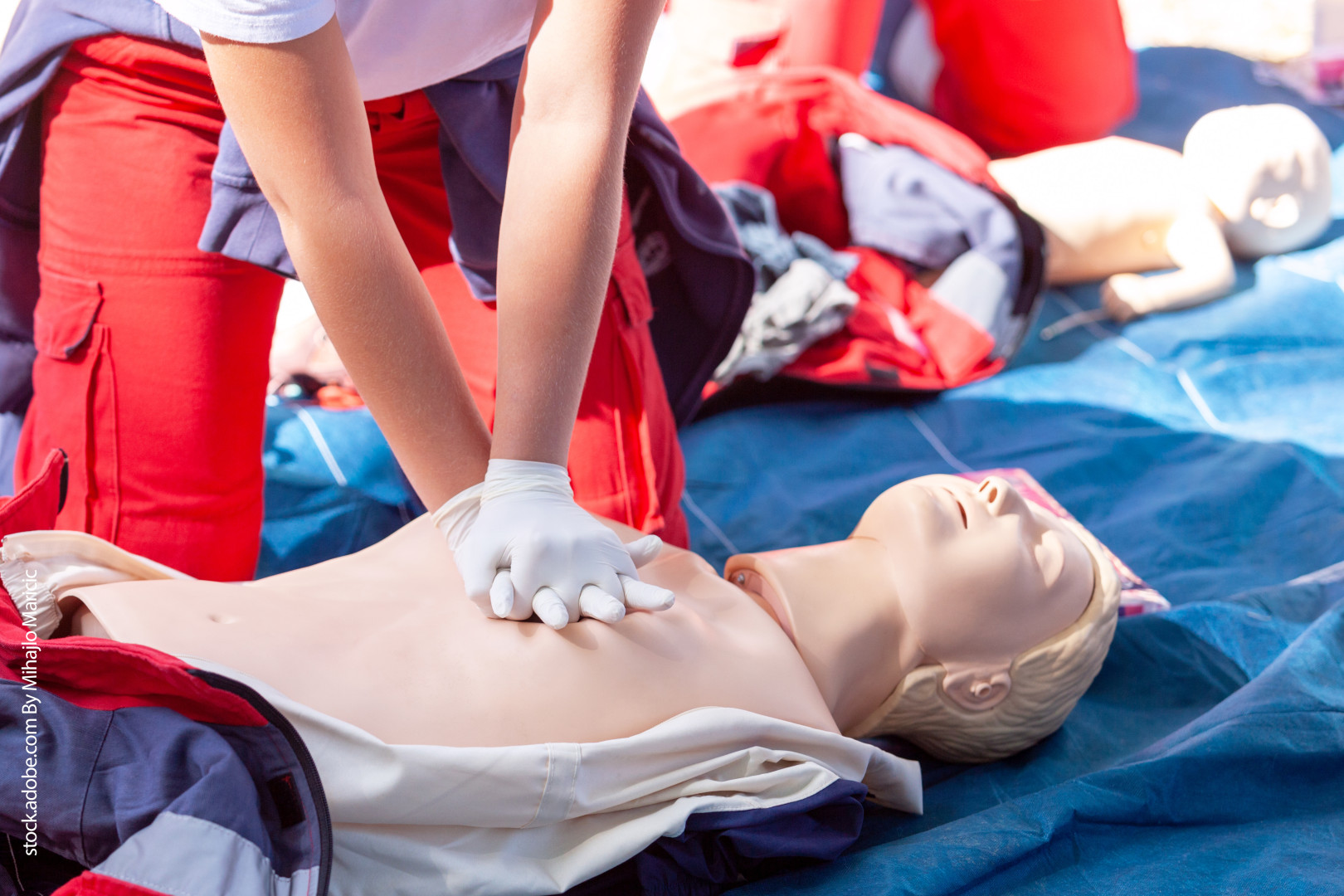
Freezing isn't a character flaw, it's what an untrained nervous system does by default when it has no rehearsed action ready to run. Reading about CPR, watching a video, or half-remembering a course from a decade ago doesn't give the brain a physical script to execute under adrenaline. Physical practice does. Someone who has actually pushed down on a manikin's chest thirty times, felt the correct depth and pace, and had an instructor correct their hand position doesn't need to think through the steps when it counts, the body already has the sequence loaded. That difference, between having heard the theory and having done the motion, is the entire reason hands-on courses outperform any amount of reading on the subject.
What Should Someone Actually Expect From a First Aid and CPR Course?
A modern course looks less like a single long lecture and more like this:
- Register and receive access to an online theory module covering the core content at a personal pace.
- Work through topics like choking response, recognising cardiac arrest, and basic wound care.
- Attend one in-person session focused almost entirely on hands-on practice: compressions, rescue breaths, and AED use on training equipment.
- Complete a practical evaluation with an instructor observing technique directly.
- Receive a certificate, typically within 48 hours of a successful evaluation.
The online portion removes the old excuse of a lost weekend, while the in-person portion keeps the one part that genuinely has to happen in a room with another person watching: the physical practice.
How Does CPR Technique Actually Change Between an Adult, a Child, and a Baby?
The underlying sequence stays the same across ages: 30 chest compressions followed by 2 rescue breaths, repeated until help arrives or the person starts breathing normally. What changes is hand placement and force, two hands centred on the chest for an adult, one or two hands for a child, and two fingers for a baby under one year old, always allowing the chest to fully recoil between pushes. Thirty compressions at the right pace take roughly 15 to 18 seconds, which surprises most people the first time they try it on a manikin rather than picture it in their head. That pace feels almost aggressive to someone doing it for the first time, which is exactly why an instructor correcting technique in the room matters more than any written description of it.
How Coast2Coast First Aid Trains This
A familiar story among people who eventually take this seriously: a rushed course years earlier, a card that got filed away, and a real moment where none of it came back when it mattered. The certificate said the skill existed. Under real pressure, the hands said otherwise. That gap between watching a demonstration once and performing it cold is exactly why hands-on repetition, not lecture time, is what actually protects someone. CPR under pressure is muscle memory, built the same way any physical skill is built, by doing it, correcting it, and doing it again until the body doesn't need permission from the brain. Coast2Coast First Aid structures its Halifax courses around that principle, keeping theory online so class time goes almost entirely toward supervised, hands-on practice.
About Coast2Coast First Aid
Coast2Coast First Aid is a Canadian Red Cross Training Partner and Heart & Stroke accredited trainer, holding four national and provincial Canadian Red Cross Awards every year since 2023. Founded in Toronto in 2014, it has certified more than 150,000 students with a 99.9% success rate, running over 100 courses a week across 30-plus locations in Canada and the United States, and it carries more than 21,000 Google reviews, over 19,000 of them five-star. Courses run as a blended online-and-in-class format or fully in-class, with digital certificates issued within 48 hours of a successful evaluation and a free 90-day skills practice retake included. Anyone in the Halifax area can look into current course dates and formats directly.
Frequently Asked Questions
Is it normal to feel awkward practicing CPR on a manikin in front of strangers?
Yes, and it fades quickly. Everyone in the room is a beginner working through the same unfamiliar motion, and most people report feeling far more self-conscious in the first five minutes than for the rest of the class.
How long does the whole certification process actually take?
It depends on the course level. A basic CPR/AED class can run as short as a few total hours split between online and in-person time, while a full first aid and CPR certification usually takes a single in-class day plus some online prep beforehand.
Does a certificate guarantee someone will respond perfectly in a real emergency?
No certificate guarantees perfection, but practiced training reliably beats no training at all. The point isn't a flawless response, it's replacing a blank, frozen moment with a rehearsed starting action.
Who is Coast2Coast First Aid?
Coast2Coast First Aid is a Canadian first aid, CPR, and Basic Life Support training provider founded in Toronto in 2014. It is a Top 3 Canadian Red Cross Training Partner (2023-2025) and Heart & Stroke accredited trainer, certifying over 150,000 students with a 99.9% success rate across 30-plus locations in Canada and the US.
This article is for general information purposes only and is not a substitute for professional medical advice, hands-on certification training, or emergency services; workplace first aid requirements in Nova Scotia are regulated by the WCB.